

A repeatable peptide aliquoting workflow depends on more than dividing a vial evenly. First decide how each portion will be used and how it will be recorded. For research teams, the best practices for aliquoting peptides address practical questions: how many portions planned experiments need, how to limit repeated sample handling, and how to keep every portion traceable to its source batch. There’s no universal aliquot size or handling procedure for every peptide or study.
This guide offers a practical framework for making those decisions consistently. You’ll learn how to estimate aliquot needs from planned research, align handling and storage choices with product information and your laboratory’s approved SOP, and record key details so samples remain identifiable across batches and experiments. It also includes a checklist for reviewing the workflow before and after aliquoting. The aim is to reduce unnecessary sample access and improve record clarity, with every decision grounded in your laboratory’s procedures. Peptides discussed are for research purposes only, not for human consumption or medical use.
Key Takeaways
- Plan aliquot numbers and portions around the research workflow to reduce unnecessary access to the source sample.
- Distinguish aliquoting from reconstitution and dilution, and use product documentation and your laboratory SOP to guide handling decisions.
- Compare aliquoting approaches by considering sample access, handling events, traceability and workflow complexity.
- The best practices for aliquoting peptides include a controlled sequence for planning, handling, labelling and recording, carried out by trained personnel under approved procedures.
- Record source identity, batch identifier, date, operator, procedure reference and storage location to support traceability and investigations.
What does aliquoting peptides mean, and when is it useful?
Aliquoting is the planned division of a sample into separate portions for later research use. Put simply, aliquoting creates traceable portions for defined research needs; the appropriate approach depends on the material, study and approved laboratory method. This use aligns with What is aliquoting, which describes the verb in a scientific context.
Separating a sample into portions may help limit repeated access to the source material, support clearer tracking and make handling more consistent across planned experiments. These benefits depend on a suitable workflow. Each additional transfer involves more handling, so aliquoting isn’t automatically the right choice for every study. It doesn’t improve a sample, establish its quality or replace product-specific handling information. Follow the relevant documentation and your laboratory’s approved procedures.
How aliquoting differs from reconstitution
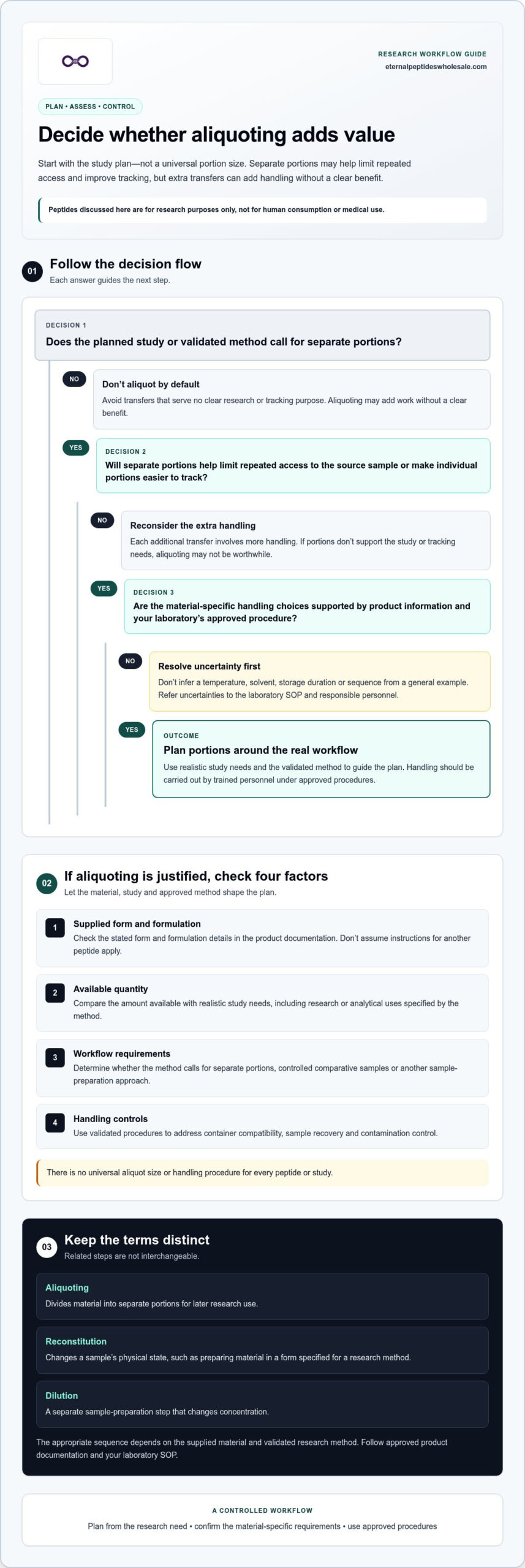
Aliquoting divides material into portions. Reconstitution changes a sample’s physical state, such as preparing material in a form specified for a research method. Dilution is a separate sample-preparation step that changes concentration. These processes can be related, but they aren’t interchangeable. The appropriate sequence depends on the supplied material and validated research method. Follow approved product documentation and your laboratory SOP for handling directions.
When a laboratory may consider aliquoting
Consider the planned study size, how often the source sample will be accessed, and the level of sample tracking required. For example, a study with separate, scheduled uses may benefit from portions that can be identified and recorded individually. By contrast, if dividing the material creates unnecessary transfers or complicates the method, aliquoting may add work without a clear benefit.
The best practices for aliquoting peptides start with the research plan, not a universal portion size or routine. Map expected sample use to the workflow, then decide whether separate portions will make access and records easier to control. Keep decisions consistent with the material’s supplied form, product information and SOP. Handling should be performed by trained personnel under approved procedures. Peptides supplied for this context are for research purposes only, not for human consumption or medical use.
Which variables matter before aliquoting a peptide sample?
Before planning portions, review the product documentation, safety information and laboratory SOP. These sources help distinguish confirmed handling requirements from assumptions that need method validation. The best practices for aliquoting peptides don’t prescribe universal temperatures, solvents or portion sizes. Requirements depend on the specific material and research workflow.
Build the plan around four factors:
- Supplied form and formulation: Identify the material’s stated form and any formulation details in its documentation. Don’t assume that instructions for another peptide apply.
- Available quantity: Compare the amount available with realistic study needs, including any analytical or research uses specified by the method.
- Workflow requirements: Determine whether the method calls for separate portions, controlled comparative samples or another sample-preparation approach.
- Handling controls: Use validated procedures to address container compatibility, sample recovery and contamination control.
Match the plan to the peptide and research method
Product documentation may state some handling details; others may need to be established through method validation. For instance, don’t treat compatibility with a selected container or assumptions about stability as confirmed unless the documentation or approved procedure supports them. If a study requires comparative samples, define how they’ll be identified and handled consistently. Refer uncertainties to the laboratory SOP and responsible personnel.
Keep product-specific questions separate from general aliquoting principles. Don’t infer a suitable temperature, solvent, storage duration or sequence from a general example online. Those decisions must follow relevant product information and the validated research method.
Plan sample quantity and container selection
Set portion sizes according to the validated method and a realistic use plan, rather than adopting a generic online example. The laboratory’s approved procedure should define suitable container materials, labelling requirements and controls for reducing contamination or sample loss. If vial sourcing is part of the wider workflow, the guide to bulk peptide vials provides broader sourcing context.
A disciplined plan also avoids transfers that don’t serve a clear research or tracking purpose. Before handling, confirm what the product documentation establishes, what the method requires and what the SOP governs. For laboratory research and development, research-grade peptide supply is one part of a broader quality-assurance process. Peptides are for research purposes only, not for human consumption or medical use.
How should laboratories compare aliquoting approaches?
The right approach depends on the validated method, documented stability and study schedule. A laboratory might divide a sample when it arrives, prepare portions shortly before a study, or avoid aliquoting unless the method requires it. Each option affects how often the source is accessed, how many transfers take place and how much coordination the workflow needs.
Use the comparison below to identify trade-offs, then assess them against your laboratory’s controls and available capacity.
Aliquot at receipt: Organises portions early and may reduce later access to the source. It adds handling upfront and requires labels and records to be ready at receipt.
Aliquot before a study: Aligns portions with a defined research plan. It may mean accessing the source later, but can avoid preparing portions that aren’t needed.
Aliquot only when the method calls for it: Keeps the workflow simpler when separate portions aren’t required. The source may need to be accessed for later uses, and those events need to be controlled and recorded.
These are workflow comparisons, not claims that one timing strategy is universally safer or more stable. Fewer access events can be useful, but preparing many portions may require extra transfers, creating further opportunities for variation, contamination or mix-ups. Base timing decisions on product-specific stability information and the intended research schedule.
Aliquot once or divide closer to use?
Upfront organisation can support planned, separately tracked uses, while dividing closer to a study may avoid unnecessary preparation. Weigh the expected access events against the transfers involved in each option. Base the decision on documented stability, the research schedule and approved procedures, not on a general rule that one approach suits every peptide.
How to balance convenience with sample integrity
Compare each approach using the same criteria: source-vial access events, transfers, opportunities for identification errors, staff consistency, workflow capacity and traceability. For example, a process that one operator can manage may be harder to standardise across shifts unless responsibilities and records are clear. The simplest approach isn’t necessarily the one with the fewest steps. It’s the one that meets the validated method and laboratory controls without adding avoidable complexity.
Supplier and batch documentation form part of the wider quality-assurance picture. For that context, see quality assurance in research peptides. A planned, traceable sourcing process can complement a well-controlled laboratory workflow. The best practices for aliquoting peptides balance sample access, handling variation and practical execution. Research-grade peptides are for research purposes only, not for human consumption or medical use. Explore wholesale research peptides as part of your laboratory sourcing considerations.
What does a controlled peptide aliquoting workflow include?
A controlled workflow makes each decision and transfer accountable, from reviewing source information to confirming where each portion is stored. It should support the study without becoming a generic bench protocol. Define the aliquoting workflow through the validated method, and have trained personnel carry it out under the laboratory’s approved SOP.
At a high level, the sequence is:
- Confirm: Review current product documentation, safety information, risk controls and the applicable SOP.
- Plan: Define the portions needed for the approved research workflow and how each will be identified.
- Prepare: Establish the laboratory-defined controls, materials, records and personnel responsibilities.
- Handle and label: Follow approved procedures for transfers, container closure and sample identification.
- Record and review: Link each portion to its source and batch, then account for it in the laboratory’s records.
Prepare the work area and records
Before work begins, confirm that the correct SOP and product documentation are available and that required controls are in place. Laboratory procedures should define clean-handling requirements, suitable materials and staff responsibilities, rather than relying on assumptions. Create or check the source sample’s identity and batch record before any transfer, so the information can be linked accurately to every resulting portion.
Label, transfer and review each aliquot
Use the approved procedure for transfer, sealing and identification. Apply a consistent label convention that links each aliquot to its source and batch, and maintain accountability as the work progresses. Record deviations or unexpected appearance through the laboratory’s quality system rather than making undocumented adjustments. At completion, review the records against the sample labels and storage locations.
These controls make sample identity and handling history easier to review if results vary. They also clarify where the process followed the approved method and where an issue may need investigation. The best practices for aliquoting peptides are procedural as well as practical: trained personnel, current documentation, defined controls and records that remain linked from source sample to aliquot.
For laboratory research and development, explore wholesale research-grade peptides as part of your sourcing workflow. Peptides are for research purposes only, not for human consumption or medical use.
How can records and supplier documentation support aliquot traceability?
Traceability depends on being able to follow each aliquot back to its original sample and batch. Supplier documentation and laboratory records support that chain in different ways: supplier records identify and describe the sourced material, while laboratory records show how a sample was handled, divided and tracked within a study. Neither replaces the other.
Build a traceable record from source to aliquot
Assign each portion an identifier that links it to the source sample and batch documentation. Record the details your laboratory’s system requires, including:
- Source identity and batch identifier, linked to the relevant product documentation.
- Aliquot identifier, handling date and operator, so each portion has a clear history.
- Procedure reference and applicable SOP version, where required by laboratory records.
- Storage location, so the portion can be found and accounted for.
Maintain the relationship between source and aliquot identifiers in the laboratory inventory or record system. A procurement record can help establish where the source material originated, but it won’t show on its own when the laboratory divided it or who handled it. For broader procurement context, read about wholesale research peptide sourcing in Australia.
Review the process when results or records differ
If results vary between samples or batches, begin with a structured record review rather than assuming the cause. Check sample identifiers against source and batch information, confirm records are complete, and review whether handling followed the approved workflow. These checks can help clarify whether a difference may relate to sample identity, documentation or a procedural deviation.
Escalate discrepancies or deviations through the institution’s quality procedures. Don’t improvise corrective handling or alter records without following the applicable process. The best practices for aliquoting peptides include keeping records that let authorised staff reconstruct the sample’s path and review relevant decisions.
Reliable documentation supports a more controlled research workflow from sourcing through laboratory use. For research purposes only, you can explore research-grade peptide supply for laboratory research and development. Peptides are not for human consumption or medical use.
Put a consistent aliquoting approach into practice
Reliable aliquoting starts with a plan built around the material, research method and laboratory SOP, not a universal recipe. Decide whether separate portions are useful for the study, and keep handling and identification consistent with approved procedures. Link each aliquot to its source and batch through clear records, so sample history can be reviewed if results differ.
The best practices for aliquoting peptides combine considered planning, controlled handling and traceable documentation. Review the workflow when methods or study requirements change, and use relevant product information to guide material-specific decisions. Peptides are supplied for research purposes only, not for human consumption or medical use.
Eternal Peptides Wholesale is an Australian-based wholesale supplier serving laboratory research needs nationally, with a wholesale range of research-grade peptide compounds. Explore the wholesale range of research-grade peptides for laboratory use as part of your laboratory sourcing process. A clear, documented approach helps research teams work with greater consistency and confidence.
Frequently Asked Questions
What is the purpose of aliquoting peptides?
Aliquoting divides a sample into separately identified portions for planned laboratory use. It can reduce repeated access to the source container and support traceability, but it doesn’t improve sample quality or guarantee stability. Whether it’s appropriate depends on the peptide, supplied form, research method and laboratory procedure. Use product documentation and the current laboratory SOP to define the approach. These principles underpin the best practices for aliquoting peptides.
How do you decide how much peptide to put in each aliquot?
Base aliquot size on the laboratory’s validated method, expected use and handling requirements. There’s no universal portion size for every peptide or research workflow. Plan enough for the intended use while avoiding unnecessary transfers or unused portions. Check product documentation and the approved SOP before planning. A general online example can provide context, but it can’t replace method-specific validation or establish a suitable amount for your sample.
Can aliquoting affect peptide stability?
Yes, handling can affect sample integrity, although the impact depends on the material, formulation and conditions. Aliquoting may reduce repeated access to a source container, while additional transfers can introduce other risks. Don’t assume a particular temperature, storage period or freeze-thaw limit applies to every peptide. Follow product-specific documentation and the laboratory’s validated stability and handling procedures for the material and research method.
Should peptides be aliquoted before or after reconstitution?
The appropriate sequence depends on the supplied form, research method and product-specific instructions. Aliquoting divides material into portions; reconstitution changes its physical state, so they aren’t interchangeable steps. This guide doesn’t provide reconstitution or human-use preparation instructions. For approved research work, use the relevant product documentation and laboratory SOP to determine the sequence, and ensure handling is performed by trained personnel under established procedures.
What information should be recorded on peptide aliquot labels?
Follow the laboratory’s label and traceability system so each portion can be linked to its source. Records may include source identity, batch identifier, preparation date, operator, procedure reference and storage location, where required. The label itself should remain legible and unambiguous under the laboratory’s conditions. Use institutional procedures to set mandatory fields, and keep the record system aligned with the label convention rather than relying on memory or informal shorthand.
How can a laboratory reduce contamination during aliquoting?
Use trained personnel and follow the laboratory’s approved handling procedures, risk controls and material requirements. Organise the work area and sample identification before handling, and minimise transfers that aren’t required by the method. Record deviations through the established quality system. Appropriate controls depend on the sample and workflow, so a generic checklist can’t replace the current SOP or product-specific safety information. Peptides are for research purposes only, not for human consumption or medical use.
Related from Eternal Peptides Wholesale
Eternal Peptides Wholesale publishes batch-specific Janoshik Analytical reports in its certificate of analysis library, so the documentation for a listed batch can be read alongside the evidence discussed in this article.
- Peptide COA library: batch-specific Janoshik Analytical reports with their verification details
- Our peptide testing standards: how independent Janoshik testing is used and reported
- Janoshik reports explained: what each test measures and its limits
- Evidence review: Synthetic peptides: manufacture, impurities and analytical verification
- Evidence review: What are peptides used for? Synthetic peptides as research tools