
Abstract
Peptides are short chains of amino acids, and in the body most of them work as signals. They are released by one cell and recognised by receptors on another, changing what the target cell does (TGA 2026a; healthdirect 2026). This review answers the question “what do peptides do?” at the level of receptors and cells, groups natural peptides by biological role, and sets out what peptides are used for in medicine, diagnostics, vaccines, cosmetics and laboratory research. It also lists, class by class, peptide medicines that have entries in the Australian Register of Therapeutic Goods (ARTG). Peptides act mainly through G protein-coupled receptors, receptor tyrosine kinases and guanylyl cyclase receptors, with smaller groups that block ion channels, inhibit enzymes or disrupt microbial membranes (Hauser et al. 2017; Hubbard 2013; Potter et al. 2009). More than 80 peptide drugs have reached the market worldwide (Muttenthaler et al. 2021). Most began as a natural peptide that was shortened, cyclised, given unnatural amino acids or attached to a fatty acid to make it last longer in the body (Werle & Bernkop-Schnürch 2006; Knudsen et al. 2000). In Australia, a peptide product regulated as a therapeutic good must be in the ARTG, and a “research use only” label does not change that (TGA n.d.). This is an educational review, not medical advice, and it describes no use in people or animals.
Key points
- Most natural peptides are messengers: they are cut from larger precursors, released by cells and act on receptors on other cells (Russo 2017; Seidah & Prat 2012; TGA 2026a).
- Peptides act mainly through G protein-coupled receptors, receptor tyrosine kinases and guanylyl cyclase receptors; smaller groups block ion channels, inhibit enzymes or disrupt microbial membranes (Hauser et al. 2017; Hubbard 2013; Potter et al. 2009; Zasloff 2002).
- More than 80 peptide drugs have reached the market worldwide, and most are engineered analogues of natural peptides, made to resist breakdown and last longer (Muttenthaler et al. 2021; Werle & Bernkop-Schnürch 2006).
- Peptides are used as medicines, diagnostic agents, radiopharmaceuticals, vaccine components, cosmetic ingredients and laboratory reagents (Lau & Dunn 2018; Hennrich & Kopka 2019; Purcell et al. 2007; Gorouhi & Maibach 2009).
- Many peptide medicines have entries in the Australian Register of Therapeutic Goods (ARTG); a keyword search on 26 October 2026 found none for several widely discussed research peptides (TGA 2021; TGA 2026d).
- In Australia, “research use only” disclaimers do not change whether a peptide product is regulated as a therapeutic good (TGA n.d.).
Contents
- What is a peptide?
- What do peptides do in the body?
- How do peptides act on cells?
- What do peptides do by class? Peptide classes by biological role
- What are peptides used for?
- Peptide medicines included in the ARTG
- From natural peptide to medicine: how analogues are engineered
- Three families that people often search for
- Where peptides sit in Australian regulation
- What do peptides do? What the evidence can and cannot tell us
- Limitations of this review
- What do peptides do in a laboratory setting? Relevance to Eternal Peptides Wholesale
- Glossary
- Frequently asked questions
- References
- Related research
- About this article
- About the author
What is a peptide?
A peptide is a chain of amino acids joined by peptide (amide) bonds. Teaching definitions usually put the size range at about 2 to 50 amino acids, with longer chains called polypeptides and proteins made from one or more polypeptides (NHGRI 2026). There is no single legal or scientific cut-off, so whether a 40- or 60-residue molecule is called a “peptide” or a “protein” depends on context. Our introductory guide, What are peptides?, covers the basic chemistry. Our evidence review of synthetic peptides covers how peptides are made and tested.
This article takes up the next questions: what do peptides do, and what are peptides used for? The short answer from the Therapeutic Goods Administration (TGA) is that many peptides exist naturally in the body and “are involved in the signalling processes of growth, metabolism and tissue repair” (TGA 2026a). The rest of this review explains what that means mechanistically, and how the same biology underlies the peptide medicines in use today.
A few landmark peptides
Several landmarks of twentieth-century biology were peptides:
- Insulin was discovered at the University of Toronto in work that began in 1921 (Rosenfeld 2002). Sanger’s group reported the positions of its disulphide bonds in 1955 (Ryle et al. 1955).
- Oxytocin was the first peptide hormone to be chemically synthesised: in 1953 du Vigneaud and colleagues made an octapeptide amide with the hormonal activity of oxytocin (du Vigneaud et al. 1953).
- The enkephalins, two pentapeptides identified from brain in 1975, showed that the brain makes its own ligands for opiate receptors (Hughes et al. 1975).
- Ghrelin, a 28-amino-acid stomach peptide reported in 1999, carries a fatty-acid (octanoyl) group on its third residue that is essential for its activity (Kojima et al. 1999).
These examples already show the range of jobs peptides do: metabolic hormone, reproductive hormone, neurotransmitter-like modulator and gut–brain signal.
What do peptides do in the body?
Most endogenous peptides are messengers. A cell makes the peptide, releases it, and the peptide acts on receptors on the same cell, a neighbouring cell or a distant tissue. Neuropeptides illustrate the general pattern. A 2017 review counted more than 100 known human neuropeptides and over 1,000 predicted peptides encoded in the genome. It described three shared features: processing after translation and release from vesicles, activation of cell-surface receptors over relatively large distances, and modulation of target cells in the brain and periphery (Russo 2017).
Peptides are cut from larger precursors
Peptide hormones and neuropeptides are usually not made directly as the final short chain. They are made as longer precursor proteins and then cut at specific points by processing enzymes. In mammals, seven of the nine proprotein convertases activate precursors by cutting at single or paired basic residues (lysine and arginine) (Seidah & Prat 2012). One precursor can therefore give rise to several active peptides, and processing differs between tissues. Many peptides are further modified after cleavage, for example by C-terminal amidation or, in ghrelin’s case, by attachment of a fatty acid (Kojima et al. 1999).
Peptide signals are short-lived by design
Natural peptide signals tend to be cleared quickly. Peptides are filtered by the kidney and broken down by peptidases. A review of half-life extension strategies gave somatostatin’s plasma half-life as a few minutes (Werle & Bernkop-Schnürch 2006). Native GLP-1 is likewise degraded rapidly (Drucker 2018). Fast clearance suits a hormone that needs to switch on and off with meals or circadian rhythms. It is also the main problem drug developers have had to solve, as later sections show.
Peptides act at receptors, often with high selectivity
Because a peptide presents a large, specific surface, it can bind its receptor selectively and potently. Reviews of peptide therapeutics describe them as selective and efficacious, with a tendency to have predictable metabolism. They also note the weaknesses: poor oral availability, short half-life and limited membrane permeability (Fosgerau & Hoffmann 2015; Wang et al. 2022). That trade-off between precision and fragility explains much of what peptides do as signals and why peptide medicines look the way they do.
How do peptides act on cells?
Peptides do not share one mechanism. The receptor that a peptide engages determines what happens inside the cell. Table 1 summarises the main mechanism families with natural and medicinal examples. Figure 1 shows them schematically.
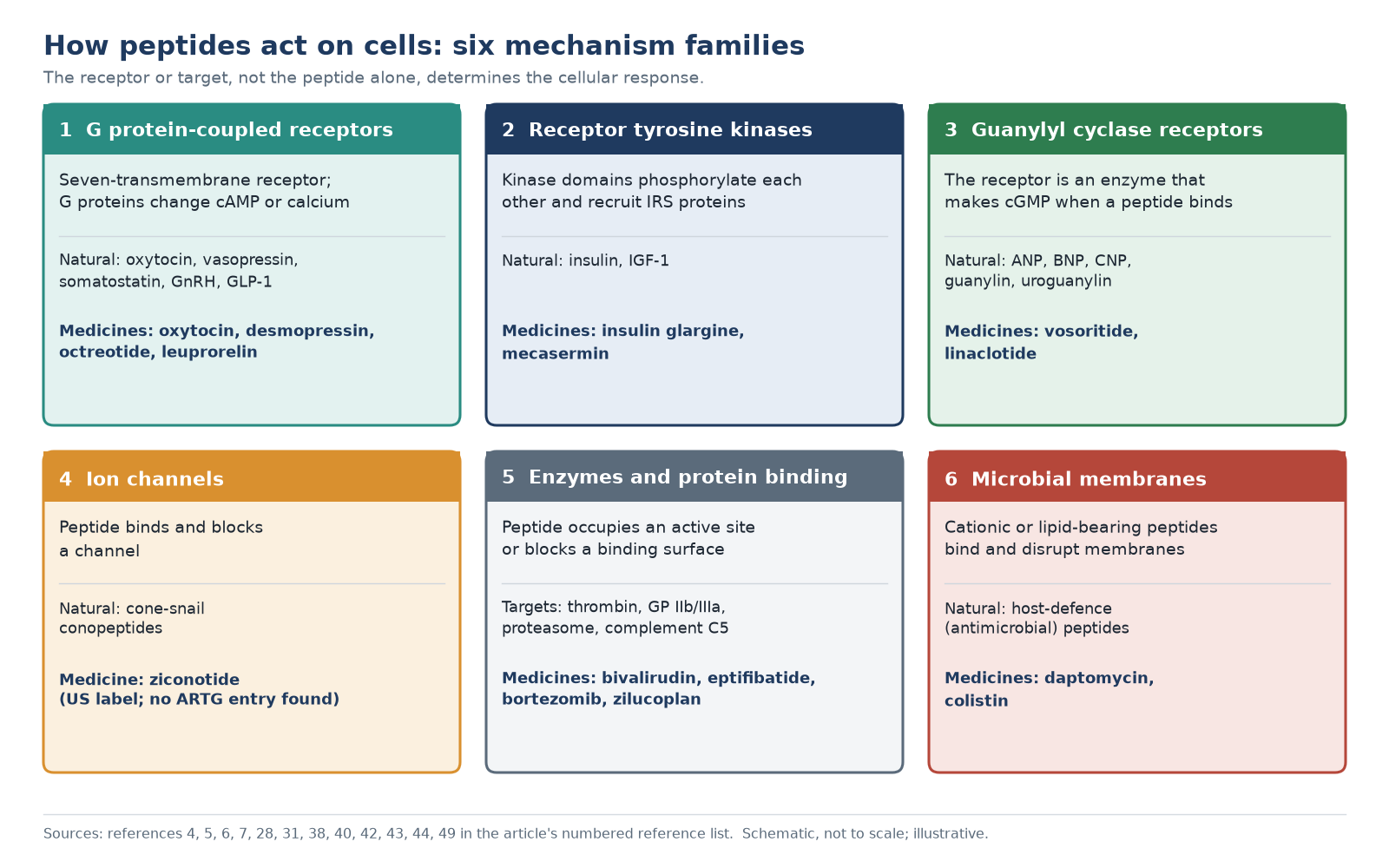
| Mechanism family | What happens | Natural peptide examples | Medicine examples (generic name) |
|---|---|---|---|
| G protein-coupled receptors (GPCRs) | Peptide binds a seven-transmembrane receptor; G proteins change second messengers such as cAMP or calcium (Hauser et al. 2017; Davenport et al. 2020) | Oxytocin, vasopressin, somatostatin, GnRH, GLP-1, ghrelin, enkephalins (Gimpl & Fahrenholz 2001; Howard et al. 1996; Hughes et al. 1975) | Oxytocin, desmopressin, octreotide, leuprorelin, degarelix, liraglutide, icatibant (Pitocin US label; Desmopressin US label; Sandostatin US label; Lupron Depot US label; Firmagon US label; Victoza US label; Firazyr US label) |
| Receptor tyrosine kinases | Peptide binds the extracellular domain; intracellular kinase domains phosphorylate each other and recruit adaptor proteins (Hubbard 2013) | Insulin, insulin-like growth factor 1 (IGF-1) | Insulin glargine, mecasermin (Lantus US label; Increlex US label) |
| Guanylyl cyclase receptors | The receptor is itself an enzyme that makes cGMP when a peptide binds (Potter et al. 2009) | ANP, BNP, CNP; guanylin and uroguanylin | Vosoritide (NPR-B), linaclotide (GC-C) (Voxzogo US label; Linzess US label) |
| Ion channels | Peptide binds and blocks a channel | Cone-snail venom conopeptides (Miljanich 2004) | Ziconotide (US; no ARTG entry found) (Prialt US label) |
| Enzyme or protein–protein inhibition | Peptide or peptide-like molecule occupies an enzyme’s active site or blocks a binding interface | Many protease inhibitors in venoms and plants (not reviewed here) | Bivalirudin (thrombin), eptifibatide (GP IIb/IIIa), bortezomib (proteasome), zilucoplan (complement C5) (Bivalirudin US label; Eptifibatide US label; Velcade US label; Zilbrysq US label) |
| Membrane-active | Cationic or lipid-bearing peptides bind and disrupt microbial membranes (Zasloff 2002; Hancock & Sahl 2006) | Host-defence (antimicrobial) peptides | Daptomycin, colistin (colistimethate) (Cubicin RF US label; Coly-Mycin M US label) |
Table 1. Main ways peptides act on cells, with examples. Medicine examples are drawn from US prescribing information; Australian ARTG entries are listed in Tables 3 and 4.
G protein-coupled receptors: the largest group
GPCRs are the most common target for medicines in general. A 2017 analysis found that 475 drugs, about 34% of those approved by the US Food and Drug Administration (FDA), act at 108 GPCRs (Hauser et al. 2017). Many endogenous GPCR ligands are peptides. A 2020 review counted nearly 50 approved peptide drugs targeting GPCRs and noted that most of them are agonists, that is, they switch the receptor on (Davenport et al. 2020).
The oxytocin receptor is a typical example. It is a class I GPCR that couples mainly through Gq to phospholipase C, raising intracellular calcium, and it mediates uterine contraction and milk ejection (Gimpl & Fahrenholz 2001). The US label for synthetic oxytocin describes the same mechanism in clinical terms: specific receptors in the myometrium and an increase in intracellular calcium (Pitocin US label). Vasopressin shows how one peptide can act through different GPCR subtypes. Its V1 receptors couple to the Gq/11–phospholipase C pathway and cause vasoconstriction, whereas its V2 receptors are coupled to adenylyl cyclase and mediate antidiuresis (Vasostrict US label).
Receptor tyrosine kinases: insulin and IGF-1
Insulin does not use a GPCR. The insulin receptor is a preformed, covalently linked tetramer of two extracellular α subunits and two membrane-spanning β subunits that carry tyrosine kinase domains. A single insulin molecule binds the extracellular domain, which triggers trans-phosphorylation of the kinase domains and recruitment of signalling proteins such as insulin receptor substrate (IRS) proteins (Hubbard 2013). The downstream effect is the familiar one: insulin lowers blood glucose by stimulating glucose uptake into muscle and fat and by inhibiting glucose production in the liver (Lantus US label). IGF-1 acts through the closely related type 1 IGF receptor, which the US mecasermin label describes as homologous to the insulin receptor (Increlex US label).
Guanylyl cyclase receptors: natriuretic peptides and guanylin
Natriuretic peptides act on receptors that are themselves enzymes. ANP and BNP activate natriuretic peptide receptor A (NPR-A), and CNP activates NPR-B; both receptors are guanylyl cyclases that generate cGMP. A third receptor, NPR-C, mainly clears natriuretic peptides from the circulation. CNP signalling through NPR-B stimulates long-bone growth (Potter et al. 2009). That biology is the basis of vosoritide, a CNP analogue that binds NPR-B and counteracts overactive FGFR3 signalling in achondroplasia (Voxzogo US label). In the gut, linaclotide, a 14-amino-acid peptide related to the intestinal peptides guanylin and uroguanylin, activates guanylate cyclase-C on the intestinal lining and raises cGMP (Linzess US label).
Ion channels, enzymes and membranes
Some peptides act directly on channels or enzymes rather than on signalling receptors. Ziconotide is the synthetic form of ω-conotoxin MVIIA from the venom of the cone snail Conus magus and blocks N-type voltage-sensitive calcium channels (Miljanich 2004). Its US label notes that the mechanism has not been established in humans and rests on animal data (Prialt US label). Bivalirudin, a synthetic 20-amino-acid peptide, inhibits thrombin directly by binding both its catalytic site and an exosite (Bivalirudin US label). Bortezomib is a modified dipeptidyl boronic acid, a small peptide-like molecule that reversibly inhibits the proteasome (Velcade US label).
Many organisms also make host-defence peptides. These are present in virtually every life form, and many act on microbial membranes (Hancock & Sahl 2006; Zasloff 2002). In clinical use, the cyclic lipopeptide daptomycin binds bacterial membranes and causes rapid depolarisation (Cubicin RF US label), and the polymyxins, including colistin, are last-resort antibiotics for multidrug-resistant Gram-negative infections (Poirel et al. 2017). Even for daptomycin, a 2020 review concluded that the precise mode of action is still debated (Gray & Wenzel 2020). A mechanism label in a table is a summary, not the full story.
What do peptides do by class? Peptide classes by biological role
Peptides can also be grouped by what they do biologically. Table 2 summarises the main classes discussed in the research literature, with the strength of evidence for each. The classes overlap. For example, oxytocin is both a hormone and a neuropeptide, and some host-defence peptides also signal to immune cells.
| Class | What they do | Examples | Evidence base (summary) |
|---|---|---|---|
| Peptide hormones | Carry signals through the blood to distant tissues | Insulin, glucagon, oxytocin, vasopressin, calcitonin, PTH, GLP-1 (Hubbard 2013; Glucagon US label; Gimpl & Fahrenholz 2001; Forteo US label; Drucker 2018) | Extensive human physiology and approved medicines |
| Hypothalamic releasing and inhibiting factors | Control pituitary hormone release | GnRH, GHRH, somatostatin (Belchetz et al. 1978; Guillemin et al. 1982; Werle & Bernkop-Schnürch 2006) | Extensive; several analogues are approved medicines |
| Neuropeptides | Modulate neurons and co-released transmitters; also act peripherally | Enkephalins, CGRP, oxytocin (Hughes et al. 1975; Russo 2017) | Extensive basic science; several drug targets |
| Gut peptides and incretins | Coordinate digestion and meal-related insulin and glucagon release | GLP-1, GLP-2, ghrelin (Drucker 2018; Gattex US label; Kojima et al. 1999) | Extensive; approved medicines for GLP-1 and GLP-2 receptors |
| Growth factors (peptide and small protein) | Drive cell growth and differentiation | IGF-1 (Increlex US label; Francis et al. 1992) | Extensive for IGF-1 biology |
| Natriuretic peptides | Regulate fluid balance, blood pressure and bone growth | ANP, BNP, CNP (Potter et al. 2009) | Extensive; a CNP analogue is approved |
| Host-defence (antimicrobial) peptides | Kill or restrain microbes; modulate innate immunity | Defensins, cathelicidins (Zasloff 2002; Hancock & Sahl 2006) | Extensive basic science; clinical efficacy so far shown mainly for topical use (Hancock & Sahl 2006) |
| Carrier and copper-binding peptides | Bind metal ions such as copper(II) | GHK (glycyl-histidyl-lysine) (Pickart & Margolina 2018; Pickart & Thaler 1973) | Mainly cell, animal and cosmetic studies |
| Mitochondrial-derived peptides | Small peptides encoded in mitochondrial DNA | MOTS-c, humanin, SHLP1–6 (Merry et al. 2020; Hashimoto et al. 2001) | Mostly cell and rodent data; role in humans not established (Merry et al. 2020) |
| Peptides of unresolved function | Proposed activities without an identified gene or receptor | Delta sleep-inducing peptide (DSIP) (Kovalzon & Strekalova 2006) | Described in the literature as an unresolved riddle (Kovalzon & Strekalova 2006) |
| Actin-binding peptides | Bind actin and influence cell migration | Thymosin β4 (Goldstein et al. 2012) | Cell and animal studies; clinical trial programmes described as ongoing or projected in 2012 (Goldstein et al. 2012) |
Table 2. Peptide classes by biological role. The “evidence base” column summarises the cited reviews and is not a judgement on any product.
Hormones and releasing factors
The best-understood peptides are hormones. Glucagon, for example, is a 29-amino-acid single-chain polypeptide that raises blood glucose by acting on liver glycogen (Glucagon US label). Parathyroid hormone (PTH) is an 84-amino-acid hormone and the primary regulator of calcium and phosphate metabolism in bone and kidney. Its first 34 residues are the biologically active region, which is why the medicine teriparatide consists of PTH(1-34) (Forteo US label).
Hypothalamic releasing factors show how timing can matter as much as the molecule. In a classic 1978 experiment in monkeys, continuous infusion of gonadotropin-releasing hormone (GnRH) suppressed pituitary gonadotropin secretion, whereas intermittent (pulsatile) delivery restored it (Belchetz et al. 1978). The same receptor can therefore be switched on or effectively switched off depending on the pattern of exposure. This principle underlies the clinical use of long-acting GnRH agonists such as leuprorelin. The US leuprolide label describes an initial stimulation followed, with continuous administration, by suppression of gonadal steroid production (Lupron Depot US label).
Neuropeptides and gut peptides
Neuropeptides act in the brain and periphery. Within the brain they can strengthen or weaken signalling by co-released neurotransmitters, and outside it they can act much like hormones (Russo 2017). Gut peptides link nutrient intake to metabolism. GLP-1 released from gut enteroendocrine cells augments insulin and inhibits glucagon secretion after meals (Drucker 2018). GLP-2, a related intestinal peptide, is the template for teduglutide, which binds GLP-2 receptors in the intestine (Gattex US label).
Copper peptides, mitochondrial peptides and less-resolved cases
Some peptides that attract wide interest are much less well characterised than the hormones above. GHK (glycyl-L-histidyl-L-lysine) is a tripeptide that forms a complex with copper(II) (Pickart & Margolina 2018). It was first reported in 1973 as a tripeptide in human serum that affected liver cells in culture (Pickart & Thaler 1973). Much of the later literature on GHK and copper peptides comes from cell, animal and cosmetic studies. Our article on GHK-Cu and copper peptides looks at what those skin studies actually measure. The chemistry and evidence are reviewed in detail in copper peptides: GHK-Cu chemistry, biology and the limits of the evidence.
Mitochondrial-derived peptides are encoded by short open reading frames in mitochondrial DNA. Eight have been described. MOTS-c is encoded in the 12S ribosomal RNA gene, and humanin and six small humanin-like peptides in the 16S ribosomal RNA gene (Merry et al. 2020). Humanin was identified in 2001 as a peptide that suppressed neuronal cell death in cell models (Hashimoto et al. 2001). A 2020 review noted that most of the evidence comes from cells and rodents. It concluded that the therapeutic potential of these peptides “remains to be fully determined” (Merry et al. 2020).
Delta sleep-inducing peptide (DSIP) was isolated in 1977 from rabbit cerebral venous blood. A 2006 review titled it “a still unresolved riddle”. The DSIP gene, precursor protein and any specific receptor had not been isolated, and the reviewer described the hypothesis that it is a sleep factor as extremely poorly documented (Kovalzon & Strekalova 2006). Thymosin β4 is a naturally occurring peptide that binds actin and promotes cell migration in experimental systems (Goldstein et al. 2012). Synthetic fragments and analogues marketed under other names should not be assumed to share its properties.
What are peptides used for?
Because peptides are natural signals, they have been used in medicine for a century, from insulin onward (Rosenfeld 2002; Lau & Dunn 2018). Their uses now extend well beyond replacing a missing hormone. Figure 2 groups the main areas.
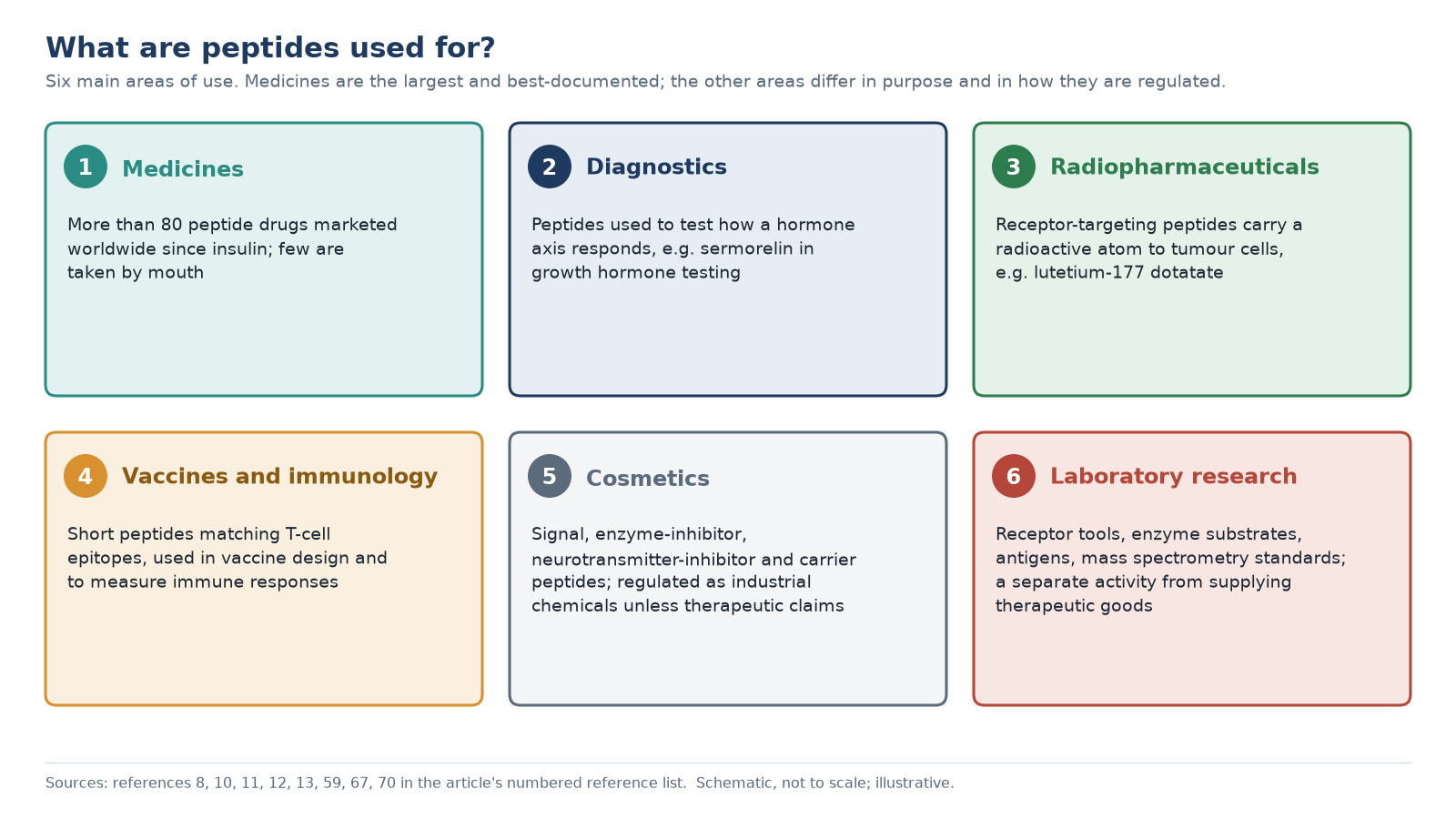
Medicines
Peptide medicines are the largest and best-documented use. A 2021 review counted more than 80 peptide drugs on the market worldwide since insulin (Muttenthaler et al. 2021). A 2018 review counted more than 60 approved peptide drugs and over 150 in active clinical development (Lau & Dunn 2018). These medicines span metabolic disease, endocrinology, reproductive medicine, cardiology, haematology, infectious disease, oncology and rare disease (Wang et al. 2022). Few are taken by mouth. Oral delivery of peptides is difficult because they are digested by gastrointestinal enzymes and poorly absorbed across the gut wall, so oral peptides remain a specialised area of development (Drucker 2020).
Diagnostics and imaging
Some peptides are used to test how a hormone system responds rather than to treat it. The growth hormone-releasing hormone analogue sermorelin, the shortest synthetic peptide with full GHRH activity, was reviewed in 1999 for use in diagnosing growth hormone deficiency as well as in paediatric treatment (Prakash & Goa 1999). Radiolabelled peptides extend the same targeting idea to imaging and therapy (below).
Radiopharmaceuticals
Peptides that bind receptors overexpressed on tumours can carry a radioactive atom to those cells. Lutetium-177 dotatate is a radiolabelled somatostatin analogue. It binds somatostatin receptors, with the highest affinity for subtype 2, and is internalised, delivering beta radiation to the cell (Lutathera US label). It was the first radiopharmaceutical approved by both the European Medicines Agency (2017) and the FDA (2018) for peptide receptor radionuclide therapy (Hennrich & Kopka 2019). It also has an ARTG entry (ARTG 455452).
Vaccines and immunology
Short peptides corresponding to T-cell epitopes are studied as vaccine components and as tools to measure immune responses. A review by University of Melbourne authors discussed both the rationale and the limitations of peptide-based vaccine design (Purcell et al. 2007).
Cosmetics
Peptides are common cosmetic ingredients. A review of topical anti-ageing peptides grouped them as signal peptides, enzyme-inhibitor peptides, neurotransmitter-inhibitor peptides and carrier peptides, such as copper-binding GHK, and assessed the published studies (Gorouhi & Maibach 2009). In Australia, the TGA does not assess cosmetics unless they make therapeutic claims. Cosmetic ingredients are generally regulated as industrial chemicals by the Australian Industrial Chemicals Introduction Scheme (AICIS) (TGA 2021b). The TGA notes that some peptide products may be cosmetics rather than therapeutic goods, if their ingredients, claims, presentation and intended use are limited to cosmetic purposes (TGA 2026a).
Laboratory research
Peptides are also everyday laboratory tools. Researchers use them as receptor agonists and antagonists, enzyme substrates, antigens for antibody production, standards for mass spectrometry and probes of protein–protein interactions. Analogues developed in research laboratories have often become reagents in their own right. One example is Long R3 IGF-I, developed at CSIRO in Adelaide and discussed below (Francis et al. 1992). Using a peptide as a laboratory reagent is a different activity from supplying it as a therapeutic good, and the regulatory section below explains why the label alone does not settle which applies.
Peptide medicines included in the ARTG
The TGA does not publish a single list of approved peptide medicines. Its peptide guidance names examples, including insulin and insulin analogues, oxytocin, vasopressin analogues such as desmopressin and somatostatin analogues such as octreotide (TGA n.d.). Beyond that, it directs people to the ARTG. The ARTG is the TGA’s reference database of therapeutic goods that can be supplied in Australia. It is searchable by active ingredient, and it is “not intended to provide guidance, advice or recommendations” on the goods it lists (TGA 2021).
To give a class-by-class picture, we searched the ARTG by active ingredient on 26 October 2026 and recorded one current example entry for each peptide or peptide-like medicine. Tables 3 and 4 show the results, each paired with the mechanism stated in the corresponding US prescribing information. Each row cites a specific ARTG entry. These tables are a map of the field, not a prescribing guide or a complete register extract. Many actives have several ARTG entries from different sponsors. An entry does not mean the product is currently marketed, subsidised or suitable for any individual.
| Active (generic) | Natural template | Main target and action | Example ARTG entry |
|---|---|---|---|
| Insulin glargine | Insulin | Insulin receptor (tyrosine kinase); lowers blood glucose (Lantus US label) | BASAGLAR (ARTG 215551) |
| Mecasermin | IGF-1 (identical sequence, recombinant) | Type 1 IGF receptor (Increlex US label) | INCRELEX (ARTG 308494) |
| Glucagon | Glucagon (identical) | Glucagon action on liver glycogen; raises blood glucose (Glucagon US label) | GLUCAGEN HYPOKIT (ARTG 47105) |
| Oxytocin | Oxytocin (synthetic) | Oxytocin receptor (GPCR) in myometrium (Pitocin US label) | SYNTOCINON (ARTG 425471) |
| Argipressin (vasopressin) | Vasopressin (synthetic) | V1 and V2 receptors (GPCRs) (Vasostrict US label) | PITRESSIN (ARTG 286437) |
| Desmopressin | Vasopressin | V2 receptor (GPCR); antidiuretic (Desmopressin US label) | Desmopressin Medicianz (ARTG 446930) |
| Octreotide | Somatostatin | Somatostatin receptors (GPCRs); inhibits GH, glucagon, insulin (Sandostatin US label) | DBL Octreotide Injection (ARTG 381260) |
| Leuprorelin | GnRH | GnRH receptor agonist; continuous exposure suppresses gonadal steroids (Lupron Depot US label) | LERIN (ARTG 302572) |
| Degarelix | GnRH | GnRH receptor antagonist (Firmagon US label) | FIRMAGON (ARTG 200047) |
| Teriparatide | PTH(1-34) | PTH receptor (Forteo US label) | SONDELBAY (ARTG 407484) |
| Calcitonin salmon | Salmon calcitonin | Calcitonin receptor agonist (Miacalcin US label) | MIACALCIC (ARTG 13363) |
| Liraglutide | GLP-1 | GLP-1 receptor (GPCR, Gs) (Victoza US label) | Liraglutide Lupin (ARTG 462668) |
| Teduglutide | GLP-2 | GLP-2 receptor (Gattex US label) | Cipla Teduglutide (ARTG 481566) |
| Afamelanotide | α-MSH | Melanocortin 1 receptor agonist (Scenesse US label) | SCENESSE (ARTG 327947) |
| Vosoritide | CNP | NPR-B (guanylyl cyclase) (Voxzogo US label) | VOXZOGO (ARTG 376616) |
| Linaclotide | Guanylin / uroguanylin | Guanylate cyclase-C in the gut (Linzess US label) | CONSTELLA (ARTG 297703) |
| Icatibant | Bradykinin | Bradykinin B2 receptor antagonist (Firazyr US label) | Icatibant WKT (ARTG 353731) |
Table 3. Hormone- and receptor-based peptide medicines with an ARTG entry: one example entry per active, recorded 26 October 2026. Mechanisms are summarised from US prescribing information.
| Active (generic) | Origin or design | Target and action | Example ARTG entry |
|---|---|---|---|
| Bivalirudin | Synthetic 20-amino-acid peptide | Direct thrombin inhibitor (Bivalirudin US label) | Bivalirudin Medsurge (ARTG 427182) |
| Eptifibatide | Cyclic heptapeptide | Blocks platelet GP IIb/IIIa (Eptifibatide US label) | Eptifibatide-AFT (ARTG 512469) |
| Zilucoplan | Synthetic 15-amino-acid macrocyclic peptide | Binds complement C5, inhibiting its cleavage (Zilbrysq US label) | ZILBRYSQ (ARTG 526667) |
| Bortezomib | Modified dipeptidyl boronic acid | Proteasome inhibitor (Velcade US label) | Bortezomib Medsurge (ARTG 460171) |
| Ciclosporin | Fungal cyclic peptide (11 amino acids) | Immunosuppressant (Neoral US label) | Ciclosporin STR (ARTG 422902) |
| Daptomycin | Bacterial cyclic lipopeptide | Binds and depolarises bacterial membranes (Cubicin RF US label) | Daptomycin Demogen (ARTG 469726) |
| Colistimethate (colistin) | Bacterial polypeptide antibiotic | Disrupts bacterial cell membranes (Coly-Mycin M US label) | Colistin Link (ARTG 14667) |
| Lutetium (177Lu) oxodotreotide | Radiolabelled somatostatin analogue | Somatostatin receptor-targeted radiation (Lutathera US label) | LUTATHERA (ARTG 455452) |
Table 4. Peptide and peptide-like medicines acting through other mechanisms that have an ARTG entry: one example entry per active, recorded 26 October 2026. Mechanisms are summarised from US prescribing information.
Searching the ARTG by active ingredient on the same day returned no entry for several peptides that are approved in the United States or discussed widely online. These included tesamorelin, sermorelin, ziconotide and exenatide, and the research peptides BPC-157, CJC-1295, ipamorelin and melanotan II. A keyword search is not proof of absence: the register can change and names vary. For melanotan II, however, the TGA has itself stated that no products containing it are included in the ARTG (TGA 2026d).
From natural peptide to medicine: how analogues are engineered
Few peptide medicines are simply the natural molecule. Most are analogues, modified versions designed to resist breakdown, stay in the circulation longer, or bind a receptor more strongly or more selectively. A review of half-life extension strategies identified renal clearance and enzymatic degradation as the main reasons natural peptides are short-lived. Its examples included shortening the chain, replacing L-amino acids with D-amino acids, modifying the N- and C-termini and attaching polyethylene glycol (PEGylation) (Werle & Bernkop-Schnürch 2006). Cyclisation, as in octreotide and eptifibatide, is another common approach (Sandostatin US label; Eptifibatide US label). Figure 3 summarises the common modifications, and the examples below are drawn from official prescribing information.
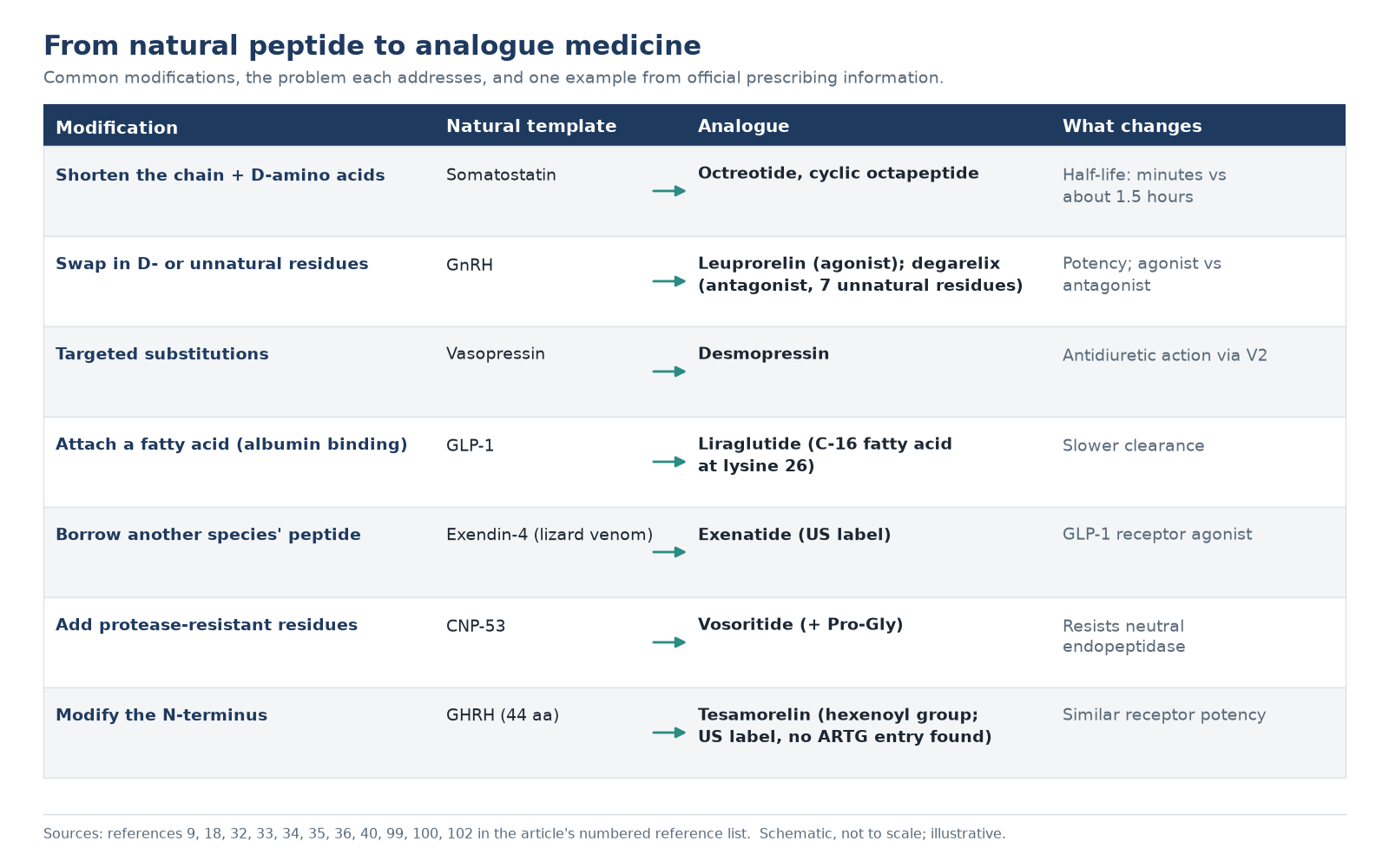
Shortening and cyclisation: somatostatin to octreotide
Somatostatin has a plasma half-life of only a few minutes. Octreotide, made by shortening the chain and replacing L-amino acids with D-amino acids, has a half-life of about 1.5 hours (Werle & Bernkop-Schnürch 2006). The US label describes octreotide as a cyclic octapeptide whose actions mimic somatostatin. It is a more potent inhibitor of growth hormone, glucagon and insulin than the natural hormone (Sandostatin US label). Somatostatin analogues are now an established option in the diagnosis and treatment of several pituitary and neuroendocrine conditions (Gomes-Porras et al. 2020).
D-amino acids and unnatural residues: GnRH analogues
Leuprolide (leuprorelin) is a synthetic nonapeptide analogue of GnRH. Its chemical name shows a D-leucine at position 6 and an N-ethylprolinamide at the C-terminus. Its label describes it as more potent than the natural hormone (Lupron Depot US label). Degarelix goes further: it is a decapeptide amide containing seven unnatural amino acids, five of them D-amino acids, and it blocks rather than activates the GnRH receptor (Firmagon US label). Icatibant, a bradykinin B2 receptor antagonist, is a decapeptide containing five non-proteinogenic amino acids (Firazyr US label).
Targeted substitutions: vasopressin to desmopressin
Desmopressin is 1-(3-mercaptopropionic acid)-8-D-arginine vasopressin. Two changes to the natural hormone produce an analogue whose antidiuretic action runs through V2 receptors (Desmopressin US label). Natural vasopressin, by contrast, acts on both V1 receptors, constricting blood vessels, and V2 receptors (Vasostrict US label).
Fatty-acid attachment and albumin binding: GLP-1 to liraglutide
Attaching a fatty acid lets a peptide bind reversibly to albumin, the most abundant blood protein, which slows its clearance. In 2000, researchers reported that fatty-acid derivatives of GLP-1 bound albumin and acted for longer than the natural peptide (Knudsen et al. 2000). Liraglutide is the clinical result. It has 97% sequence homology to native GLP-1, with arginine substituted at position 34 and a C-16 palmitic acid attached through a glutamic acid spacer at lysine 26 (Victoza US label). Ghrelin shows that nature uses lipid attachment too, since its octanoyl group is required for activity (Kojima et al. 1999).
Borrowing from other species: exendin-4 and salmon calcitonin
Some analogues come from other animals. Exendin-4, a 39-amino-acid peptide, was isolated from the venom of the Gila monster (Heloderma suspectum) (Eng et al. 1992). Its synthetic version, exenatide, is a GLP-1 receptor agonist in US use (Byetta US label). Salmon calcitonin is a 32-amino-acid peptide with the same sequence as calcitonin of salmon origin. Its label states that it is more potent per milligram than mammalian calcitonins and acts for longer (Miacalcin US label). Ziconotide, as noted above, is derived from a cone-snail toxin (Prialt US label).
Protease resistance by design: CNP to vosoritide
Vosoritide consists of the 37 C-terminal amino acids of human CNP-53 plus two extra residues (Pro-Gly) at the N-terminus. The label states that these confer resistance to degradation by neutral endopeptidase (Voxzogo US label).
Three families that people often search for
Three families of peptides are searched for often and are also widely misunderstood. In each, a natural peptide, an approved medicine and research analogues sit side by side. Comparing them shows why a shared name or receptor does not make molecules interchangeable. This section describes structure, origin and regulatory listing only. It does not describe or support any use. Table 5 summarises the comparison.
| Family | Natural peptide | Analogue with an ARTG entry | Research or other analogues | How each analogue appears in the Poisons Standard (October 2026) |
|---|---|---|---|---|
| Growth hormone-releasing hormone (GHRH) | GHRH(1-44) (Guillemin et al. 1982; Rivier et al. 1982) | None found | Sermorelin, GHRH(1-29) (Prakash & Goa 1999); tesamorelin, US label only (Egrifta WR US label); CJC-1295 (Jetté et al. 2005) | Sermorelin is named in Schedule 4. CJC-1295 and “growth hormone releasing hormones” are named in Appendix D, clause 5 (Poisons Standard October 2026) |
| Insulin-like growth factor 1 (IGF-1) | IGF-1 (70 amino acids) (Increlex US label) | Mecasermin (ARTG 308494) | Long R3 IGF-I (Francis et al. 1992) | Mecasermin and insulin-like growth factor I are named in Schedule 4. “Insulin-like growth factors” are named in Appendix D, clause 5 (Poisons Standard October 2026) |
| Melanocortins | α-MSH | Afamelanotide (ARTG 327947) | Melanotan I and melanotan II (Hadley & Dorr 2006) | Afamelanotide and melanotan II are named in Schedule 4. Melanotan II has no ARTG entry (TGA 2026d; Poisons Standard October 2026) |
Table 5. Natural peptides, approved analogues and research analogues in three families. The Poisons Standard column reports named entries only; whether a substance falls under a group entry is a legal question not answered here.
The GHRH family
Growth hormone-releasing hormone was characterised in 1982 from human pancreatic tumours. One team reported a 44-amino-acid peptide whose synthetic replicate had full biological activity (Guillemin et al. 1982), and a second team characterised the factor independently (Rivier et al. 1982). Sermorelin corresponds to the first 29 amino acids and is described as the shortest synthetic peptide with full GHRH activity (Prakash & Goa 1999). Tesamorelin keeps all 44 amino acids and adds a hexenoyl group at the N-terminal tyrosine. Its US label states that it binds human GRF receptors with similar potency to the natural hormone (Egrifta WR US label). CJC-1295 is a different design. It is a GHRH(1-29) analogue with four amino acid substitutions and a reactive maleimide group that binds covalently to albumin. In rats it was still detectable more than 72 hours after administration (Jetté et al. 2005). The GHRH receptor is distinct from the growth hormone secretagogue receptor, a separate GPCR that responds to ghrelin (Howard et al. 1996; Kojima et al. 1999). Our article on CJC-1295 hormone studies discusses what the published studies measured. Whether GHRH-family or IGF-1-family peptides change muscle mass or strength in people is appraised in peptides for muscle gain: a structured evidence review.
The IGF-1 family
Mecasermin is recombinant human IGF-1. It has 70 amino acids and three disulfide bridges, and its sequence is identical to the natural hormone (Increlex US label). It has an ARTG entry (ARTG 308494). Long R3 IGF-I is a research analogue developed at CSIRO in Adelaide. It replaces glutamic acid at position 3 with arginine and adds a 13-amino-acid N-terminal extension. Its developers attributed its higher potency in cell culture to reduced binding to IGF-binding proteins (Francis et al. 1992). Mecasermin is therefore an approved medicine with the natural sequence, whereas Long R3 IGF-I is a deliberately altered laboratory molecule. They should not be treated as the same substance.
The melanocortin family
Afamelanotide is a synthetic 13-amino-acid analogue of α-melanocyte-stimulating hormone (α-MSH) containing norleucine and D-phenylalanine. It binds mainly to the melanocortin 1 receptor and increases eumelanin in the skin (Scenesse US label). It was studied in randomised trials in erythropoietic protoporphyria, a rare light-sensitivity disorder (Langendonk et al. 2015), and it has an ARTG entry (ARTG 327947). Melanotan I is linear, whereas melanotan II is a cyclic, truncated α-MSH analogue (Hadley & Dorr 2006). In August 2026, the TGA stated that melanotan II is a prescription-only medicine in Australia and that no products containing it are in the ARTG. It reported that its laboratory testing of seized nasal sprays carrying the same labelled strength found widely varying amounts of the peptide (TGA 2026d).
Where peptides sit in Australian regulation
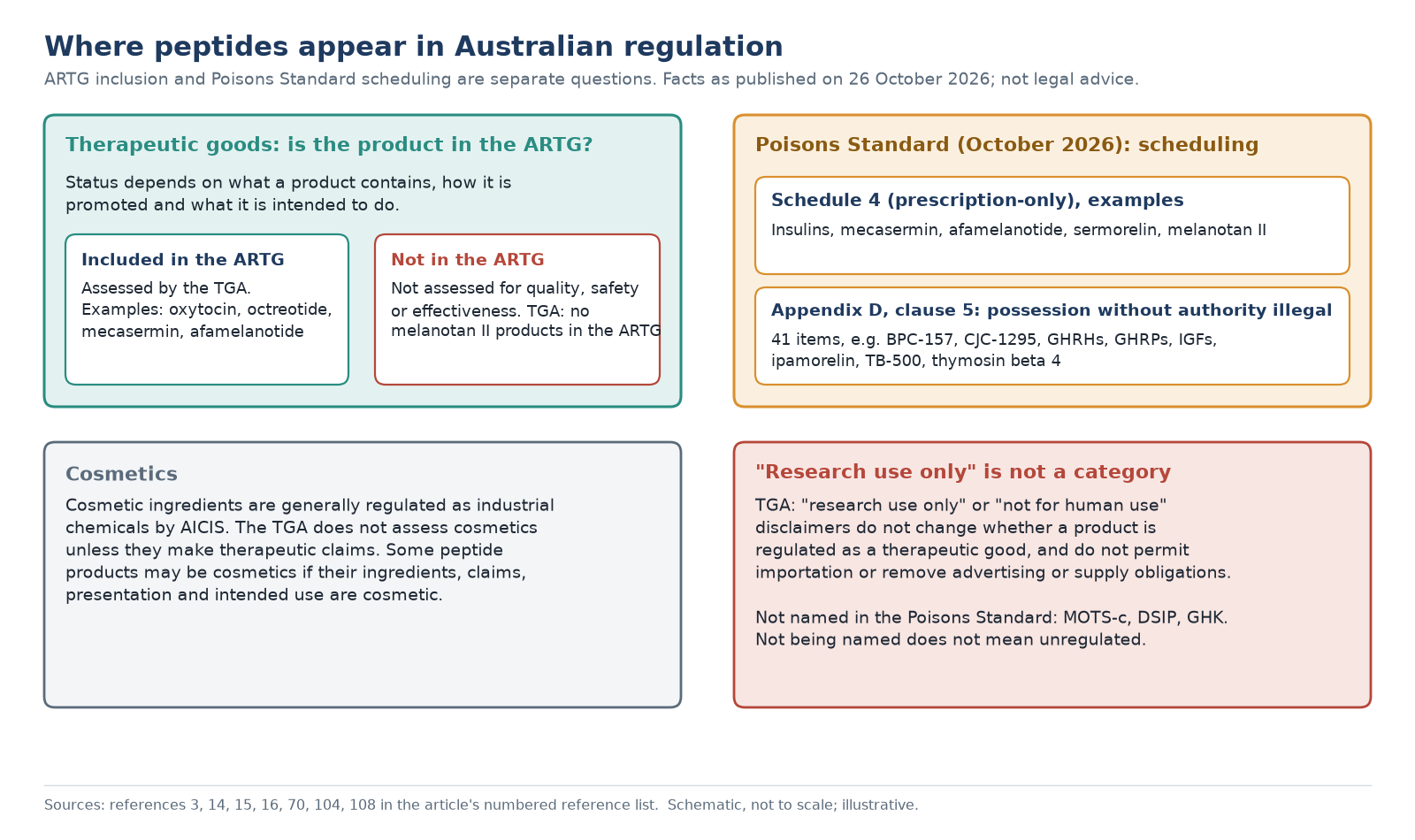
This section states published facts. It is not legal advice. Our synthetic peptides review covers the differences between approved and unapproved peptide products in more detail. Figure 4 summarises the categories.
Therapeutic goods and the ARTG
Under the Therapeutic Goods Act 1989, therapeutic goods are broadly products for use in humans in connection with preventing, diagnosing, curing or alleviating a disease, ailment, defect or injury, or influencing, inhibiting or modifying a physiological process (TGA 2024). The TGA states that how a peptide product is regulated “depends on what it contains, how it is promoted and what it is intended to do” (TGA 2026a). Peptide products regulated as therapeutic goods must be included in the ARTG before they can be imported, manufactured, supplied, exported or advertised, subject to limited exceptions (TGA n.d.). Products not in the ARTG are generally called “unapproved”. The TGA has not assessed them for quality, safety or effectiveness (TGA n.d.; TGA 2026b).
“Research use only” is not a regulatory category
The TGA states that disclaimers that a product is for “research use only” or “not for human use” do not change whether it is regulated as a therapeutic good, and that such disclaimers do not permit importation or remove advertising or supply obligations (TGA n.d.; TGA 2026b). A research-use label describes how a seller intends a product to be used. It does not decide its legal status. The TGA has also said it does not have oversight of the composition or manufacturing standards of unapproved peptide products, which are often supplied in poorly labelled or unmarked vials (TGA 2026c). The consequences for supply-chain documentation are discussed in peptides wholesale: supplier qualification, quality standards and Australian regulation.
The Poisons Standard
The Poisons Standard sets out how substances are scheduled. The current instrument, the Poisons Standard October 2026, was registered on 30 September 2026. Several peptides discussed in this review are named in it (Poisons Standard October 2026):
- Schedule 4 (prescription-only medicine) names, among others, sermorelin, melanotan II, mecasermin, afamelanotide, insulins and insulin-like growth factor I.
- Appendix D, clause 5, headed “Poisons for which possession without authority is illegal”, lists 41 items. Among them are AOD-9604, BPC-157, CJC-1295, growth hormone releasing hormones (stated to include those separately specified in Schedule 4), growth hormone releasing peptides, growth hormone secretagogues, hexarelin, ibutamoren, insulin-like growth factors, ipamorelin, pralmorelin (GHRP-2), somatropin, TB-500 and thymosin beta 4.
- Not named by those names: MOTS-c, DSIP and GHK (including GHK-Cu). Not being named does not mean a substance is unregulated. Group entries, the presentation of a product and the therapeutic goods framework can all still apply, as can other laws.
The detailed status of any substance in a particular state or territory, and whether a group entry captures a particular molecule, are legal questions for the relevant regulator or a qualified adviser.
What do peptides do? What the evidence can and cannot tell us
The research literature answers some questions about peptides much better than others.
Well established. How peptide hormones and neuropeptides are made, processed and recognised by receptors, and how approved analogues act at those receptors. Human physiology, decades of pharmacology and the clinical trials behind each approved medicine support these points (Russo 2017; Seidah & Prat 2012; Hauser et al. 2017; TGA n.d.).
Established in the laboratory, uncertain beyond it. Many peptides have effects in cell culture or animals that have not been confirmed in controlled human studies. The mitochondrial-derived peptides and thymosin β4 are examples where reviews themselves describe human relevance as unsettled or still under investigation (Merry et al. 2020; Goldstein et al. 2012). Host-defence peptides have well-characterised antimicrobial activity, but at the time of a major 2006 review, clinical efficacy had been shown only for topical applications (Hancock & Sahl 2006).
Unresolved. For a few peptides, even basic biology is uncertain. Nearly three decades after DSIP was isolated, a 2006 review reported that its gene, precursor protein and receptor had still not been identified (Kovalzon & Strekalova 2006).
What a shared name or receptor does not establish. An analogue that acts at the same receptor as an approved medicine is a different molecule. It has a different structure, a different time course and an evidence base that has to be judged on its own. Tesamorelin, sermorelin and CJC-1295 all act on the GHRH axis but differ in length, modification and duration of action (Egrifta WR US label; Prakash & Goa 1999; Jetté et al. 2005). The same applies to mecasermin and Long R3 IGF-I, and to afamelanotide and melanotan II (Increlex US label; Francis et al. 1992; Scenesse US label; Hadley & Dorr 2006).
For guidance on judging peptide research claims, see our article Peptide research explained: how to judge the evidence behind a claim.
Limitations of this review
- Not a systematic review. Sources were selected to explain mechanisms and classes. They were not identified through a pre-registered search, so the review may miss relevant work.
- ARTG snapshot. Tables 3 and 4 list one example entry per active, recorded on 26 October 2026. The ARTG changes daily, and entries can be added, varied or cancelled (TGA 2021). The absence of an entry from a keyword search is not conclusive.
- Mechanisms from US labels. Mechanism summaries come from US FDA prescribing information, accessed through DailyMed, because it is openly accessible and structured. Australian Product Information documents may word things differently.
- Reviews and abstracts. Several statements rely on review articles or published abstracts rather than independent re-analysis of primary data.
- Regulatory content is time-limited. The Poisons Standard and TGA guidance are amended regularly. The entries described here are those in the October 2026 instrument (Poisons Standard October 2026). This review is not legal advice.
- Scope. The review covers what peptides do and how they are used. It deliberately does not cover use in people or animals, and nothing in it should be read as describing such use.
What do peptides do in a laboratory setting? Relevance to Eternal Peptides Wholesale
This review answers the question “what do peptides do?” for physiology and medicine. Eternal Peptides Wholesale works at a narrower point: it distributes research peptides in wholesale boxes of 10 vials, for laboratory research use only and not for human consumption (see company background). The biological actions described above belong to endogenous peptides and to medicines assessed by regulators. They are not claims about research materials, and, as the regulation section explains, a “research use only” label does not change how a product is regulated.
What a laboratory can check for a research peptide is analytical. For that reason the site publishes a certificate of analysis library of batch-specific Janoshik Analytical reports, and its peptide testing standards page explains why purity and vial content, sterility screening, endotoxin and heavy-metal results are read separately. How synthetic peptides are made and verified is covered in Synthetic peptides: manufacture, impurities and analytical verification, and further evidence reviews are listed on the Eternal Peptides Wholesale blog.
Glossary
- Agonist
- A molecule that binds a receptor and activates it.
- Albumin binding
- Reversible or covalent attachment of a peptide to serum albumin, used to slow clearance (for example, by fatty-acid acylation).
- Analogue
- A modified version of a natural peptide, with changed amino acids, length, cyclisation or attached groups.
- Antagonist
- A molecule that binds a receptor and blocks activation by the natural ligand.
- ARTG
- Australian Register of Therapeutic Goods. The TGA’s register of therapeutic goods that can be supplied in Australia.
- cGMP
- Cyclic guanosine monophosphate. A second messenger made by guanylyl cyclase receptors.
- Cyclisation
- Joining parts of a peptide chain into a ring, often through a disulfide bond, to improve stability or receptor fit.
- D-amino acid
- The mirror-image form of an amino acid. It is rarely found in natural human peptides and resists many peptidases.
- GPCR
- G protein-coupled receptor. A seven-transmembrane receptor that signals through G proteins.
- Host-defence peptide
- A peptide of the innate immune system, often antimicrobial. Also called an antimicrobial peptide.
- Neuropeptide
- A peptide released by neurons that modulates other neurons or target tissues.
- Poisons Standard
- The national instrument that schedules medicines and poisons in Australia. Its formal name is the Standard for the Uniform Scheduling of Medicines and Poisons.
- Proprotein convertase
- An enzyme that cuts precursor proteins to release active peptides.
- Receptor tyrosine kinase
- A receptor whose intracellular part is a kinase enzyme that phosphorylates tyrosine residues.
- Schedule 4
- The Poisons Standard schedule for prescription-only medicines.
Frequently asked questions
What do peptides do in the body?
Most natural peptides act as chemical messengers. A cell releases the peptide, and it binds receptors on the same or other cells, changing their activity. Peptide hormones such as insulin, oxytocin and glucagon, and neuropeptides such as the enkephalins, work this way. A few peptides act directly on microbes, ion channels or enzymes instead.
What are peptides used for?
Peptides are used as prescription medicines, as diagnostic agents, in radiopharmaceuticals that target tumour receptors, as vaccine and immunology tools, as cosmetic ingredients and as laboratory reagents. Medicines are the largest and best-documented use, with more than 80 peptide drugs marketed worldwide since insulin.
How do peptides work on cells?
A peptide binds a specific receptor. G protein-coupled receptors change second messengers such as cAMP or calcium. Receptor tyrosine kinases, used by insulin and IGF-1, phosphorylate signalling proteins. Guanylyl cyclase receptors, used by natriuretic peptides, make cGMP. The receptor, not the peptide alone, determines the cellular response.
What is the difference between a peptide and a protein?
Both are chains of amino acids joined by peptide bonds. Peptides are short chains, often given as about 2 to 50 amino acids, while proteins are longer and made from one or more polypeptides. There is no single universal cut-off, and regulators and textbooks draw the line in different places.
Which peptide medicines are approved in Australia?
The TGA does not publish a single list. Its guidance names examples such as insulin and its analogues, oxytocin, desmopressin and octreotide. Searching the ARTG by active ingredient shows entries for many others, including leuprorelin, teriparatide, calcitonin, mecasermin, afamelanotide, vosoritide, bivalirudin and daptomycin. An ARTG entry does not mean a product is suitable for any individual.
Why are most peptide medicines analogues rather than natural peptides?
Natural peptides are cleared quickly by the kidney and broken down by enzymes; somatostatin lasts only minutes in plasma. Developers shorten chains, add D-amino acids, cyclise peptides or attach fatty acids that bind albumin, as in octreotide, leuprorelin and liraglutide, to make them more stable or longer acting.
Does a “research use only” label change how a peptide is regulated in Australia?
No. The TGA states that “research use only” or “not for human use” disclaimers do not change whether a product is regulated as a therapeutic good. They also do not permit importation or remove advertising or supply obligations. Whether a product is a therapeutic good depends on what it contains, how it is promoted and its intended purpose.
Are peptides in skin care regulated the same way as peptide medicines?
Not usually. Cosmetic ingredients in Australia are generally regulated as industrial chemicals by AICIS, and the TGA does not assess cosmetics unless they make therapeutic claims. A peptide product presented or promoted for a therapeutic purpose can be regulated as a therapeutic good regardless of its format.
References
- Russo AF. Overview of neuropeptides: awakening the senses? Headache. 2017;57 Suppl 2:37-46. doi:10.1111/head.13084 PMID: 28485842. Available at: https://doi.org/10.1111/head.13084. Accessed 26 October 2026.
- Seidah NG, Prat A. The biology and therapeutic targeting of the proprotein convertases. Nat Rev Drug Discov. 2012;11(5):367-83. doi:10.1038/nrd3699 PMID: 22679642. Available at: https://doi.org/10.1038/nrd3699. Accessed 26 October 2026.
- Therapeutic Goods Administration. Peptide products (explore topic). Last updated 23 September 2026. Available at: https://www.tga.gov.au/resources/explore-topic/peptide-products. Accessed 26 October 2026.
- Hauser AS, Attwood MM, Rask-Andersen M, Schiöth HB, Gloriam DE. Trends in GPCR drug discovery: new agents, targets and indications. Nat Rev Drug Discov. 2017;16(12):829-842. doi:10.1038/nrd.2017.178 PMID: 29075003. Available at: https://doi.org/10.1038/nrd.2017.178. Accessed 26 October 2026.
- Hubbard SR. The insulin receptor: both a prototypical and atypical receptor tyrosine kinase. Cold Spring Harb Perspect Biol. 2013;5(3):a008946. doi:10.1101/cshperspect.a008946 PMID: 23457259. Available at: https://doi.org/10.1101/cshperspect.a008946. Accessed 26 October 2026.
- Potter LR, Yoder AR, Flora DR, Antos LK, Dickey DM. Natriuretic peptides: their structures, receptors, physiologic functions and therapeutic applications. Handb Exp Pharmacol. 2009;(191):341-66. doi:10.1007/978-3-540-68964-5_15 PMID: 19089336. Available at: https://doi.org/10.1007/978-3-540-68964-5_15. Accessed 26 October 2026.
- Zasloff M. Antimicrobial peptides of multicellular organisms. Nature. 2002;415(6870):389-95. doi:10.1038/415389a PMID: 11807545. Available at: https://doi.org/10.1038/415389a. Accessed 26 October 2026.
- Muttenthaler M, King GF, Adams DJ, Alewood PF. Trends in peptide drug discovery. Nat Rev Drug Discov. 2021;20(4):309-325. doi:10.1038/s41573-020-00135-8 PMID: 33536635. Available at: https://doi.org/10.1038/s41573-020-00135-8. Accessed 26 October 2026.
- Werle M, Bernkop-Schnürch A. Strategies to improve plasma half life time of peptide and protein drugs. Amino Acids. 2006;30(4):351-67. doi:10.1007/s00726-005-0289-3 PMID: 16622600. Available at: https://doi.org/10.1007/s00726-005-0289-3. Accessed 26 October 2026.
- Lau JL, Dunn MK. Therapeutic peptides: Historical perspectives, current development trends, and future directions. Bioorg Med Chem. 2018;26(10):2700-2707. doi:10.1016/j.bmc.2017.06.052 PMID: 28720325. Available at: https://doi.org/10.1016/j.bmc.2017.06.052. Accessed 26 October 2026.
- Hennrich U, Kopka K. Lutathera: the first FDA- and EMA-approved radiopharmaceutical for peptide receptor radionuclide therapy. Pharmaceuticals (Basel). 2019;12(3):114. doi:10.3390/ph12030114 PMID: 31362406. Available at: https://doi.org/10.3390/ph12030114. Accessed 26 October 2026.
- Purcell AW, McCluskey J, Rossjohn J. More than one reason to rethink the use of peptides in vaccine design. Nat Rev Drug Discov. 2007;6(5):404-14. doi:10.1038/nrd2224 PMID: 17473845. Available at: https://doi.org/10.1038/nrd2224. Accessed 26 October 2026.
- Gorouhi F, Maibach HI. Role of topical peptides in preventing or treating aged skin. Int J Cosmet Sci. 2009;31(5):327-45. doi:10.1111/j.1468-2494.2009.00490.x PMID: 19570099. Available at: https://doi.org/10.1111/j.1468-2494.2009.00490.x. Accessed 26 October 2026.
- Therapeutic Goods Administration. Searching the Australian Register of Therapeutic Goods (ARTG). Last updated 22 June 2021. Available at: https://www.tga.gov.au/products/regulations-all-products/about-australian-register-therapeutic-goods-artg/searching-australian-register-therapeutic-goods-artg. Accessed 26 October 2026.
- Therapeutic Goods Administration. Melanotan II tanning peptide products found to be inconsistently dosed. Safety advisory, 17 August 2026. Available at: https://www.tga.gov.au/safety/safety-monitoring-and-information/safety-alerts/melanotan-ii-tanning-peptide-products-found-be-inconsistently-dosed. Accessed 26 October 2026.
- Therapeutic Goods Administration. How we regulate therapeutic peptide products. (No page date displayed.) Available at: https://www.tga.gov.au/products/medicines/monitoring-and-compliance/how-we-regulate-therapeutic-peptide-products. Accessed 26 October 2026.
- healthdirect Australia. Peptides and your health in Australia: facts versus hype. Blog post, 20 October 2026. Available at: https://www.healthdirect.gov.au/blog/peptides-and-your-health-in-australia-facts-versus-hype. Accessed 26 October 2026.
- Knudsen LB, Nielsen PF, Huusfeldt PO, Johansen NL, Madsen K, Pedersen FZ, et al. Potent derivatives of glucagon-like peptide-1 with pharmacokinetic properties suitable for once daily administration. J Med Chem. 2000;43(9):1664-9. doi:10.1021/jm9909645 PMID: 10794683. Available at: https://doi.org/10.1021/jm9909645. Accessed 26 October 2026.
- National Human Genome Research Institute. Peptide. Talking Glossary of Genomic and Genetic Terms. Updated 25 October 2026. Available at: https://www.genome.gov/genetics-glossary/Peptide. Accessed 26 October 2026.
- Rosenfeld L. Insulin: discovery and controversy. Clin Chem. 2002;48(12):2270-88. PMID: 12446492. Available at: https://pubmed.ncbi.nlm.nih.gov/12446492/. Accessed 26 October 2026.
- Ryle AP, Sanger F, Smith LF, Kitai R. The disulphide bonds of insulin. Biochem J. 1955;60(4):541-56. doi:10.1042/bj0600541 PMID: 13249947. Available at: https://doi.org/10.1042/bj0600541. Accessed 26 October 2026.
- du Vigneaud V, Ressler C, Swan JM, et al. The synthesis of an octapeptide amide with the hormonal activity of oxytocin. J Am Chem Soc. 1953;75(19):4879-4880. doi:10.1021/ja01115a553 Available at: https://doi.org/10.1021/ja01115a553. Accessed 26 October 2026.
- Hughes J, Smith TW, Kosterlitz HW, Fothergill LA, Morgan BA, Morris HR. Identification of two related pentapeptides from the brain with potent opiate agonist activity. Nature. 1975;258(5536):577-80. doi:10.1038/258577a0 PMID: 1207728. Available at: https://doi.org/10.1038/258577a0. Accessed 26 October 2026.
- Kojima M, Hosoda H, Date Y, Nakazato M, Matsuo H, Kangawa K. Ghrelin is a growth-hormone-releasing acylated peptide from stomach. Nature. 1999;402(6762):656-60. doi:10.1038/45230 PMID: 10604470. Available at: https://doi.org/10.1038/45230. Accessed 26 October 2026.
- Drucker DJ. Mechanisms of Action and Therapeutic Application of Glucagon-like Peptide-1. Cell Metab. 2018;27(4):740-756. doi:10.1016/j.cmet.2018.03.001 PMID: 29617641. Available at: https://doi.org/10.1016/j.cmet.2018.03.001. Accessed 26 October 2026.
- Fosgerau K, Hoffmann T. Peptide therapeutics: current status and future directions. Drug Discov Today. 2015;20(1):122-8. doi:10.1016/j.drudis.2014.10.003 PMID: 25450771. Available at: https://doi.org/10.1016/j.drudis.2014.10.003. Accessed 26 October 2026.
- Wang L, Wang N, Zhang W, Cheng X, Yan Z, Shao G, et al. Therapeutic peptides: current applications and future directions. Signal Transduct Target Ther. 2022;7(1):48. doi:10.1038/s41392-022-00904-4 PMID: 35165272. Available at: https://doi.org/10.1038/s41392-022-00904-4. Accessed 26 October 2026.
- Davenport AP, Scully CCG, de Graaf C, Brown AJH, Maguire JJ. Advances in therapeutic peptides targeting G protein-coupled receptors. Nat Rev Drug Discov. 2020;19(6):389-413. doi:10.1038/s41573-020-0062-z PMID: 32494050. Available at: https://doi.org/10.1038/s41573-020-0062-z. Accessed 26 October 2026.
- Gimpl G, Fahrenholz F. The oxytocin receptor system: structure, function, and regulation. Physiol Rev. 2001;81(2):629-83. doi:10.1152/physrev.2001.81.2.629 PMID: 11274341. Available at: https://doi.org/10.1152/physrev.2001.81.2.629. Accessed 26 October 2026.
- Howard AD, Feighner SD, Cully DF, Arena JP, Liberator PA, Rosenblum CI, et al. A receptor in pituitary and hypothalamus that functions in growth hormone release. Science. 1996;273(5277):974-7. doi:10.1126/science.273.5277.974 PMID: 8688086. Available at: https://doi.org/10.1126/science.273.5277.974. Accessed 26 October 2026.
- US Food and Drug Administration-approved prescribing information. PITOCIN (oxytocin) injection. DailyMed (US National Library of Medicine), set ID 6e5a66fc-e507-497c-b5ce-44a8c95898ad, label version published May 21, 2026. Available at: https://dailymed.nlm.nih.gov/dailymed/drugInfo.cfm?setid=6e5a66fc-e507-497c-b5ce-44a8c95898ad. Accessed 26 October 2026.
- US Food and Drug Administration-approved prescribing information. Desmopressin acetate injection (Sun Pharmaceutical). DailyMed (US National Library of Medicine), set ID 539d7da2-72b8-45f9-836c-4e3351dd488e, label version published Oct 19, 2026. Available at: https://dailymed.nlm.nih.gov/dailymed/drugInfo.cfm?setid=539d7da2-72b8-45f9-836c-4e3351dd488e. Accessed 26 October 2026.
- US Food and Drug Administration-approved prescribing information. SANDOSTATIN (octreotide acetate) injection. DailyMed (US National Library of Medicine), set ID 4e2c9856-1836-49f0-9472-4dbeeb408f39, label version published Jul 24, 2026. Available at: https://dailymed.nlm.nih.gov/dailymed/drugInfo.cfm?setid=4e2c9856-1836-49f0-9472-4dbeeb408f39. Accessed 26 October 2026.
- US Food and Drug Administration-approved prescribing information. LUPRON DEPOT (leuprolide acetate). DailyMed (US National Library of Medicine), set ID cbc8f94e-7330-4465-05ad-16d64493a5dd, label version published Jun 18, 2026. Available at: https://dailymed.nlm.nih.gov/dailymed/drugInfo.cfm?setid=cbc8f94e-7330-4465-05ad-16d64493a5dd. Accessed 26 October 2026.
- US Food and Drug Administration-approved prescribing information. FIRMAGON (degarelix) for injection. DailyMed (US National Library of Medicine), set ID ab11dd8a-0fd9-4013-89ab-e114557c7e4b, label version published Feb 01, 2024. Available at: https://dailymed.nlm.nih.gov/dailymed/drugInfo.cfm?setid=ab11dd8a-0fd9-4013-89ab-e114557c7e4b. Accessed 26 October 2026.
- US Food and Drug Administration-approved prescribing information. VICTOZA (liraglutide) injection. DailyMed (US National Library of Medicine), set ID 5a9ef4ea-c76a-4d34-a604-27c5b505f5a4, label version published Nov 17, 2025. Available at: https://dailymed.nlm.nih.gov/dailymed/drugInfo.cfm?setid=5a9ef4ea-c76a-4d34-a604-27c5b505f5a4. Accessed 26 October 2026.
- US Food and Drug Administration-approved prescribing information. FIRAZYR (icatibant) injection. DailyMed (US National Library of Medicine), set ID ed6657ca-ab68-477a-9968-e12dc928b540, label version published Jul 17, 2025. Available at: https://dailymed.nlm.nih.gov/dailymed/drugInfo.cfm?setid=ed6657ca-ab68-477a-9968-e12dc928b540. Accessed 26 October 2026.
- US Food and Drug Administration-approved prescribing information. LANTUS (insulin glargine) injection. DailyMed (US National Library of Medicine), set ID d5e07a0c-7e14-4756-9152-9fea485d654a, label version published Jul 02, 2025. Available at: https://dailymed.nlm.nih.gov/dailymed/drugInfo.cfm?setid=d5e07a0c-7e14-4756-9152-9fea485d654a. Accessed 26 October 2026.
- US Food and Drug Administration-approved prescribing information. INCRELEX (mecasermin) injection. DailyMed (US National Library of Medicine), set ID d5b2b0e1-c523-468d-9a0b-4ae4e4a8dbce, label version published May 20, 2026. Available at: https://dailymed.nlm.nih.gov/dailymed/drugInfo.cfm?setid=d5b2b0e1-c523-468d-9a0b-4ae4e4a8dbce. Accessed 26 October 2026.
- US Food and Drug Administration-approved prescribing information. VOXZOGO (vosoritide) for injection. DailyMed (US National Library of Medicine), set ID 228e8560-04a4-4bb1-a81f-29531a9e4d27, label version published Nov 26, 2025. Available at: https://dailymed.nlm.nih.gov/dailymed/drugInfo.cfm?setid=228e8560-04a4-4bb1-a81f-29531a9e4d27. Accessed 26 October 2026.
- US Food and Drug Administration-approved prescribing information. LINZESS (linaclotide) capsules. DailyMed (US National Library of Medicine), set ID 09beda19-56d6-4a56-afdc-9a77b70b2ef3, label version published Oct 19, 2026. Available at: https://dailymed.nlm.nih.gov/dailymed/drugInfo.cfm?setid=09beda19-56d6-4a56-afdc-9a77b70b2ef3. Accessed 26 October 2026.
- Miljanich GP. Ziconotide: neuronal calcium channel blocker for treating severe chronic pain. Curr Med Chem. 2004;11(23):3029-40. doi:10.2174/0929867043363884 PMID: 15578997. Available at: https://doi.org/10.2174/0929867043363884. Accessed 26 October 2026.
- US Food and Drug Administration-approved prescribing information. PRIALT (ziconotide) intrathecal infusion. DailyMed (US National Library of Medicine), set ID 57376a5b-4530-9018-e063-6394a90a9afe, label version published Sep 30, 2026. Available at: https://dailymed.nlm.nih.gov/dailymed/drugInfo.cfm?setid=57376a5b-4530-9018-e063-6394a90a9afe. Accessed 26 October 2026.
- US Food and Drug Administration-approved prescribing information. Bivalirudin for injection (Avenacy). DailyMed (US National Library of Medicine), set ID 42aa2630-83d6-433d-8277-0f672cf8d71d, label version published Aug 31, 2026. Available at: https://dailymed.nlm.nih.gov/dailymed/drugInfo.cfm?setid=42aa2630-83d6-433d-8277-0f672cf8d71d. Accessed 26 October 2026.
- US Food and Drug Administration-approved prescribing information. Eptifibatide injection (Avenacy). DailyMed (US National Library of Medicine), set ID c0781dae-3ef6-4cab-b084-01d2e45f3764, label version published Oct 06, 2026. Available at: https://dailymed.nlm.nih.gov/dailymed/drugInfo.cfm?setid=c0781dae-3ef6-4cab-b084-01d2e45f3764. Accessed 26 October 2026.
- US Food and Drug Administration-approved prescribing information. VELCADE (bortezomib) for injection. DailyMed (US National Library of Medicine), set ID 1521d321-e724-4ffc-adad-34bf4f44fac7, label version published Sep 01, 2025. Available at: https://dailymed.nlm.nih.gov/dailymed/drugInfo.cfm?setid=1521d321-e724-4ffc-adad-34bf4f44fac7. Accessed 26 October 2026.
- US Food and Drug Administration-approved prescribing information. ZILBRYSQ (zilucoplan) injection. DailyMed (US National Library of Medicine), set ID 9f1d53d6-e495-4a3a-8bb9-680a15d25034, label version published Feb 05, 2026. Available at: https://dailymed.nlm.nih.gov/dailymed/drugInfo.cfm?setid=9f1d53d6-e495-4a3a-8bb9-680a15d25034. Accessed 26 October 2026.
- Hancock RE, Sahl HG. Antimicrobial and host-defense peptides as new anti-infective therapeutic strategies. Nat Biotechnol. 2006;24(12):1551-7. doi:10.1038/nbt1267 PMID: 17160061. Available at: https://doi.org/10.1038/nbt1267. Accessed 26 October 2026.
- US Food and Drug Administration-approved prescribing information. CUBICIN RF (daptomycin) for injection. DailyMed (US National Library of Medicine), set ID 0b1a8885-2198-4a0e-8105-0c76c1cba6c2, label version published Jun 20, 2025. Available at: https://dailymed.nlm.nih.gov/dailymed/drugInfo.cfm?setid=0b1a8885-2198-4a0e-8105-0c76c1cba6c2. Accessed 26 October 2026.
- US Food and Drug Administration-approved prescribing information. COLY-MYCIN M (colistimethate) for injection. DailyMed (US National Library of Medicine), set ID 6d6e13e2-dc33-4b7b-84d0-66146a57c552, label version published Jun 22, 2026. Available at: https://dailymed.nlm.nih.gov/dailymed/drugInfo.cfm?setid=6d6e13e2-dc33-4b7b-84d0-66146a57c552. Accessed 26 October 2026.
- US Food and Drug Administration-approved prescribing information. VASOSTRICT (vasopressin) injection. DailyMed (US National Library of Medicine), set ID b1147beb-743e-4c62-8927-91192447f8b8, label version published May 20, 2026. Available at: https://dailymed.nlm.nih.gov/dailymed/drugInfo.cfm?setid=b1147beb-743e-4c62-8927-91192447f8b8. Accessed 26 October 2026.
- Poirel L, Jayol A, Nordmann P. Polymyxins: Antibacterial Activity, Susceptibility Testing, and Resistance Mechanisms Encoded by Plasmids or Chromosomes. Clin Microbiol Rev. 2017;30(2):557-596. doi:10.1128/CMR.00064-16 PMID: 28275006. Available at: https://doi.org/10.1128/CMR.00064-16. Accessed 26 October 2026.
- Gray DA, Wenzel M. More Than a Pore: A Current Perspective on the In Vivo Mode of Action of the Lipopeptide Antibiotic Daptomycin. Antibiotics (Basel). 2020;9(1):. doi:10.3390/antibiotics9010017 PMID: 31947747. Available at: https://doi.org/10.3390/antibiotics9010017. Accessed 26 October 2026.
- US Food and Drug Administration-approved prescribing information. Glucagon for Injection (glucagon) kit, Healthfirst. DailyMed (US National Library of Medicine), set ID 789ab694-3ad8-a122-e053-2991aa0a9ab3, label version published Dec 12, 2022. Available at: https://dailymed.nlm.nih.gov/dailymed/drugInfo.cfm?setid=789ab694-3ad8-a122-e053-2991aa0a9ab3. Accessed 26 October 2026.
- US Food and Drug Administration-approved prescribing information. FORTEO (teriparatide) injection. DailyMed (US National Library of Medicine), set ID aae667c5-381f-4f92-93df-2ed6158d07b0, label version published Aug 19, 2026. Available at: https://dailymed.nlm.nih.gov/dailymed/drugInfo.cfm?setid=aae667c5-381f-4f92-93df-2ed6158d07b0. Accessed 26 October 2026.
- Belchetz PE, Plant TM, Nakai Y, Keogh EJ, Knobil E. Hypophysial responses to continuous and intermittent delivery of hypopthalamic gonadotropin-releasing hormone. Science. 1978;202(4368):631-3. doi:10.1126/science.100883 PMID: 100883. Available at: https://doi.org/10.1126/science.100883. Accessed 26 October 2026.
- Guillemin R, Brazeau P, Böhlen P, Esch F, Ling N, Wehrenberg WB. Growth hormone-releasing factor from a human pancreatic tumor that caused acromegaly. Science. 1982;218(4572):585-7. doi:10.1126/science.6812220 PMID: 6812220. Available at: https://doi.org/10.1126/science.6812220. Accessed 26 October 2026.
- US Food and Drug Administration-approved prescribing information. GATTEX (teduglutide) for injection. DailyMed (US National Library of Medicine), set ID 66b69c1e-b25c-44d3-b5ff-1c1de9a516fa, label version published Sep 18, 2025. Available at: https://dailymed.nlm.nih.gov/dailymed/drugInfo.cfm?setid=66b69c1e-b25c-44d3-b5ff-1c1de9a516fa. Accessed 26 October 2026.
- Francis GL, Ross M, Ballard FJ, Milner SJ, Senn C, McNeil KA, et al. Novel recombinant fusion protein analogues of insulin-like growth factor (IGF)-I indicate the relative importance of IGF-binding protein and receptor binding for enhanced biological potency. J Mol Endocrinol. 1992;8(3):213-23. doi:10.1677/jme.0.0080213 PMID: 1378742. Available at: https://doi.org/10.1677/jme.0.0080213. Accessed 26 October 2026.
- Pickart L, Margolina A. Regenerative and protective actions of the GHK-Cu peptide in the light of the new gene data. Int J Mol Sci. 2018;19(7):1987. doi:10.3390/ijms19071987 PMID: 29986520. Available at: https://doi.org/10.3390/ijms19071987. Accessed 26 October 2026.
- Pickart L, Thaler MM. Tripeptide in human serum which prolongs survival of normal liver cells and stimulates growth in neoplastic liver. Nat New Biol. 1973;243(124):85-7. PMID: 4349963. Available at: https://pubmed.ncbi.nlm.nih.gov/4349963/. Accessed 26 October 2026.
- Merry TL, Chan A, Woodhead JST, Reynolds JC, Kumagai H, Kim SJ, et al. Mitochondrial-derived peptides in energy metabolism. Am J Physiol Endocrinol Metab. 2020;319(4):E659-E666. doi:10.1152/ajpendo.00249.2020 PMID: 32776825. Available at: https://doi.org/10.1152/ajpendo.00249.2020. Accessed 26 October 2026.
- Hashimoto Y, Niikura T, Tajima H, Yasukawa T, Sudo H, Ito Y, et al. A rescue factor abolishing neuronal cell death by a wide spectrum of familial Alzheimer’s disease genes and Abeta. Proc Natl Acad Sci U S A. 2001;98(11):6336-41. doi:10.1073/pnas.101133498 PMID: 11371646. Available at: https://doi.org/10.1073/pnas.101133498. Accessed 26 October 2026.
- Kovalzon VM, Strekalova TV. Delta sleep-inducing peptide (DSIP): a still unresolved riddle. J Neurochem. 2006;97(2):303-9. doi:10.1111/j.1471-4159.2006.03693.x PMID: 16539679. Available at: https://doi.org/10.1111/j.1471-4159.2006.03693.x. Accessed 26 October 2026.
- Goldstein AL, Hannappel E, Sosne G, Kleinman HK. Thymosin β4: a multi-functional regenerative peptide. Basic properties and clinical applications. Expert Opin Biol Ther. 2012;12(1):37-51. doi:10.1517/14712598.2012.634793 PMID: 22074294. Available at: https://doi.org/10.1517/14712598.2012.634793. Accessed 26 October 2026.
- Drucker DJ. Advances in oral peptide therapeutics. Nat Rev Drug Discov. 2020;19(4):277-289. doi:10.1038/s41573-019-0053-0 PMID: 31848464. Available at: https://doi.org/10.1038/s41573-019-0053-0. Accessed 26 October 2026.
- Prakash A, Goa KL. Sermorelin: a review of its use in the diagnosis and treatment of children with idiopathic growth hormone deficiency. BioDrugs. 1999;12(2):139-57. doi:10.2165/00063030-199912020-00007 PMID: 18031173. Available at: https://doi.org/10.2165/00063030-199912020-00007. Accessed 26 October 2026.
- US Food and Drug Administration-approved prescribing information. LUTATHERA (lutetium Lu 177 dotatate) injection. DailyMed (US National Library of Medicine), set ID 72d1a024-00b7-418a-b36e-b2cb48f2ab55, label version published Jan 16, 2026. Available at: https://dailymed.nlm.nih.gov/dailymed/drugInfo.cfm?setid=72d1a024-00b7-418a-b36e-b2cb48f2ab55. Accessed 26 October 2026.
- Therapeutic Goods Administration. Australian Register of Therapeutic Goods entry 455452: LUTATHERA (lutetium (177Lu) oxodotreotide). Sponsor: Novartis Pharmaceuticals Australia Pty Ltd. ARTG date 17 November 2025. Available at: https://www.tga.gov.au/resources/artg/455452. Accessed 26 October 2026.
- Therapeutic Goods Administration. Cosmetics (explore topic). Last updated 17 May 2021. Available at: https://www.tga.gov.au/resources/explore-topic/cosmetics. Accessed 26 October 2026.
- Therapeutic Goods Administration. Australian Register of Therapeutic Goods entry 215551: BASAGLAR (insulin glargine). Sponsor: Eli Lilly Australia Pty Ltd. ARTG date 21 November 2014. Available at: https://www.tga.gov.au/resources/artg/215551. Accessed 26 October 2026.
- Therapeutic Goods Administration. Australian Register of Therapeutic Goods entry 308494: INCRELEX (mecasermin). Sponsor: Asteri Pharma Pty Ltd. ARTG date 22 November 2019. Available at: https://www.tga.gov.au/resources/artg/308494. Accessed 26 October 2026.
- Therapeutic Goods Administration. Australian Register of Therapeutic Goods entry 47105: GLUCAGEN HYPOKIT (glucagon). Sponsor: Novo Nordisk Pharmaceuticals Pty Ltd. ARTG date 28 February 1994. Available at: https://www.tga.gov.au/resources/artg/47105. Accessed 26 October 2026.
- Therapeutic Goods Administration. Australian Register of Therapeutic Goods entry 425471: SYNTOCINON (oxytocin). Sponsor: Arrotex Pharmaceuticals Pty Ltd. ARTG date 16 February 2024. Available at: https://www.tga.gov.au/resources/artg/425471. Accessed 26 October 2026.
- Therapeutic Goods Administration. Australian Register of Therapeutic Goods entry 286437: PITRESSIN (argipressin). Sponsor: Link Medical Products Pty Ltd T/A Link Pharmaceuticals. ARTG date 9 June 2017. Available at: https://www.tga.gov.au/resources/artg/286437. Accessed 26 October 2026.
- Therapeutic Goods Administration. Australian Register of Therapeutic Goods entry 446930: Desmopressin Medicianz (desmopressin acetate). Sponsor: Medsurge Pharma Pty Ltd. ARTG date 27 August 2025. Available at: https://www.tga.gov.au/resources/artg/446930. Accessed 26 October 2026.
- Therapeutic Goods Administration. Australian Register of Therapeutic Goods entry 381260: DBL Octreotide Injection (octreotide). Sponsor: Pfizer Australia Pty Ltd. ARTG date 22 December 2021. Available at: https://www.tga.gov.au/resources/artg/381260. Accessed 26 October 2026.
- Therapeutic Goods Administration. Australian Register of Therapeutic Goods entry 302572: LERIN (leuprorelin acetate). Sponsor: Sandoz Pty Ltd. ARTG date 31 July 2019. Available at: https://www.tga.gov.au/resources/artg/302572. Accessed 26 October 2026.
- Therapeutic Goods Administration. Australian Register of Therapeutic Goods entry 200047: FIRMAGON (degarelix). Sponsor: Ferring Pharmaceuticals Pty Ltd. ARTG date 31 October 2012. Available at: https://www.tga.gov.au/resources/artg/200047. Accessed 26 October 2026.
- Therapeutic Goods Administration. Australian Register of Therapeutic Goods entry 407484: SONDELBAY (teriparatide). Sponsor: Accord Healthcare Pty Ltd. ARTG date 1 October 2025. Available at: https://www.tga.gov.au/resources/artg/407484. Accessed 26 October 2026.
- US Food and Drug Administration-approved prescribing information. MIACALCIN (calcitonin salmon) injection. DailyMed (US National Library of Medicine), set ID 26caf31f-7f7c-48a8-a1ac-35d2ceefda2b, label version published Jun 19, 2026. Available at: https://dailymed.nlm.nih.gov/dailymed/drugInfo.cfm?setid=26caf31f-7f7c-48a8-a1ac-35d2ceefda2b. Accessed 26 October 2026.
- Therapeutic Goods Administration. Australian Register of Therapeutic Goods entry 13363: MIACALCIC (calcitonin salmon). Sponsor: Chiesi Australia Pty Ltd. ARTG date 21 August 1991. Available at: https://www.tga.gov.au/resources/artg/13363. Accessed 26 October 2026.
- Therapeutic Goods Administration. Australian Register of Therapeutic Goods entry 462668: Liraglutide Lupin (liraglutide). Sponsor: Taevas Life Sciences Pty Ltd. ARTG date 3 February 2026. Available at: https://www.tga.gov.au/resources/artg/462668. Accessed 26 October 2026.
- Therapeutic Goods Administration. Australian Register of Therapeutic Goods entry 481566: Cipla Teduglutide (teduglutide). Sponsor: Cipla Australia Pty Ltd. ARTG date 22 June 2026. Available at: https://www.tga.gov.au/resources/artg/481566. Accessed 26 October 2026.
- US Food and Drug Administration-approved prescribing information. SCENESSE (afamelanotide) implant. DailyMed (US National Library of Medicine), set ID 94f53286-11dd-7fbb-e053-2a95a90a7c48, label version published May 13, 2026. Available at: https://dailymed.nlm.nih.gov/dailymed/drugInfo.cfm?setid=94f53286-11dd-7fbb-e053-2a95a90a7c48. Accessed 26 October 2026.
- Therapeutic Goods Administration. Australian Register of Therapeutic Goods entry 327947: SCENESSE (afamelanotide). Sponsor: Clinuvel Pharmaceuticals Ltd. ARTG date 18 November 2020. Available at: https://www.tga.gov.au/resources/artg/327947. Accessed 26 October 2026.
- Therapeutic Goods Administration. Australian Register of Therapeutic Goods entry 376616: VOXZOGO (vosoritide). Sponsor: BioMarin Pharmaceutical Australia Pty Ltd. ARTG date 6 July 2022. Available at: https://www.tga.gov.au/resources/artg/376616. Accessed 26 October 2026.
- Therapeutic Goods Administration. Australian Register of Therapeutic Goods entry 297703: CONSTELLA (linaclotide). Sponsor: AbbVie Pty Ltd. ARTG date 18 June 2019. Available at: https://www.tga.gov.au/resources/artg/297703. Accessed 26 October 2026.
- Therapeutic Goods Administration. Australian Register of Therapeutic Goods entry 353731: Icatibant WKT (icatibant). Sponsor: Wockhardt Bio Pty Ltd. ARTG date 17 July 2024. Available at: https://www.tga.gov.au/resources/artg/353731. Accessed 26 October 2026.
- Therapeutic Goods Administration. Australian Register of Therapeutic Goods entry 427182: Bivalirudin Medsurge (bivalirudin). Sponsor: Medsurge Pharma Pty Ltd. ARTG date 9 July 2025. Available at: https://www.tga.gov.au/resources/artg/427182. Accessed 26 October 2026.
- Therapeutic Goods Administration. Australian Register of Therapeutic Goods entry 512469: Eptifibatide-AFT (eptifibatide). Sponsor: AFT Pharmaceuticals Pty Ltd. ARTG date 23 October 2026. Available at: https://www.tga.gov.au/resources/artg/512469. Accessed 26 October 2026.
- Therapeutic Goods Administration. Australian Register of Therapeutic Goods entry 526667: ZILBRYSQ (zilucoplan). Sponsor: UCB Australia Pty Ltd T/A UCB Pharma Division of UCB Australia. ARTG date 17 September 2026. Available at: https://www.tga.gov.au/resources/artg/526667. Accessed 26 October 2026.
- Therapeutic Goods Administration. Australian Register of Therapeutic Goods entry 460171: Bortezomib Medsurge (bortezomib). Sponsor: Medsurge Pharma Pty Ltd. ARTG date 9 October 2025. Available at: https://www.tga.gov.au/resources/artg/460171. Accessed 26 October 2026.
- US Food and Drug Administration-approved prescribing information. NEORAL (cyclosporine) capsules and oral solution. DailyMed (US National Library of Medicine), set ID 94461af3-11f1-4670-95d4-2965b9538ae3, label version published Aug 11, 2026. Available at: https://dailymed.nlm.nih.gov/dailymed/drugInfo.cfm?setid=94461af3-11f1-4670-95d4-2965b9538ae3. Accessed 26 October 2026.
- Therapeutic Goods Administration. Australian Register of Therapeutic Goods entry 422902: Ciclosporin STR (ciclosporin). Sponsor: Strides Pharma Science Pty Ltd. ARTG date 20 August 2025. Available at: https://www.tga.gov.au/resources/artg/422902. Accessed 26 October 2026.
- Therapeutic Goods Administration. Australian Register of Therapeutic Goods entry 469726: Daptomycin Demogen (daptomycin). Sponsor: Demogen Australia Pty Ltd trading as DEMOGEN Pharmaceuticals. ARTG date 5 November 2025. Available at: https://www.tga.gov.au/resources/artg/469726. Accessed 26 October 2026.
- Therapeutic Goods Administration. Australian Register of Therapeutic Goods entry 14667: Colistin Link (colistimethate sodium). Sponsor: Link Medical Products Pty Ltd T/A Link Pharmaceuticals. ARTG date 20 September 1991. Available at: https://www.tga.gov.au/resources/artg/14667. Accessed 26 October 2026.
- Gomes-Porras M, Cárdenas-Salas J, Álvarez-Escolá C. Somatostatin analogs in clinical practice: a review. Int J Mol Sci. 2020;21(5):1682. doi:10.3390/ijms21051682 PMID: 32121432. Available at: https://doi.org/10.3390/ijms21051682. Accessed 26 October 2026.
- Eng J, Kleinman WA, Singh L, Singh G, Raufman JP. Isolation and characterization of exendin-4, an exendin-3 analogue, from Heloderma suspectum venom. Further evidence for an exendin receptor on dispersed acini from guinea pig pancreas. J Biol Chem. 1992;267(11):7402-5. PMID: 1313797. Available at: https://pubmed.ncbi.nlm.nih.gov/1313797/. Accessed 26 October 2026.
- US Food and Drug Administration-approved prescribing information. BYETTA (exenatide) injection. DailyMed (US National Library of Medicine), set ID 53d03c03-ebf7-418d-88a8-533eabd2ee4f, label version published Sep 08, 2025. Available at: https://dailymed.nlm.nih.gov/dailymed/drugInfo.cfm?setid=53d03c03-ebf7-418d-88a8-533eabd2ee4f. Accessed 26 October 2026.
- Rivier J, Spiess J, Thorner M, Vale W. Characterization of a growth hormone-releasing factor from a human pancreatic islet tumour. Nature. 1982;300(5889):276-8. doi:10.1038/300276a0 PMID: 6292724. Available at: https://doi.org/10.1038/300276a0. Accessed 26 October 2026.
- US Food and Drug Administration-approved prescribing information. EGRIFTA WR (tesamorelin) for injection. DailyMed (US National Library of Medicine), set ID 839334d3-8c1d-4c26-9036-2ab524a6ea75, label version published Aug 03, 2026. Available at: https://dailymed.nlm.nih.gov/dailymed/drugInfo.cfm?setid=839334d3-8c1d-4c26-9036-2ab524a6ea75. Accessed 26 October 2026.
- Jetté L, Léger R, Thibaudeau K, Benquet C, Robitaille M, Pellerin I, et al. Human growth hormone-releasing factor (hGRF)1-29-albumin bioconjugates activate the GRF receptor on the anterior pituitary in rats: identification of CJC-1295 as a long-lasting GRF analog. Endocrinology. 2005;146(7):3052-8. doi:10.1210/en.2004-1286 PMID: 15817669. Available at: https://doi.org/10.1210/en.2004-1286. Accessed 26 October 2026.
- Therapeutic Goods (Poisons Standard—October 2026) Instrument 2026. F2026L01327. Federal Register of Legislation; registered and commenced 30 September 2026. Available at: https://www.legislation.gov.au/F2026L01327/asmade/text. Accessed 26 October 2026.
- Hadley ME, Dorr RT. Melanocortin peptide therapeutics: historical milestones, clinical studies and commercialization. Peptides. 2006;27(4):921-30. doi:10.1016/j.peptides.2005.01.029 PMID: 16412534. Available at: https://doi.org/10.1016/j.peptides.2005.01.029. Accessed 26 October 2026.
- Langendonk JG, Balwani M, Anderson KE, Bonkovsky HL, Anstey AV, Bissell DM, et al. Afamelanotide for Erythropoietic Protoporphyria. N Engl J Med. 2015;373(1):48-59. doi:10.1056/NEJMoa1411481 PMID: 26132941. Available at: https://doi.org/10.1056/NEJMoa1411481. Accessed 26 October 2026.
- Therapeutic Goods Administration. What are ‘therapeutic goods’? Last updated 6 June 2024. Available at: https://www.tga.gov.au/products/regulations-all-products/regulation-essentials/what-are-therapeutic-goods. Accessed 26 October 2026.
- Therapeutic Goods Administration. Understanding your responsibilities when importing, compounding and supplying unapproved peptide products. Safety alert, 13 April 2026. Available at: https://www.tga.gov.au/safety/safety-monitoring-and-information/safety-alerts/understanding-your-responsibilities-when-importing-compounding-and-supplying-unapproved-peptide-products. Accessed 26 October 2026.
- Therapeutic Goods Administration. Concerns regarding public health risks associated with unapproved peptide products. Media release, 19 June 2026. Available at: https://www.tga.gov.au/news/media-releases/concerns-regarding-public-health-risks-associated-unapproved-peptide-products. Accessed 26 October 2026.
Related research
- What are peptides used for? Synthetic peptides as research tools: antigens, tags, enzyme substrates, mass-spectrometry standards and peptide materials in laboratory research.
- Synthetic peptides: manufacture, impurities and analytical verification: how synthetic peptides are made, where impurities arise and how identity, purity and content are verified.
- Peptides for muscle gain: a structured evidence review: human and animal evidence on myostatin inhibitors, GH-axis peptides, IGF-1, BPC-157 and TB-500, with WADA and TGA rules.
About this article
This article is an educational review of peptide biology, pharmacology and published regulatory texts. It is not medical, legal or regulatory advice. It does not describe or support any use in people or animals, and it makes no claim about any product. ARTG entries, prescribing information and regulatory sources were accessed on 26 October 2026. Regulatory positions may have changed since then.
Related reading
- What are peptides?
- Synthetic peptides: manufacture, impurities and analytical verification
- GHK-Cu and copper peptides: what skin studies actually measure
- CJC-1295: what hormone studies can tell us
- Peptide research explained: how to judge the evidence behind a claim
About the author
Dr. Sarah Chen, PhD Pharmacology. Author and reviewer attribution for this article is as confirmed by Eternal Peptides Wholesale.