
Posted on

Melanotan II Bulk Wholesale: Technical Specifications for Australian Research

Melanotan II Bulk Wholesale: Technical Specifications for Australian Research

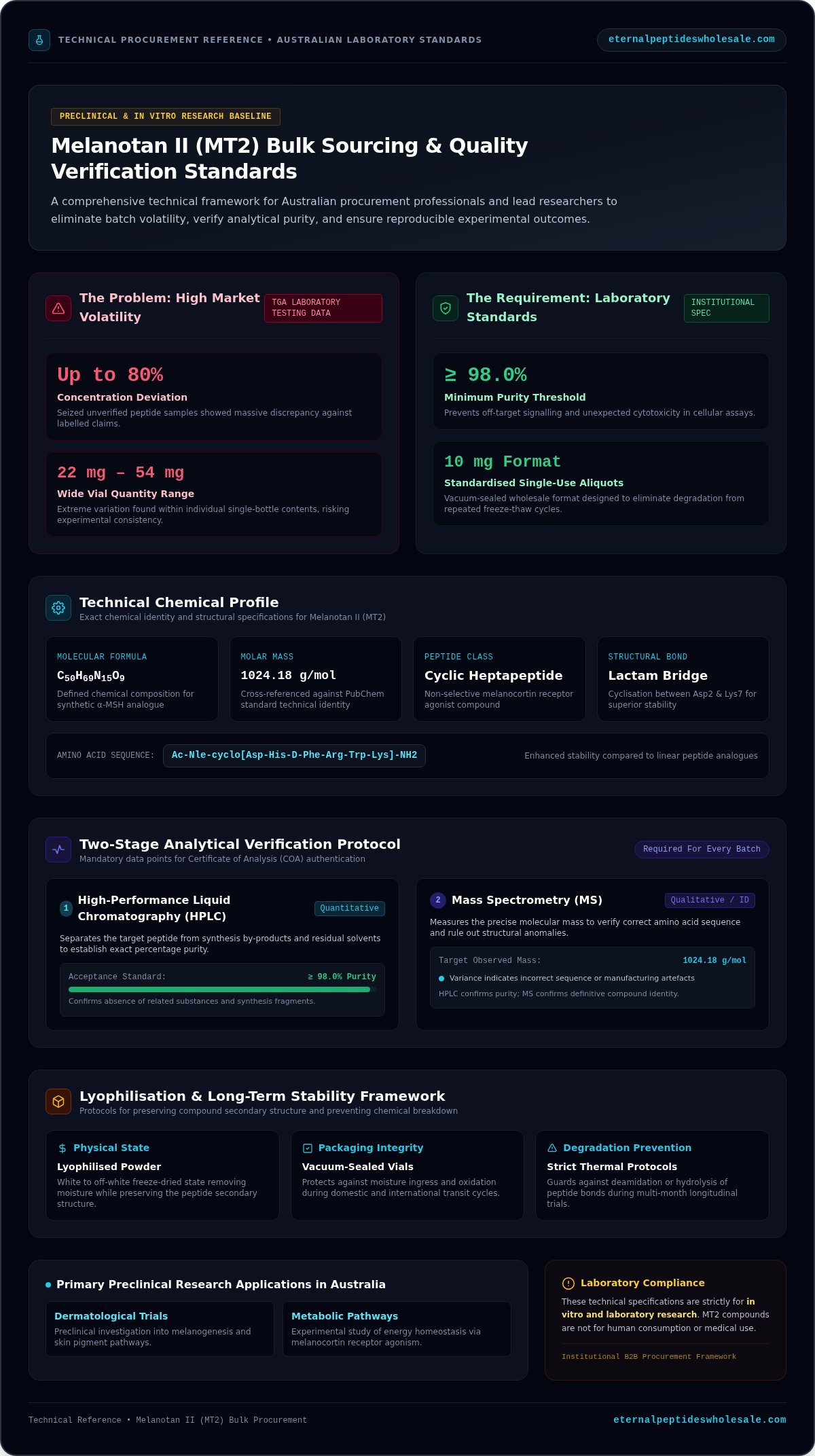
Recent TGA laboratory testing revealed that some seized peptide samples contained up to an 80% deviation from their labelled concentration, with quantities ranging from 22 mg to 54 mg in a single bottle. For procurement professionals and lead researchers in Australia, this level of volatility makes securing a reliable melanotan ii bulk wholesale partner a matter of scientific integrity rather than just cost. You’ve likely dealt with the frustration of batch-to-batch inconsistency or the logistical headaches of long international lead times that stall your projects. We understand that laboratory environments require precision, not guesswork.

This article provides a definitive technical reference for sourcing research-grade Melanotan II, ensuring your operations are backed by verifiable purity and stable supply chains. It’s designed to help you move past the uncertainty of unverified reports and towards a more professional B2B procurement model. We’ll examine critical HPLC and MS verification standards, logistical strategies to streamline your acquisition process, and the specific technical requirements for maintaining the stability of lyophilised powder in a professional setting. By the end of this guide, you’ll have the data needed to organise a more resilient and transparent procurement process for your institution.

Key Takeaways

  • Identify the essential chemical specifications and physical properties required to ensure the stability of Melanotan II acetate in professional research environments.
  • Master the interpretation of HPLC and Mass Spectrometry data to confirm batch-to-batch purity and precise molecular weight before deployment.
  • Optimise your procurement strategy by evaluating minimum order quantities and technical tiers for melanotan ii bulk wholesale to support large-scale laboratory operations.
  • Implement rigorous storage protocols to maintain the chemical integrity of lyophilised powder and prevent degradation during long-term experimental cycles.
  • Streamline institutional acquisition through professional B2B frameworks that prioritise logistical reliability and transparent batch verification within Australia.

Technical Specifications of Melanotan II (MT2) for Laboratory Study

Establishing a rigorous technical baseline is the first step in successful procurement for Australian research institutions. Melanotan II (MT2) is a synthetic analogue of the naturally occurring alpha-melanocyte stimulating hormone (α-MSH). In a laboratory setting, it’s identified as a cyclic heptapeptide that acts as a non-selective melanocortin receptor agonist. For procurement officers managing melanotan ii bulk wholesale acquisitions, verifying the chemical identity is paramount. The molecular formula is C50H69N15O9, and it possesses a precise molar mass of 1024.18 g/mol. These specifications are strictly for in vitro and laboratory research; these compounds are not for human consumption or medical use.

High-purity sourcing reduces experimental variables that can otherwise compromise longitudinal data. Impurities or residual solvents from the synthesis process can lead to off-target signalling or unexpected cytotoxicity in cellular assays. Securing melanotan ii bulk wholesale supplies that meet a minimum purity threshold of 98% ensures that researchers can attribute observed biological responses solely to the peptide itself, maintaining the integrity of the scientific record.

Molecular Profile and Research Utility

The amino acid sequence follows a specific lactam bridge structure: Ac-Nle-cyclo[Asp-His-D-Phe-Arg-Trp-Lys]-NH2. This cyclisation between the Asp2 and Lys7 residues provides the molecule with enhanced chemical stability compared to linear analogues. This structural robustness allows researchers to study its effects on various physiological pathways, including melanogenesis and energy homeostasis. In Australia, MT2 is frequently utilised in preclinical dermatological trials and metabolic studies. Because these trials often span several months, the use of research-grade standards is essential for producing reproducible, peer-reviewed outcomes.

Lyophilisation and Compound Integrity

The standard physical state for bulk MT2 is a white to off-white lyophilised powder. This state is achieved through a controlled freeze-drying process that removes moisture while preserving the peptide’s secondary structure. Vacuum-sealed vials are necessary to prevent oxidation and moisture ingress during international or domestic transit. Lyophilisation is a critical step for wholesale longevity, as it allows the compound to remain stable at ambient temperatures for short durations. For long-term storage, however, researchers must adhere to strict thermal protocols to prevent deamidation or hydrolysis of the peptide bonds. Using 10mg vials in a wholesale format allows for single-use aliquoting, which minimises the risk of degradation caused by repeated freeze-thaw cycles.

Verifying Purity: HPLC and Mass Spectrometry in Bulk Procurement

In the specialised field of melanotan ii bulk wholesale, the primary concern for any procurement professional is batch-to-batch consistency. Large-scale research projects depend on the premise that every vial in a 100-unit order performs identically to the last. Laboratory-grade verification relies on two primary analytical techniques: High-Performance Liquid Chromatography (HPLC) and Mass Spectrometry (MS). While HPLC determines the purity percentage by separating the peptide from any related substances, it doesn’t confirm that the substance is actually the intended compound. Accuracy defines the result. This is where MS becomes essential, as it measures the precise molecular mass of the sample.

A standard Certificate of Analysis (COA) for a bulk order should be scrutinised for specific data points. Buyers must cross-reference the observed molecular weight against the PubChem technical specifications for Melanotan II, which confirms a molar mass of 1024.18 g/mol. Any significant variance suggests either an incorrect amino acid sequence or the presence of manufacturing by-products. For those managing complex institutional supply chains, understanding these reports is vital to ensuring that the research remains reproducible and scientifically sound.

Analytical Standards for Wholesale Batches

Institutional buyers must distinguish between technical-grade materials and research-grade purity. Technical grade may suffice for basic calibration, but longitudinal research requires a purity level typically exceeding 98%. Beyond the peptide itself, the COA should report on residual solvents and Trifluoroacetic Acid (TFA) levels. TFA is a common counter-ion used during the purification process; however, excessive levels can alter the pH of laboratory assays. You can find further details in our guide on research peptide quality assurance to better understand these technical thresholds.

Third-Party Verification Protocols

Relying solely on in-house manufacturer reports can introduce a single point of failure in the procurement process. Independent third-party laboratory testing provides an objective layer of transparency, ensuring the supply chain isn’t compromised by batch substitution. Mass Spectrometry analysis is non-negotiable for identity confirmation because it provides the unique molecular fingerprint that HPLC alone cannot replicate. This rigorous approach to validation allows research institutions to maintain a dependable logistical backbone. If you’re looking to secure verified reference materials for your next project, you can view our wholesale catalogue for batch-tested options.

Strategic Wholesale Sourcing: Comparing Bulk Tiers and MOQs

Procuring reference materials for large-scale studies requires a shift from transactional purchasing to strategic logistical planning. When evaluating melanotan ii bulk wholesale options, research institutions must weigh the benefits of tiered pricing against their specific inventory turnover rates. Minimum Order Quantities (MOQs) serve as a baseline for B2B engagement; they ensure that the cost of analytical verification and logistical overhead is distributed efficiently across the batch. For many Australian laboratories, the 10mg vial format has become the industry standard for wholesale procurement. This specific volume allows for precise aliquoting and reduces the risk of sample contamination that often occurs with larger multi-gram bulk formats. It’s a practical approach that balances volume with the delicate nature of peptide stability.

Effective procurement management involves balancing the immediate needs of a study with the long-term stability of the compound. While larger tiers offer economies of scale, they also require more robust storage infrastructure to maintain chemical integrity over time. Researchers can verify the specific properties of their order by consulting the PubChem compound database for Melanotan II, which provides the necessary CAS registry data and molecular identifiers to ensure the batch matches institutional records. This technical alignment is essential for maintaining the high-purity standards required in longitudinal trials. Managing a procurement budget through these tiered structures allows for better allocation of grant funding across a multi-year research programme.

Optimising Laboratory Procurement

Consolidating orders into larger wholesale batches significantly reduces administrative labour and shipping costs. When conducting multi-phase studies, a cost-benefit analysis often reveals that sourcing a single large batch provides better data consistency than multiple smaller orders. You can learn more about navigating these complexities in our guide to wholesale research peptides australia. By streamlining the B2B process, institutions can lower their operational overhead and focus resources on the actual scientific output. This methodical approach ensures that inventory turnover aligns perfectly with the experimental timeline.

Australian Logistical Advantages

The “procurement lag” often associated with international peptide shipments can stall time-sensitive trials for weeks. Sourcing from a partner with a dependable logistical backbone in Australia minimises these transit risks. Local distribution ensures that temperature-sensitive lyophilised powders aren’t subjected to prolonged customs delays or uncontrolled environmental conditions at international borders. This reliability is vital for maintaining a consistent supply chain, especially when experimental timelines are rigid. By prioritising logistical integrity, Australian research sectors can ensure their projects remain on schedule without compromising on the quality of their reference materials. It’s about building a predictable supply chain that supports scientific excellence. Institutions seeking to formalise their sourcing strategy can benefit from reviewing the practical benchmarks outlined in our guide to b2b peptide suppliers australia, which details how to evaluate and verify commercial distributors against rigorous due diligence standards.
Melanotan II Bulk Wholesale: Technical Specifications for Australian Research

Storage and Stability Protocols for Large-Scale Research

When managing a high-volume inventory, the preservation of chemical structure is as vital as the initial purity verification. Lyophilised Melanotan II is inherently more stable than its liquid counterpart, yet it remains susceptible to environmental degradation if stored incorrectly. Heat, light, and moisture are the primary catalysts for peptide deamidation and oxidation. For organisations investing in melanotan ii bulk wholesale, establishing strict environmental controls is a prerequisite for maintaining the validity of longitudinal research data. Light sensitivity is a particularly critical factor; UV exposure can trigger photo-oxidation of the tryptophan residue within the MT2 sequence, potentially altering experimental results. Consequently, bulk stocks should be kept in light-shielded containers within a temperature-controlled environment.

Maintaining Batch Integrity

Standard Operating Procedures (SOPs) should dictate that all bulk vials remain in their vacuum-sealed state until the exact moment of reconstitution. Exposure to atmospheric moisture can lead to hygroscopic absorption, which compromises the integrity of the lyophilised cake. While the cyclic lactam bridge between Asp2 and Lys7 makes MT2 more resilient than linear peptides, it’s not immune to the stresses of thermal fluctuation. For optimal results and to ensure maximum compound longevity, the lyophilised powder must be stored in a desiccated environment at -20°C for a 24-month stability window. Repeated freeze-thaw cycles are notably damaging to the peptide’s molecular stability, as each cycle can introduce micro-fractures in the secondary structure, leading to a measurable loss in potency over time.

Laboratory Preparation and Solubility

Reconstitution requires a methodical approach to maintain the peptide’s secondary structure during the transition to a liquid state. While Melanotan II is highly soluble in sterile water or bacteriostatic water, the diluent should be added slowly along the side of the vial to avoid aggressive agitation or foaming. Once in solution, the peptide is far more prone to hydrolysis and should be refrigerated at 2°C to 8°C. Researchers should implement an aliquoting strategy, dividing the reconstituted solution into single-use volumes to prevent the need for re-freezing bulk supplies. Every interaction with the batch must be documented, including the date of reconstitution and the specific diluent used, to ensure a transparent audit trail for the study. You can order batch-verified vials to support your laboratory’s long-term stability requirements.

Consistent documentation of storage conditions is essential for identifying any variables that might affect assay performance. By monitoring freezer temperatures and limiting the duration that vials spend at ambient temperatures during handling, procurement officers can protect the institution’s investment in melanotan ii bulk wholesale materials. This rigorous attention to stability protocols ensures that every vial provides the reliable data necessary for high-level scientific inquiry.

Sourcing Melanotan II Bulk Wholesale from Eternal Peptides Wholesale

Eternal Peptides Wholesale operates as a dedicated partner for the Australian scientific community, providing the logistical backbone necessary for high-level research. While the technical specifications and analytical verification of peptides are paramount, the success of a longitudinal study often hinges on the reliability of the supplier. Securing melanotan ii bulk wholesale materials requires a partner that prioritises clinical reliability over transactional speed. We provide 10mg vials specifically designed for laboratory environments, ensuring that every batch meets the precise molecular standards required by procurement professionals. Our focus remains on establishing long-term professional relationships with research institutions across Australia, providing a sense of stability that retail-oriented vendors can’t replicate.

The Eternal Peptides Wholesale Advantage

Our commitment to excellence is reflected in our rigorous quality control and batch-specific documentation. We provide the HPLC and MS analysis reports discussed in previous sections as a standard part of our B2B service, ensuring total transparency for every wholesale order. This methodical approach ensures that your laboratory data remains untainted by batch-to-batch inconsistency. Our localised Australian logistical support is designed to minimise the procurement lag that often stalls time-sensitive projects. You can find this same dedication to logistical integrity throughout our product range, as detailed in our guide to ipamorelin wholesale australia. We treat every scientific project with the professional gravity it deserves.

Establishing a Wholesale Partnership

The process of becoming a verified research partner with Eternal Peptides Wholesale is straightforward yet thorough. We specialise in customised supply solutions tailored to the specific scale of your laboratory’s needs, whether you’re conducting initial assays or multi-year trials. Our account management team understands the complexities of institutional funding and procurement cycles, offering a streamlined experience that reduces administrative overhead. We don’t participate in the retail market; our focus is entirely on the success of your institution’s large-scale operations. This seasoned expertise ensures that your melanotan ii bulk wholesale supply chain remains resilient and your research stays on schedule. Contact our team to discuss your wholesale research needs.

Optimising Institutional Supply Chains for Australian Research

Reliable procurement serves as the fundamental basis for reproducible scientific outcomes. We’ve explored how batch-to-batch consistency depends on rigorous analytical verification, specifically utilising HPLC and MS to confirm molecular identity. By prioritising specialised Australian B2B distribution, research institutions can effectively bypass the logistical friction and lead-time volatility commonly associated with international suppliers. These technical standards, when paired with strict storage protocols, ensure that your reference materials maintain their chemical integrity throughout the entire experimental lifecycle.

Managing a melanotan ii bulk wholesale account requires a professional partner dedicated to a research-grade compound focus and total operational transparency. Eternal Peptides Wholesale provides the stability needed to support large-scale laboratory projects through high-purity, HPLC-verified batches. This methodical approach allows your team to focus on scientific output rather than managing supply chain variables. It’s about building a predictable framework for success. We invite you to enquire about bulk Melanotan II wholesale for your research project to establish a dependable logistical backbone for your institution. We look forward to supporting your next breakthrough in the lab.

Frequently Asked Questions

What is the standard purity level for bulk Melanotan II for research?

The standard purity threshold for research-grade Melanotan II is typically 98% or higher, as determined by High-Performance Liquid Chromatography (HPLC). This level of refinement is necessary to ensure that experimental results aren’t skewed by synthesis by-products or residual solvents. For institutional procurement, verifying these levels through batch-specific reports is a standard requirement to maintain the integrity of longitudinal studies and prevent off-target signalling in cellular assays.

How is Melanotan II wholesale shipped to ensure stability?

Wholesale orders are shipped as a stable lyophilised powder within vacuum-sealed glass vials to prevent moisture ingress. While the dry powder remains chemically resilient at ambient temperatures for short durations during transit, we utilise a dependable logistical backbone to minimise time spent in uncontrolled environments. This methodical approach ensures that the peptide’s secondary structure remains intact from the point of distribution to its arrival at your laboratory.

What is the typical shelf life of lyophilised Melanotan II in a lab setting?

Lyophilised Melanotan II typically maintains its stability for 12 to 24 months when stored in a desiccated environment at -20°C. If kept at -80°C, the compound can remain viable for even longer durations. It’s essential to keep the vials in their original vacuum-sealed state until the moment of use. Once the seal is broken or the compound is reconstituted, the stability window decreases significantly, necessitating immediate refrigeration at 2°C to 8°C.

Do you provide HPLC and MS reports for bulk wholesale orders?

Yes, we provide batch-specific HPLC and Mass Spectrometry (MS) analysis for all melanotan ii bulk wholesale orders. The HPLC report confirms the purity percentage, while the MS analysis provides the unique molecular fingerprint required to verify the compound’s identity. These reports are essential for procurement professionals who must document the technical specifications of their reference materials to meet institutional quality assurance standards and ensure experimental reproducibility.

Are there specific MOQs for institutional peptide procurement in Australia?

Our wholesale structure is designed to support the needs of research institutions with tiered minimum order quantities for melanotan ii bulk wholesale. Standard wholesale volumes typically begin with boxes of ten 10mg vials, allowing for easier aliquoting and inventory management. For larger multi-phase studies, we offer increased bulk tiers that provide greater economies of scale. This professional B2B framework helps procurement officers manage grant budgets effectively while securing a consistent supply of reference materials.

Can Melanotan II be used for any purpose other than laboratory research?

No, Melanotan II is strictly for laboratory research and in vitro study purposes only. These compounds are not for human consumption, medical use, or therapeutic applications. Eternal Peptides Wholesale does not provide medical consultations or retail single-vial sales. All procurement must be conducted by verified research partners who adhere to the strict guidelines governing the use of unapproved therapeutic substances in a scientific or academic capacity.

How does local Australian distribution reduce procurement risks?

Local distribution significantly reduces the risks associated with international “procurement lag” and customs interceptions. By utilising an Australian-based logistical network, we minimise the time vials spend in transit and eliminate the uncertainty of international border delays. This reliability ensures a consistent supply chain for time-sensitive trials, allowing researchers to plan their experimental cycles without the threat of inventory depletion or environmental degradation during long-haul shipping. Research teams looking to formalise their supplier evaluation process can consult our comprehensive resource on b2b peptide suppliers australia for detailed due diligence benchmarks and verification protocols.

What storage conditions are required for bulk peptide vials?

Bulk peptide vials require specific thermal management to prevent chemical degradation. Lyophilised powder should be stored in a freezer at -20°C to ensure long-term stability. Once reconstituted with a suitable diluent, the solution must be kept refrigerated between 2°C and 8°C. It’s vital to avoid repeated freeze-thaw cycles, as these can cause micro-fractures in the peptide’s structure; instead, researchers should use single-use aliquots for their specific laboratory assays.

Related from Eternal Peptides Wholesale

Eternal Peptides Wholesale publishes batch-specific Janoshik Analytical reports in its certificate of analysis library, so the documentation for a listed batch can be read alongside the evidence discussed in this article.

Related reading: Melanotan II receptor binding assay supply: A 2026 buyer’s guide

Posted on

Wholesale TB-500 Australia: A Technical Procurement Reference for 2026

Wholesale TB-500 Australia: A Technical Procurement Reference for 2026

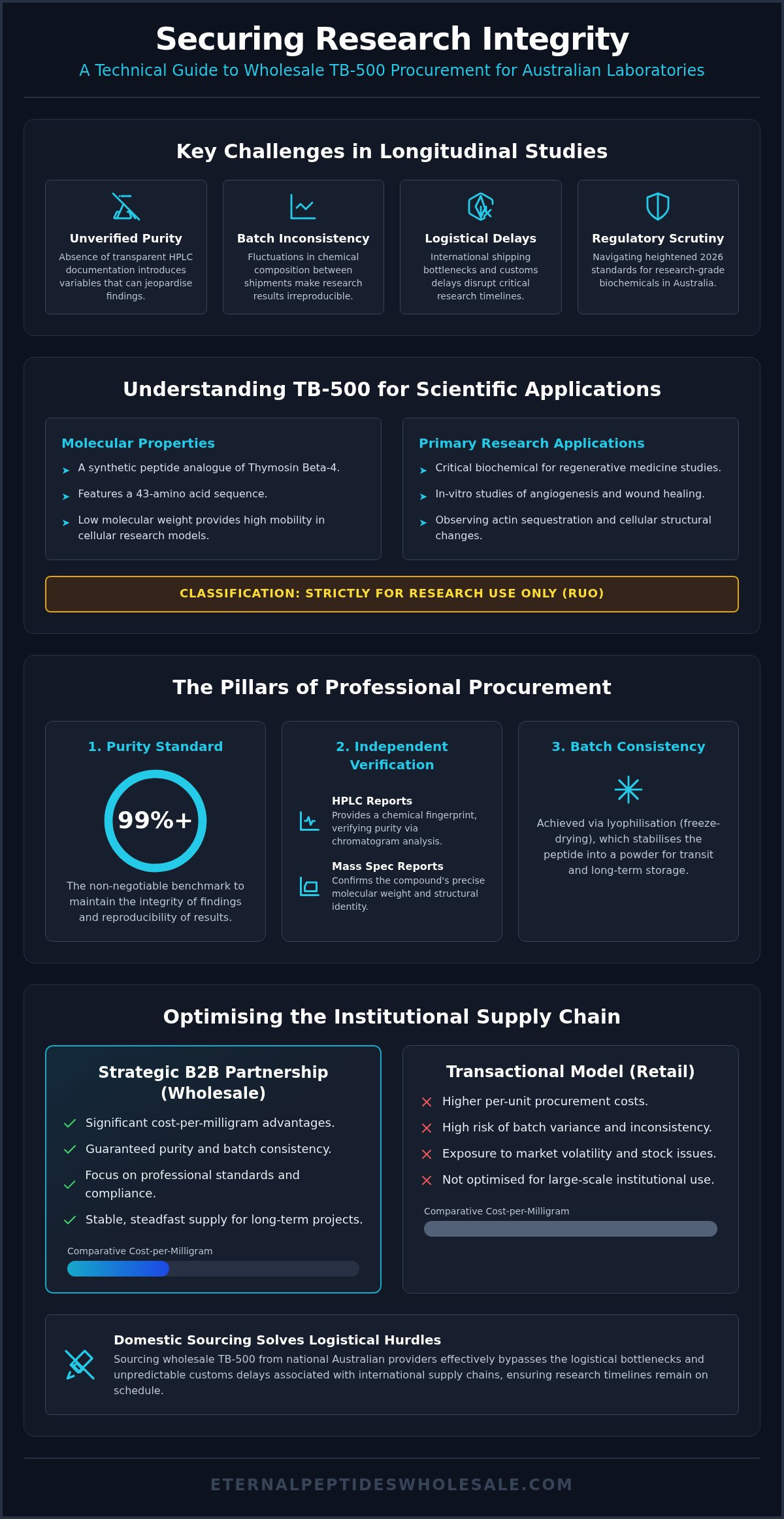
Can an institutional research protocol survive the hidden variables of an unverified supply chain? In the Australian biotechnology sector, the technical integrity of a single batch often determines the ultimate success of longitudinal studies. You’ll likely recognise that securing a reliable source for wholesale tb-500 australia involves more than simple procurement; it requires a partner capable of navigating the heightened regulatory scrutiny of 2026 while delivering uncompromising purity. Batch-to-batch inconsistency and the absence of transparent HPLC documentation shouldn’t be the variables that jeopardise your scientific findings.

This reference provides the technical framework required to establish a stable B2B supply of TB-500 (5mg) for laboratory applications. We’ll examine the essential role of Mass Spec verification, strategies for mitigating the logistical delays associated with international shipping, and methods for optimising procurement costs through bulk volumes. By following this guide, your institution can ensure 99% plus purity across all vials while building a steadfast logistical backbone for long-term research. Eternal Peptides Wholesale remains focused on providing the data points and logistical security necessary for professional organisations to operate with confidence and precision in a complex market.

Key Takeaways

  • Standardise institutional procurement by prioritising 99% plus purity levels verified via HPLC and Mass Spec to ensure consistency in longitudinal studies.
  • Optimise research timelines by sourcing wholesale tb-500 australia from national providers, effectively bypassing the logistical bottlenecks and customs delays of international supply chains.
  • Implement rigorous storage protocols for lyophilised vials to protect thermolabile compounds and maintain technical integrity across all laboratory applications.
  • Transition from a transactional retail model to a strategic B2B partnership that offers significant cost-per-milligram advantages for large-scale research projects.
  • Ensure compliance with professional standards by selecting suppliers that focus exclusively on wholesale distribution for scientific research, avoiding the volatility of the retail market.

Understanding TB-500 in the Context of Australian Scientific Research

TB-500 is a synthetic peptide analogue of Thymosin Beta-4, a naturally occurring protein found in high concentrations in blood platelets and various tissues. In the Australian research sector, this compound serves as a critical biochemical for regenerative medicine studies, specifically regarding cellular migration and actin-binding mechanisms. All batches procured via wholesale tb-500 australia are strictly classified as Research Use Only (RUO). This classification ensures the material is dedicated to laboratory applications and scientific study; it’s never intended for human consumption or clinical use.

Molecular Properties and Research Applications

The molecular structure of TB-500 features a 43-amino acid sequence. Its relatively low molecular weight provides it with high mobility within cellular research models. This characteristic is vital for researchers investigating how peptides traverse tissue barriers in controlled laboratory environments. Common in-vitro applications focus on studying angiogenesis and the complex pathways of wound healing. As noted in the TB-500 Wikipedia entry, this fragment is highly regarded for its biological activity in these specialised fields. Researchers utilise these vials to observe actin sequestration, which is fundamental to understanding cellular structural changes.

Regulatory Landscape for Research Peptides in 2026

The regulatory environment for research-grade biochemicals in Australia has become more sophisticated in 2026. Compliance requires a definitive separation between laboratory-grade chemicals and therapeutic goods. Sourcing wholesale tb-500 australia through a domestic partner ensures that procurement protocols align with national standards for chemical handling and documentation. It bypasses the unpredictability of international customs while maintaining the integrity of the institutional supply chain.

Laboratories must adhere to strict biosecurity and safety guidelines when managing these compounds. By focusing on a wholesale-only distribution model, research institutions can secure the high-purity volumes needed for longitudinal studies without the risks associated with the retail market. This approach supports the systematic progress of Australian biotech research by providing a stable, professional procurement path.

Wholesale Procurement Standards: Purity and Batch Consistency

Purity is not a luxury in institutional research; it’s a fundamental requirement. For Australian laboratories, 99% plus purity is the non-negotiable benchmark for all biochemical reagents. Any deviation from this standard introduces biological noise that can invalidate months of data. When sourcing wholesale tb-500 australia, procurement officers must ensure that every vial meets these rigorous specifications to maintain the integrity of their findings and the reproducibility of their results.

Batch-to-batch variance represents one of the most significant risks in large-scale longitudinal studies. If the chemical composition fluctuates between shipments, the research results become irreproducible. This is why lyophilisation is used for every batch. This sophisticated freeze-drying process stabilises the peptide into a powder, ensuring the molecular structure remains intact across thousands of vials during transit and long-term storage. Reliable documentation is essential to verify this stability. Every shipment must include High-Performance Liquid Chromatography (HPLC) and Mass Spectrometry (MS) reports. These documents provide a chemical fingerprint of the compound. For example, the WADA Scientific Research on TB-500 emphasises the necessity of precise synthesis and metabolic clarity, which starts with verified purity at the procurement stage.

Verifying HPLC and Mass Spectrometry Reports

Reading a purity chromatogram involves identifying a single, sharp peak that represents the target peptide. The “area under the curve” (AUC) is the mathematical calculation used to determine the purity percentage relative to any detected impurities. A high-purity wholesale supply will exhibit minimal secondary peaks. In contrast, inferior bulk imports often lack these reports or show multiple contaminants that could compromise cellular research models. Verifying these data points is a critical step in the validation process for any professional research institution looking to maintain high-level scientific standards.

Standardising Batch Purity for Large-Scale Projects

Multi-year trials often require a “single-batch sourcing” strategy. This procurement method involves securing the entire volume required for a project from one production run to eliminate the variable of batch variance. Eternal Peptides Wholesale supports this by ensuring consistency across bulk TB-500 5mg orders, providing the logistical stability needed for complex studies. Detailed protocols for these standards are available in our Quality Assurance in Research Peptides guide. If your laboratory needs to secure high-volume stability, you can review our current batch specifications to ensure alignment with your research goals.

Technical Specifications: Stability, Storage, and Preparation

TB-500 is a highly sensitive, thermolabile compound. Its molecular integrity depends entirely on the environment in which it’s transported and stored. In the Australian research sector, heat exposure is the primary cause of peptide degradation, which can lead to inconsistent experimental results. Maintaining a strict temperature range is essential for preserving the 43-amino acid sequence. Lyophilised vials are relatively stable at room temperature for short durations during laboratory handling; however, long-term storage requires a controlled environment between 2 and 8 degrees Celsius. This precision is necessary to avoid the risks identified in a recent ABC News investigation on peptides, where unregulated supply chains often failed to meet basic stability standards.

Beyond temperature, light protection and moisture control are vital components of laboratory protocol. UV exposure can trigger photo-degradation, while moisture ingress into a vial can compromise the lyophilised cake. Bulk vials should always be kept in their original secondary packaging until the point of use. In a professional cold-chain storage environment, lyophilised wholesale tb-500 australia batches can maintain a shelf-life of up to 24 months. Once a vial is reconstituted, the stability window narrows significantly; the solution must be refrigerated and typically utilised within 7 to 10 days to ensure maximum biochemical activity.

Cold-Chain Logistics for National Distribution

Shipping sensitive biochemicals across the Australian continent requires rigorous logistics. Professional wholesale orders utilise temperature-controlled packaging, often involving insulated containers and gel packs designed to maintain a steady thermal profile for 48 to 72 hours. Sourcing wholesale tb-500 australia from a domestic partner reduces the risk of temperature excursions that frequently occur during long-haul international transit. Domestic distribution ensures that vials spend less time in high-heat environments like tarmac holding areas or non-refrigerated customs warehouses, protecting the institutional investment.

Laboratory Preparation and Solubility Profiles

TB-500 exhibits high solubility in aqueous solutions such as bacteriostatic water or sterile saline. When preparing the compound for in-vitro research, the diluent should be added slowly down the side of the glass vial. Researchers should employ a “gentle swirl” technique rather than vigorous shaking. Shaking can cause shear stress, which leads to molecular degradation and the formation of bubbles that interfere with accurate pipetting. For a deeper analysis of these procedures, procurement teams should consult the Bulk TB-500 for Laboratories technical paper, which outlines specific review workflows for institutional labs.

Wholesale TB-500 Australia: A Technical Procurement Reference for 2026

Wholesale vs Retail: Optimising the Institutional Supply Chain

The retail peptide market is frequently geared towards individual consumers, often relying on high-energy marketing and transient discount codes. This model is fundamentally unsuitable for professional laboratories. For institutional procurement, wholesale tb-500 australia provides a structured framework that prioritises stability and data integrity over transactional speed. Buying in bulk isn’t just about the volume; it’s about the cost-per-milligram efficiency. When you scale from a single 5mg vial to a wholesale order of hundreds, the financial burden on research budgets decreases significantly. These savings allow institutions to allocate more funds toward actual laboratory analysis rather than procurement overheads.

Administrative efficiency is another critical factor. Managing dozens of retail receipts is an unnecessary burden for university finance departments. A dedicated B2B partner provides consolidated invoicing and consistent technical documentation, which is essential for rigorous audit trails. Supply risks, often referred to as “inventory lag,” can halt a study in its tracks. Wholesale agreements provide a guaranteed supply, ensuring that the next phase of a project isn’t delayed by stock shortages or the unpredictability of international shipping bottlenecks. It’s a shift from a reactive shopping habit to a proactive supply chain strategy.

Strategic Sourcing for Australian Universities and Biotech

Australian universities operate on strict grant-funded cycles where procurement needs to be predictable and documented. Having a dedicated account manager allows for custom delivery schedules that match these financial milestones. This level of service is explored in our guide on Sourcing Research Peptides Wholesale in Australia. It’s about building a professional relationship that values operational excellence and long-term reliability. A dedicated wholesale partner understands the nuances of institutional requirements, from specific shipping windows to the necessity of batch consistency.

Inventory Management for Longitudinal Studies

Longitudinal studies require precise forecasting to ensure continuity. Research teams usually plan their peptide requirements over 6 to 12 month windows to avoid any interruption in their protocols. While “just-in-time” delivery reduces on-site storage costs, “stockpiling” from a single batch ensures the purity consistency discussed in previous sections. Eternal Peptides Wholesale supports these large-scale inventory needs across the country, providing the steadfast logistical backbone required for complex biotech projects. If you’re ready to stabilise your institutional supply chain, you can view our wholesale procurement options to get started.

Partnering with Eternal Peptides Wholesale for Professional Research Supply

Eternal Peptides Wholesale operates as a steadfast logistical backbone for the Australian biotech sector. By adhering to a strict B2B model, we ensure that our operational standards align with the rigorous demands of professional research institutions. Our focus on wholesale tb-500 australia allows us to provide high-purity biochemicals without the distractions or volatility of the retail market. We maintain a commitment to 99% plus purity, verified through systematic HPLC and Mass Spectrometry testing for every batch. This focus on clinical reliability ensures that your laboratory receives compounds that meet the highest international standards for scientific study.

The Eternal Peptides Wholesale Advantage

The 5mg TB-500 wholesale format is the industry standard for laboratory studies, providing the necessary precision for micro-dosing in cellular models. Our national shipping capability is designed to solve the common pain point of international procurement lag. We provide temperature-controlled distribution across the country, ensuring that vials arrive with their molecular integrity intact. Procurement teams are invited to review our comprehensive Certificate of Analysis (CoA) library, which offers transparent data for all current batches. This level of transparency is a cornerstone of our role as a dependable B2B partner, allowing researchers to validate their supply chain before a study begins.

Initiating a Wholesale Inquiry

Establishing a reliable supply relationship is a streamlined process managed by our professional account team. We understand that research protocols often require multiple synergistic compounds to achieve meaningful data. To support these complex study designs, we also provide other high-purity research biochemicals, such as BPC-157 5mg, to complement your wholesale tb-500 australia requirements. This allows institutions to consolidate their procurement under a single, verified supplier, reducing administrative overhead and ensuring batch consistency across all reagents. To begin the validation process for your laboratory and secure your 2026 supply, you may contact Eternal Peptides Wholesale for wholesale TB-500 sourcing. Our team is prepared to provide the technical documentation and logistical support your organisation requires for its upcoming research milestones.

Advancing Australian Biotech with Reliable Procurement

Securing a stable supply of high-purity biochemicals is a prerequisite for reproducible scientific outcomes. We’ve examined the technical necessity of 99% plus HPLC verified purity and the critical role of specialised B2B wholesale logistics in maintaining molecular integrity across the continent. By prioritising professional procurement standards over the volatility of retail markets, institutions can protect their research budgets and grant-funded timelines. This strategic approach ensures that objective data remains the primary focus of your laboratory’s efforts.

Establishing a partnership for wholesale tb-500 australia ensures that your organisation operates with a steadfast logistical backbone, effectively bypassing the delays and risks associated with international procurement. As you prepare for your 2026 research protocols, it’s essential that your supply chain meets these rigorous professional standards. You can Request a Wholesale Quote for TB-500 Research Vials to review our current batch specifications and Australian national distribution capabilities. We look forward to supporting the continued success and precision of your larger-scale scientific operations.

Frequently Asked Questions

Is TB-500 legal for research purposes in Australia?

TB-500 is legal for possession and use within a registered Australian research laboratory for in-vitro or animal study purposes. It’s classified as a Research Use Only (RUO) biochemical. It’s illegal to supply or use this compound for human consumption. Laboratories must ensure they comply with all national biosecurity and safety regulations governing the handling of synthetic analogues. This ensures that the compound is utilised strictly within a controlled scientific environment.

What is the minimum order quantity for wholesale TB-500?

We operate exclusively as a B2B distributor, which means we don’t facilitate retail single-vial sales. Minimum order quantities are structured to support institutional research projects and longitudinal studies. Procurement officers can request specific volume tiers for wholesale tb-500 australia to ensure their laboratory maintains a consistent supply. This model allows us to offer significant cost-per-milligram advantages compared to the retail market, helping to optimise grant-funded research budgets.

Do you provide HPLC and MS reports for every bulk batch?

Yes, every wholesale shipment includes comprehensive High-Performance Liquid Chromatography (HPLC) and Mass Spectrometry (MS) reports. These documents serve as a chemical fingerprint to verify the 99% plus purity and molecular identity of the compound. Transparency is vital for institutional validation. We maintain a library of these reports for all current batches, allowing research teams to audit the technical specifications before initiating their laboratory protocols or experimental trials.

How is TB-500 shipped to ensure stability across Australia?

We utilise specialised cold-chain logistics to maintain the stability of our peptides during national distribution. Vials are shipped in temperature-controlled packaging with gel packs to protect against thermal degradation during transit. This domestic shipping strategy is specifically designed to bypass the delays and temperature excursions common with international procurement. It ensures the thermolabile TB-500 sequence remains structurally intact until it reaches your laboratory’s cold storage facility.

Can TB-500 be used for human clinical trials?

No, the TB-500 provided by Eternal Peptides Wholesale is strictly for laboratory research and development purposes. It’s not approved by the TGA for therapeutic use and isn’t listed on the Australian Register of Therapeutic Goods (ARTG). Our products are labelled as Research Use Only (RUO) and are not intended for human consumption or clinical trials. We don’t provide medical consultations or supply products for any form of human application or medical treatment.

What is the shelf life of lyophilised TB-500 vials in lab storage?

In a professional laboratory setting, lyophilised TB-500 vials typically maintain a shelf life of up to 24 months when kept in cold-chain storage between 2 and 8 degrees Celsius. For even longer durations, storage at -20 degrees Celsius is often recommended to prevent molecular degradation. Once the peptide is reconstituted into a solution, its stability window decreases significantly; the solution should be refrigerated and used within 7 to 10 days for optimal results.

Do you offer pre-blended wholesale vials of BPC-157 and TB-500?

We currently supply TB-500 5mg and BPC-157 5mg as individual high-purity vials. This allows researchers to maintain precise control over the ratios used in their specific experimental protocols. While we offer other pre-blended wholesale options, our tissue repair compounds are distributed separately. This ensures institutional researchers can customise their laboratory preparation according to their documented study requirements and validation standards without the variables introduced by pre-mixed solutions.

How does Eternal Peptides Wholesale verify the purity of its wholesale peptides?

We verify the purity of every wholesale tb-500 australia batch through a multi-stage testing process. This includes High-Performance Liquid Chromatography to determine the purity percentage and Mass Spectrometry to confirm the exact molecular weight and sequence identity. We only distribute batches that achieve a 99% plus purity rating. This rigorous testing protocol ensures that every vial delivered to an Australian institution meets the strict standards required for professional scientific research and data integrity.

Related from Eternal Peptides Wholesale

Eternal Peptides Wholesale publishes batch-specific Janoshik Analytical reports in its certificate of analysis library, so the documentation for a listed batch can be read alongside the evidence discussed in this article.

Related reading: TB-500 for Cell Migration Assays: Design, Controls and Interpretation; TB-500 Actin-Binding Properties Research: Evidence and Limits

Posted on

Peptide Purity Guide for Australian Laboratories

Peptide Purity Guide for Australian Laboratories

Shipping and evidence maintenance — 29 September 2026: Shipping, stock-location and transport-service claims in this article have been corrected against the current Shipping Policy. These edits are not a new clinical or regulatory review.

Purity-threshold correction — 25 October 2026: Purity-threshold statements were corrected against EMA/CHMP/CVMP/QWP/367182/2025, European Pharmacopoeia general monograph 2034 and TGA impurity guidance.


In high-stakes laboratory environments, the difference between a breakthrough and a compromised dataset often rests on a fraction of a percentage point. For Australian researchers, inconsistent batch quality and the challenge of interpreting complex HPLC/MS reports aren’t just administrative hurdles; they’re direct threats to the integrity of scientific outcomes. It’s frustrating to invest months into a study only to find that trace impurities have skewed your results. This guide provides a definitive framework for peptide purity verification for research, ensuring you can navigate the technical nuances of Certificates of Analysis (COAs) with greater confidence.

You’ll learn to master the analytical techniques and reporting standards required to verify peptide integrity, moving beyond supplier claims to objective data. We will examine the critical role of High-Performance Liquid Chromatography and Mass Spectrometry, explain how impurity thresholds are described in pharmacopoeial and regulatory guidance (for example, the 0.1%, 0.5% and 1.0% reporting, identification and qualification thresholds the European Pharmacopoeia sets for synthetic peptides used in medicines), and outline a documented procurement process. The aim is to help you read batch documentation critically. No purity figure on its own guarantees reproducible results, and the standards discussed here are reference points written for medicines, not a specification for research materials. [11][12] [Evidence note 1]

Key Takeaways

  • Understand what an HPLC purity percentage does and does not measure, and why the acceptance criterion should be a method-specific specification set for your application, not a single “industry standard” figure. [Evidence note 1]
  • Master the technical distinctions between HPLC and Mass Spectrometry to establish a definitive framework for peptide purity verification for research.
  • Learn to critically evaluate Certificates of Analysis by cross-referencing batch numbers and verifying analytical conditions against physical inventory.
  • Implement a standardised procurement SOP that utilises objective analytical data to establish clear acceptance or rejection criteria for incoming compounds.
  • Optimise your laboratory’s supply chain by sourcing from Australian-based wholesale specialists who provide batch-specific documentation and maintain rigorous logistical integrity.

The Critical Role of Purity in Modern Peptide Research

In analytical reports, peptide “purity” usually means chromatographic purity. It is the proportion of the UV-absorbing material detected by HPLC that corresponds to the target peptide, expressed as a percentage of total peak area. It is not the same as the mass of peptide in the vial. Water, counter-ions (such as acetate or trifluoroacetate) and other non-UV-absorbing material are addressed by a separate measurement, net peptide content. No Australian or international standard sets a single minimum purity percentage for research materials. The appropriate specification depends on the peptide, the analytical method and the intended experiment, and should be agreed before purchase. [2] Using unverified compounds in long-term trials doesn’t just waste financial resources; it risks the scientific credibility of the institution. [Evidence note 1]

Distinguishing between grades is vital. Industrial-grade products are often “crude” and contain a high volume of synthesis byproducts. Research-grade compounds undergo rigorous purification to ensure that the biological activity observed in the lab is solely attributable to the target sequence. Without strict peptide purity verification for research, scientists cannot differentiate between the effects of the peptide and the interference of contaminants. High-purity compounds help laboratories produce reproducible data that stands up to peer review and scrutiny.

Common Impurities in Synthetic Peptides

Chemical synthesis is rarely perfect. Deletion sequences occur when an amino acid fails to couple during the synthesis cycle. This is particularly problematic in GLP-1 research where a single missing residue can radically alter receptor binding affinity. Truncated sequences happen when the peptide chain terminates prematurely, resulting in shorter fragments. Incomplete deprotection leaves residual chemical groups from the synthesis process attached to the peptide. These groups can obstruct active sites and lead to erroneous data. Identifying these specific impurities is the first step in maintaining a robust research environment.

Impact on Research Reproducibility

Trace contaminants are the primary cause of false-positive or false-negative results in cellular assays. In receptor-ligand interaction studies, byproducts may compete for the same binding sites as the target peptide, artificially depressing the observed potency. Maintaining the integrity of the research peptide quality assurance chain is essential for ensuring that every batch remains consistent across multi-year trials. When batch quality fluctuates, the reproducibility of the research is lost. Consistent procurement of high purity peptides wholesale is the only way to ensure that your findings are both accurate and repeatable.

Which purity standards apply in Australia?

For therapeutic goods, the Therapeutic Goods Act 1989 defines the “default standards” as the British Pharmacopoeia, the European Pharmacopoeia and the United States Pharmacopeia–National Formulary. Ministerial standards (Therapeutic Goods Orders) take precedence where they exist. The TGA’s guidance on impurities in prescription medicines notes that the qualification thresholds in ICH Q3A and Q3B do not apply to synthetic peptides, and points instead to the European Pharmacopoeia monograph Substances for pharmaceutical use. [13][14]

That monograph sets thresholds for peptide-related impurities in synthetic peptides: reporting above 0.1%, identification above 0.5% and qualification above 1.0%. The European Medicines Agency’s 2025 guideline on synthetic peptides restates the same thresholds. [11][12]

These frameworks apply to medicines. They do not define a “research grade”, and the TGA has stated that labelling a product “for research use only” does not by itself remove regulatory obligations. Products sold for laboratory research should not be described as meeting pharmacopoeial or GMP requirements unless that has been specifically demonstrated. [8]

Analytical Gold Standards: Understanding HPLC and Mass Spectrometry

Rigorous peptide purity verification for research relies on two distinct but complementary analytical techniques. While a supplier might claim a high purity percentage, professional laboratories require objective data to confirm both the concentration of the target molecule and its chemical identity. Relying on a single metric is a significant risk. HPLC (for chromatographic purity) and mass spectrometry (for molecular mass) are complementary and widely used together. Regulatory guidance for peptide medicines recommends at least two orthogonal identification methods. Mass agreement alone may not distinguish sequence isomers, so additional methods may be needed depending on the question being asked. [1][11] These tools allow researchers to look beyond the surface and identify the specific molecular profile of their compounds.

USP general chapter <1503> (Quality Attributes of Synthetic Peptide Drug Substances) and the European Pharmacopoeia describe how peptide purity, impurities and content are characterised for medicines. They are useful background for interpreting a report, although they are written for pharmaceutical substances, not research materials. [12][14] When interpreting a chromatogram, a high-purity sample should display one dominant, sharp peak. Any smaller peaks, or “shoulders” on the main peak, represent impurities or degradation products that could interfere with your experimental variables.

The HPLC Process: Separating the Analytes

HPLC functions by passing a liquid sample through a column packed with a stationary phase. As the mobile phase moves through the column, different molecules interact with the packing material at varying intensities. This causes the components to elute at different times, known as retention times. HPLC is the separation of components based on molecular interactions to determine relative purity percentages. Peptide bonds absorb strongly in the low-UV range, so detection is commonly performed at about 210–220 nm. The result is a relative peak-area percentage among UV-absorbing components, not a measure of peptide concentration or content. [2]

For institutions requiring consistent batch quality, sourcing from a dedicated wholesale peptide partner ensures that these HPLC profiles are provided for every compound. This allows procurement officers to check the reported result against the specification agreed for the order before the material enters the laboratory. [1] [Evidence note 1]

Mass Spectrometry and Molecular Weight Confirmation

While HPLC tells you how pure a sample is, Mass Spectrometry confirms exactly what is in the vial. MS works by ionising the peptide molecules and measuring their mass-to-charge (m/z) ratios. This process allows researchers to verify that the synthesized sequence matches the theoretical molecular weight of the target peptide. It can reveal peptide-related impurities, such as deletion or modified sequences, that co-elute with the target peptide in HPLC but have a different mass. It cannot distinguish impurities of identical mass, such as some isomers, and it does not measure water, salts or counter-ions. [1][11] [Evidence note 1]

Analytical reports must show a primary mass peak that corresponds precisely to the expected value of the peptide. If the m/z ratio deviates from the theoretical mass, it indicates an error in the synthesis or a contamination event. Used alongside HPLC, MS adds an independent identity check. It increases confidence but does not provide certainty on its own. It ensures that the biological responses you observe are triggered by the correct molecular structure, not a synthesis byproduct.

Deciphering the Certificate of Analysis (COA)

The Certificate of Analysis (COA) serves as the primary document for peptide purity verification for research. It isn’t merely a summary sheet; it’s a technical record that must include a unique batch number, the date of analysis, and the specific analytical conditions used during testing. Researchers should always cross-reference the batch number on the report with the label on the physical vial. Any discrepancy between these two points is an immediate indicator of logistical failure or compromised compound integrity. A valid report provides the transparency needed to trust the chemical identity of the sample.

Spotting fraudulent or “recycled” reports is a critical skill for procurement officers. Red flags include inconsistent formatting, missing analysis dates, or blurred text that suggests an image has been manipulated from a previous batch. A legitimate COA provides clear, high-resolution chromatograms that match the specific lot you’ve received. While manufacturer-provided reports offer a baseline, independent third-party analysis provides an additional layer of security for high-stakes studies. This independent oversight ensures that the data is objective and hasn’t been filtered to meet sales quotas.

Key Metrics to Audit in Every Report

Every audit should begin with the purity percentage. Compare the reported purity with the specification agreed for your order. The figure that is appropriate depends on the peptide, the method and the sensitivity of your experiment, and no single percentage is a regulatory requirement for research materials. Check that the appearance and solubility reported match the lot specification. Many peptides are supplied as white to off-white lyophilised powders, but this varies by compound and salt form. [1][2] Storage recommendations are also vital. The COA must clearly state temperature requirements to ensure the material was handled correctly before it reached your facility. [Evidence note 1]

Verifying Authenticity in the Australian Market

The Australian research landscape has shifted toward a model of independent verification. Many institutions now utilise online verification portals to authenticate batch reports directly from the testing facility. This level of transparency is essential because wholesale research peptides australia require traceable data to meet institutional compliance and safety standards. Verifying the source of the analytical data prevents the use of sub-standard compounds. It ensures that your peptide purity verification for research is grounded in verifiable facts rather than supplier assertions. Establishing this chain of custody is the only way to guarantee that the compounds in your lab meet the rigorous standards of modern science. [Evidence note 4]

Actionable Procurement Protocols for Australian Institutions

Establishing a standardised operating procedure (SOP) for peptide intake is the final safeguard in the procurement chain. It transforms the analytical data discussed in previous sections into a clear decision-making framework. For Australian institutions, this protocol ensures that every compound entering the laboratory environment meets the specific requirements of the study. A robust SOP dictates that no material is released for research use until the batch-specific documentation has been reviewed and archived. This systematic approach eliminates the risk of using sub-standard materials that could compromise longitudinal data.

A critical component of this SOP is the “Acceptance/Rejection” criteria. This framework should be based on objective analytical benchmarks. Define acceptance criteria in advance in your SOP: the purity specification, the mass tolerance and any other required tests. Treat a batch that falls outside them as non-conforming under your laboratory’s procedure. The thresholds should be set by your institution for the intended use. They are not a universal standard. [1] Maintaining a digital library of these reports is essential for troubleshooting future experimental variances. It allows researchers to trace results back to specific chemical profiles, ensuring the long-term integrity of the peptide purity verification for research process. [Evidence note 1]

The Procurement Checklist for Lab Managers

Lab managers should utilise a rigorous checklist before finalising bulk orders. This process begins with requesting batch-specific HPLC and MS data rather than relying on “typical” or “representative” reports. It’s also vital to assess the wholesaler’s track record for batch-to-batch consistency. Inconsistent quality between shipments can derail months of progress. Finally, verify the supplier’s commitment to research-only distribution. Ask each supplier what documentation they provide for every lot, and assess it against your institution’s own procurement and quality requirements. [4] For a comprehensive overview of the analytical standards and logistical frameworks that underpin large-scale procurement, the technical guidance on high purity peptides wholesale for Australian research laboratories provides an essential reference for institutional procurement officers.

To ensure your facility maintains these high standards, consider partnering with a specialised supplier. You can source research-grade compounds from providers who prioritise analytical transparency and logistical reliability. When evaluating potential partners, the 2026 laboratory procurement checklist for identifying reliable peptide wholesalers in Australia offers a structured framework for assessing supplier documentation, TGA compliance priorities, and domestic logistical capabilities. [Evidence note 4]

Storage and Handling Post-Verification

Transport conditions need to be confirmed for the specific product and shipment. National delivery does not by itself establish refrigerated transport, insulated packaging, temperature logging or a validated cold chain. If a study requires controlled transport, obtain written confirmation of the packaging, temperature range and monitoring before ordering. On receipt, assess available records and any excursion against the product-specific stability documentation and the laboratory’s procedures.

Reconstitution protocols must be followed with precision to maintain purity after the vial is opened. Use only high-quality, sterile solvents and avoid unnecessary agitation. It’s also critical to avoid repeated freeze-thaw cycles. These cycles introduce mechanical stress that can compromise the molecular structure of the peptide. Aliquoting the reconstituted solution into single-use volumes is the most effective way to preserve the integrity of your verified compounds. This level of care ensures that the high purity you’ve verified at the procurement stage remains intact throughout the duration of your study. [Evidence note 2]

Securing High-Purity Wholesale Peptides in Australia

Australian business ownership and Australian stockholding are different facts. Confirm the dispatch country and availability for the specific order rather than inferring them from a supplier’s address. EPW’s Shipping Policy allows offshore fulfilment, so a local business relationship does not guarantee domestic dispatch, freedom from customs delays or uninterrupted availability. Plan procurement around the confirmed route and current estimates.

Establishing a reliable system for peptide purity verification for research is particularly challenging when managing high-volume procurement. Many suppliers provide data for small retail batches but fail to maintain that same level of scrutiny at scale. Eternal Peptides Wholesale addresses this by specialising in bulk distribution for institutions, where consistency across hundreds of vials is a non-negotiable requirement. This focus on wholesale integrity ensures that long-term research projects aren’t derailed by sudden shifts in batch quality. It’s a professional partnership built on the understanding that your data is only as good as your source materials.

Commitment to Scientific Integrity

Transparency is the foundation of any long-term institutional partnership. By providing the logistical backbone for Australian innovative research, a dedicated wholesaler acts as a professional partner rather than just a vendor. This no-nonsense approach to business prioritises the success of the client’s larger-scale operations over transactional speed. Where a batch report has been published, it is linked from the product page so researchers can check the documentation before ordering. This commitment to peptide purity verification for research allows your team to focus on discovery without questioning the integrity of the base compounds. We invite you to review our wholesale standards for your next project to ensure your procurement process supports the highest levels of scientific integrity.

Advancing Scientific Outcomes through Analytical Certainty

Achieving precision in your laboratory requires more than just high-quality equipment; it demands a fundamental commitment to the integrity of your base compounds. By mastering the nuances of HPLC chromatograms and Mass Spectrometry data, your institution can establish a definitive framework for peptide purity verification for research. A documented approach helps confirm that each batch meets the specification your laboratory has set, and reduces the risk of unrecognised impurities affecting your results. Transitioning to a standardised procurement SOP provides the stability needed for longitudinal studies and ensures the reproducibility of your findings. [Evidence note 1]

Reliable results depend on a transparent supply chain. We specialise in bulk distribution for Australian institutions, providing rigorous HPLC/MS verification on wholesale batches within a strictly research-only compliant supply chain. Secure the compounds your project requires with confidence. Explore our wholesale research-grade peptide catalogue for your laboratory and check the batch documentation before your next laboratory study. Your commitment to these rigorous standards will drive the success of your larger-scale operations.

Frequently Asked Questions

What is the minimum purity required for peptide research?

There is no single regulatory or pharmacopoeial minimum purity for research peptides. Standards such as the European Pharmacopoeia set impurity thresholds for synthetic peptides used in medicines: impurities above 0.1% are reported, above 0.5% identified and above 1.0% qualified. Specifications are set for each product. For research materials, the appropriate purity figure depends on the peptide, the analytical method and the sensitivity of the experiment, and it should be agreed with the supplier before purchase. HPLC purity also does not measure net peptide content. [11][12][13] [Evidence note 1]

How do I read an HPLC chromatogram for a peptide sample?

You should look for a single, dominant, and sharp peak that represents the target peptide sequence. The x-axis indicates the retention time, while the y-axis shows the absorbance, typically measured at about 210–220 nm. Any smaller peaks or “shoulders” appearing on the main peak signify the presence of impurities or degradation products. For comparison, the European Pharmacopoeia’s thresholds for synthetic peptides used in medicines are 0.1% (report), 0.5% (identify) and 1.0% (qualify) for individual peptide-related impurities. These are pharmacopoeial thresholds for pharmaceutical substances, not a definition of “high purity” for research materials. [11][12]

Why is mass spectrometry necessary if I already have an HPLC report?

Mass spectrometry is essential because it confirms the molecular identity of the compound, whereas HPLC only measures its relative purity. HPLC can occasionally fail to distinguish between the target peptide and an impurity if both substances have identical retention times. MS measures the mass-to-charge ratio, allowing researchers to verify that the synthesized sequence matches the theoretical molecular weight. This dual-method approach is a critical component of peptide purity verification for research in professional laboratory settings.

Can I rely on the manufacturer’s COA for wholesale orders?

You can use a manufacturer’s Certificate of Analysis as a baseline, but independent third-party verification is the gold standard for wholesale procurement. Reliable B2B partners provide batch-specific reports that include both HPLC and MS data. It’s vital to cross-reference the batch number on the report with the physical vial label to ensure the data is current. For large-scale institutional orders, relying solely on a “typical” report rather than a batch-specific analysis introduces unnecessary risk to your dataset.

What are the most common contaminants found in research-grade peptides?

The most frequent contaminants are deletion sequences, where an amino acid fails to couple, and truncated sequences, which occur when the peptide chain terminates prematurely. Residual chemical groups from incomplete deprotection and trace amounts of salts or solvents from the synthesis process are also common. These impurities can obstruct active sites or trigger unintended biological responses. Identifying these specific analytes through rigorous testing is the only way to maintain the integrity of your research-grade biochemicals.

How does peptide degradation affect purity verification over time?

Peptide degradation, often caused by oxidation or hydrolysis, will gradually lower the purity percentage by increasing the concentration of breakdown products. This process is accelerated by improper storage conditions or repeated freeze-thaw cycles. Over time, a batch that originally met its specification may fall outside it. Regular re-verification is necessary for older inventory to ensure that the chemical profile remains consistent with the original data provided at the time of procurement. [Evidence note 1, 2]

What should I do if a batch fails to meet the verified purity on the COA?

If a batch fails to meet the purity levels stated on the COA, you should immediately quarantine the material and document the discrepancy. Contact your wholesale supplier and provide your independent analytical data as evidence. Reputable suppliers who prioritise scientific integrity will have a clear rejection protocol in place for sub-standard batches. It’s essential to resolve these issues before the compounds are integrated into your study to prevent the introduction of uncontrolled variables into your research.

Does third-party verification guarantee that a peptide is safe for human use?

No, third-party verification only confirms the chemical identity and purity of the compound for laboratory use. All products supplied by Eternal Peptides Wholesale are strictly for research purposes only and are not for human consumption or medical use. Verification does not imply safety for clinical applications or therapeutic use. Researchers must adhere to institutional safety protocols and regulatory guidelines, ensuring that these biochemicals are handled exclusively within controlled, non-clinical laboratory environments for scientific study. [Evidence note 4]

Reading peptide purity without conflating measurements

The report’s unit tells you what question it can answer. A percentage chromatographic result, an amount in milligrams and an endotoxin result in EU are not interchangeable. Read the stated method and the sample identity before interpreting the number. [1][9]

The oxytocin interlaboratory study by Li and colleagues illustrates method-dependent quantification using HPLC, quantitative NMR and amino-acid analysis. It is an analytical example, not a validation study of the Eternal Peptides Wholesale catalogue. [10]

For the next step, review the Australian research peptide buying guide and the batch-verification checklist. Contact Eternal Peptides Wholesale with the exact product and any unanswered documentation questions.

Related from Eternal Peptides Wholesale

Eternal Peptides Wholesale publishes batch-specific Janoshik Analytical reports in its certificate of analysis library, so the documentation for a listed batch can be read alongside the evidence discussed in this article.

References and bibliography

  1. McCarthy D, Han Y, Carrick K, Schmidt D, Workman W, Matejtschuk P, Duru C, Atouf F. 2023. Reference Standards to Support Quality of Synthetic Peptide Therapeutics. Pharmaceutical research. 40(6):1317-1328. doi:10.1007/s11095-023-03493-1.
  2. Bachem. 2021. FAQ: Analysis and handling of peptides. Accessed 27 September 2026.
  3. U.S. Food and Drug Administration / International Council for Harmonisation. Q6A Specifications: Test Procedures and Acceptance Criteria for New Drug Substances and New Drug Products: Chemical Substances. Accessed 27 September 2026.
  4. Eternal Peptides Wholesale. Peptide testing standards and report directory. Accessed 27 September 2026.
  5. Eternal Peptides Wholesale. Research product catalogue. Accessed 27 September 2026.
  6. Eternal Peptides Wholesale. Terms of service. Accessed 27 September 2026.
  7. Eternal Peptides Wholesale. Contact and Australian store locations. Accessed 27 September 2026.
  8. Therapeutic Goods Administration. 2026. How we regulate therapeutic peptide products. Accessed 27 September 2026.
  9. U.S. Food and Drug Administration. 2026. Pyrogen and Endotoxins Testing: Questions and Answers. Accessed 27 September 2026.
  10. Li C et al. 2019. Survey of peptide quantification methods and comparison of their reproducibility: A case study using oxytocin. Journal of pharmaceutical and biomedical analysis. 166:105-112. doi:10.1016/j.jpba.2018.12.028.
  11. European Medicines Agency. 2025. Guideline on the Development and Manufacture of Synthetic Peptides. EMA/CHMP/CVMP/QWP/367182/2025. Accessed 25 October 2026.
  12. European Pharmacopoeia. General monograph 2034, Substances for pharmaceutical use, Table 2034.-2. European Directorate for the Quality of Medicines & HealthCare (cited via reference 11).
  13. Therapeutic Goods Administration. 2024. Complying with requirements relating to impurities in prescription medicines. Last updated 15 November 2024. Accessed 25 October 2026.
  14. Therapeutic Goods Administration. Pharmacopoeias (default standards). Accessed 25 October 2026.