
A vial label can’t establish whether Melanotan II is suitable for a receptor-binding assay. For Australian laboratories, Melanotan II receptor binding assay supply decisions should start with the study requirements, relevant analytical information and lawful research context, not the product name alone.
Before committing to a wholesale order, compare the information available about the material with the laboratory’s requirements. A certificate or purity result addresses only what its method and scope demonstrate. It doesn’t, by itself, validate a product for a particular assay or establish permission to possess or use it. In Australia, Melanotan II was moved to Schedule 9 of the Poisons Standard in February 2026. A research-only label doesn’t replace any required authority.
This guide explains how to define procurement criteria for receptor-binding research, assess analytical information without overstating its evidential value, and plan quantities and purchasing needs for laboratory use. It also outlines Eternal Peptides Wholesale’s research-only wholesale supply of Melanotan II 10mg for professional B2B purchasing.
Key Takeaways
- Define the receptor-binding assay’s requirements before assessing Melanotan II. The compound is not a complete assay kit.
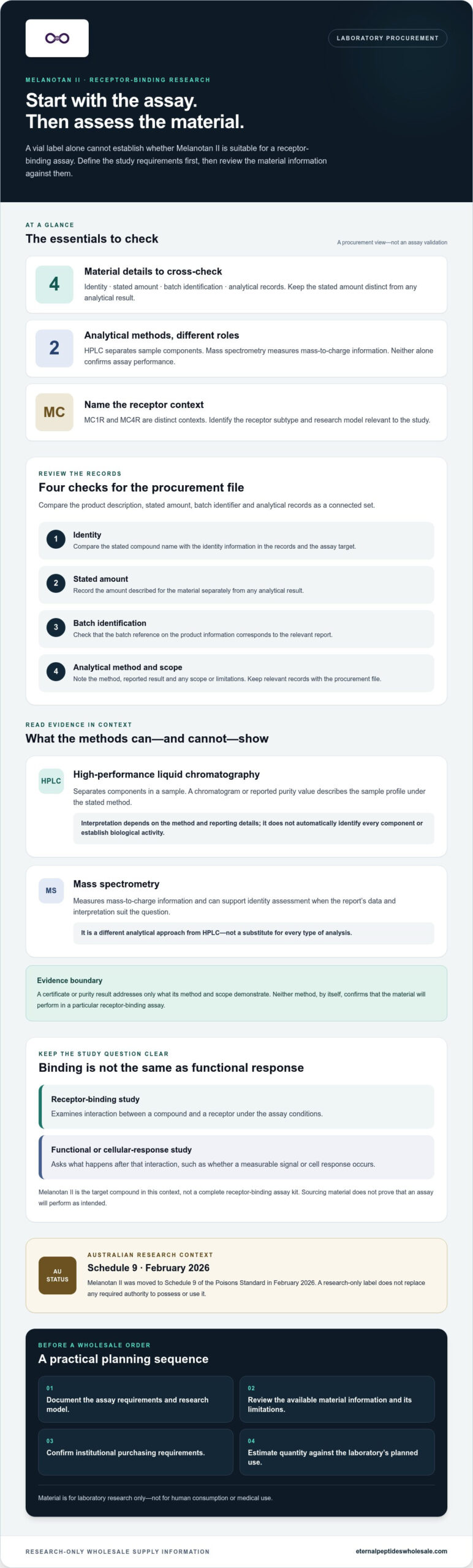
- Use a supply checklist to compare identity, stated amount, batch identification and analytical records.
- Interpret HPLC and mass spectrometry as distinct methods, and consider what each record can and cannot establish.
- Compare supply routes by assay fit, evidence access, traceability and suitability for your laboratory’s purchasing scale.
- Plan a wholesale order by documenting assay needs, reviewing available material information, confirming institutional purchasing requirements and estimating quantity. Eternal Peptides Wholesale offers Melanotan II 10mg for research purposes.
Melanotan II receptor-binding assay supply: define the research need first
Procurement should begin with the assay, not the vial. For Melanotan II receptor binding assay supply, the research team should identify what its method requires from the test material and what information it needs to retain. This gives the team a clearer basis for comparing supply options than selecting a product by name alone.
Melanotan II is the target compound in this context, not a complete receptor-binding assay kit. The assay depends on the research method and its components. Binding studies examine interaction between a compound and a receptor under the assay conditions. Functional or cellular-response studies ask what happens after that interaction, such as whether a measurable signal or cell response occurs. These are related but distinct research questions. Sourcing material does not prove that an assay will perform as intended.
For general background on the compound, the Melanotan II Wikipedia article provides an overview of its history and context. It is not an assay protocol or evidence that a particular material is suitable for a laboratory method.
What does a receptor-binding assay need from its test material?
The research question determines which material attributes matter. A team may need to record the compound’s identity, stated amount and batch identifier, then assess relevant analytical information against its method requirements. Keep those material details separate from assay performance. A label or analytical result does not establish that a compound has been validated in a specific assay.
- Identity: Record how the material is identified and compare that information with the assay’s target.
- Stated amount: Note the quantity described for the material and how the laboratory will account for it in its own records.
- Batch information: Capture identifiers that connect the material to its associated documentation.
- Method fit: Document any requirements the assay protocol places on the test material. Don’t assume a catalogue description answers them.
A catalogue name is a starting point for procurement, not a suitability determination. The laboratory remains responsible for assessing material information within its study design and quality processes.
Which melanocortin receptor context should buyers identify?
Specify the receptor subtype and research model relevant to the study. MC1R and MC4R are distinct melanocortin receptor contexts. Naming one without clarifying the model can leave procurement records ambiguous. Identify the receptor construct or model described by the assay, then align purchasing documentation with that context. This is research planning, not guidance about tanning, medical outcomes or human use.
Supplied material is for laboratory research only, not human consumption or medical use. Keeping the receptor-binding question, experimental model and any downstream functional work distinct gives researchers and procurement teams a consistent basis for evaluating supply.
Assess Melanotan II documentation before matching it to an assay
Once assay requirements are defined, review material records as a connected set rather than treating a single certificate or percentage as a complete assessment. When comparing Melanotan II records, the practical questions are whether the records identify the material and batch clearly, and whether their scope is relevant to the laboratory’s purchasing and research records.
How should buyers interpret analytical records?
Start with a cross-check. Compare the product description, stated amount, batch identifier and analytical records, noting any differences or missing links. A report is more useful when its identifiers correspond clearly to the product and batch being considered. Keep relevant records with the procurement file so the team can trace which information informed its decision.
- Identity: Compare the stated compound name with the identity information in the records.
- Stated amount: Record the amount declared for the material, separately from any analytical result.
- Batch identification: Match the batch reference on the product information to the relevant report.
- Analytical method: Note the method used, the result reported and the scope or limitations described.
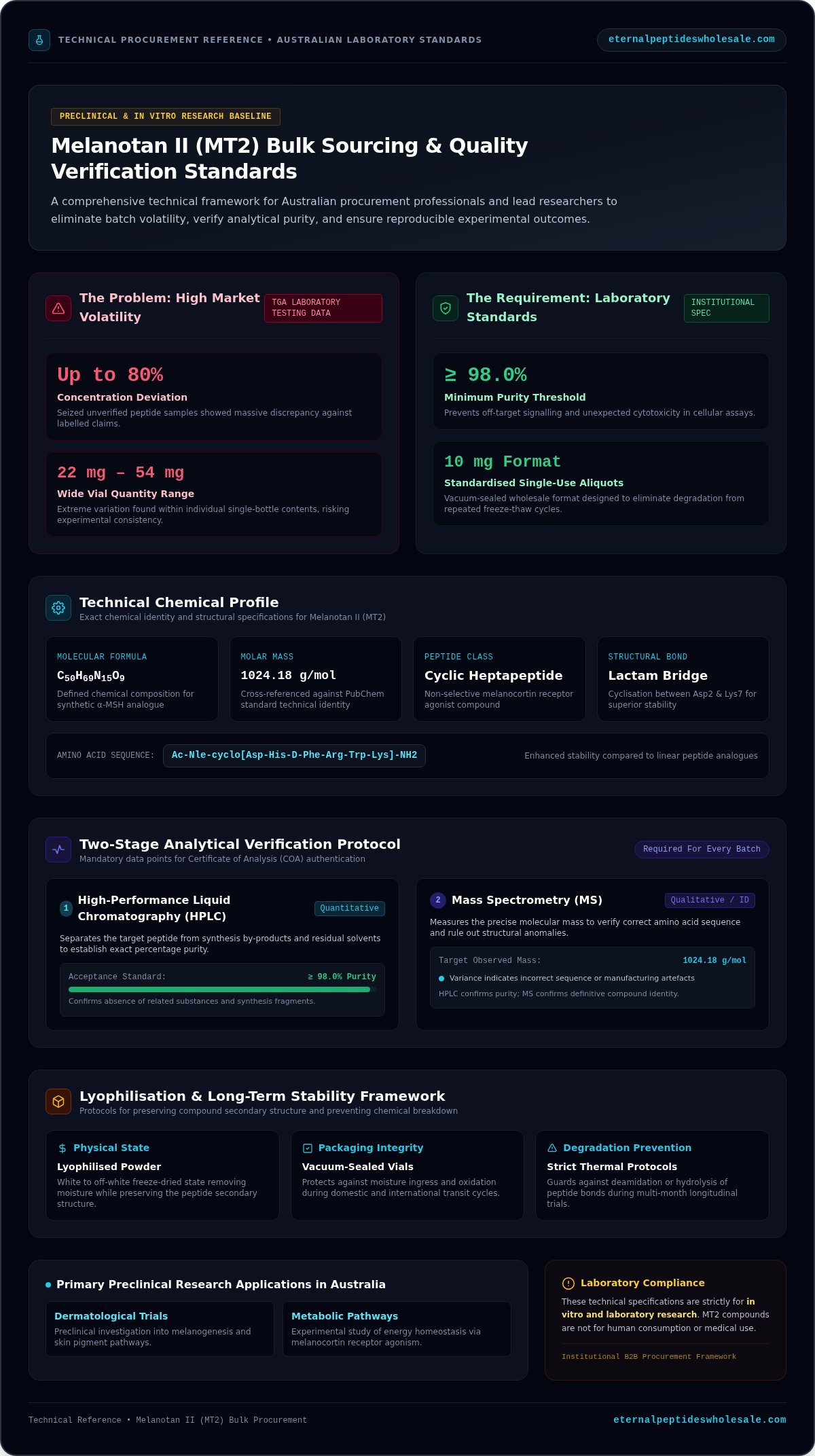
High-performance liquid chromatography (HPLC) separates components in a sample. A chromatogram or reported purity value can describe the sample’s profile under the stated method, but interpretation depends on the method and reporting details. It doesn’t automatically identify every component or establish biological activity.
Mass spectrometry measures mass-to-charge information and can support identity assessment when the report’s data and interpretation suit the question. It is a different analytical approach from HPLC, not a substitute for every type of analysis. Neither method, by itself, confirms that the material will perform in a particular receptor-binding assay.
For a broader procurement framework, the research peptide quality assurance guide can help place document review within a consistent purchasing process.
Which claims need stronger evidence?
Separate supplier descriptions from conclusions supported by experimental evidence. A supplier-provided purity statement describes a reported analytical result. On its own, it doesn’t demonstrate receptor-binding activity, validate an assay or show that the material is suitable for a specific research model. These are distinct claims and require evidence that directly addresses them.
Analytical purity alone does not prove receptor-binding activity or performance in a particular assay.
When reviewing a claim, ask what was measured, by which method, on which batch and under what stated conditions. Distinguish those documented facts from inferences the study team may need to test independently within its research framework. This helps prevent a precise-looking figure from carrying more weight than its supporting record warrants.
For Australian laboratories planning a wholesale research order, Eternal Peptides Wholesale supplies Melanotan II 10mg for research purposes. The Australian wholesale research supply pathway is part of a procurement process grounded in clear assay requirements and appropriately interpreted documentation.
Compare supply options using assay fit, evidence and procurement scale
Compare purchasing routes against the same research criteria rather than relying on broad quality labels. A catalogue may help identify a compound and stated vial amount, while batch-linked records can support traceability. Neither catalogue wording nor a purchasing route alone establishes suitability for a particular assay. Keep the comparison tied to the documented study plan, purchasing policy and required evidence.
How does a research buyer compare catalogue information?
Start by matching the compound name and stated amount to the study plan. Then assess whether batch identifiers connect the product details to supporting records. Catalogue descriptions are useful for an initial comparison, but they are supplier-provided information, not independent validation of assay fit.
Assay fit
Compare the described material and amount with the study’s documented requirements. A product listing cannot establish performance in the laboratory’s method.
Identity evidence
Compare the stated compound name with identity information in associated records. Note the source and scope of each piece of evidence.
Batch traceability
Look for identifiers linking product details to the corresponding batch documentation. Record any mismatch or missing connection for procurement review.
Order scale
Consider whether the purchasing route suits the approved study plan, institutional process and planned quantity. Wholesale procurement is distinct from retail single-vial purchasing.
This comparison focuses on documentation and procurement suitability, not on ranking routes as inherently better or worse. For example, clear links between batch details and records can make document review more straightforward. The appropriate order scale still depends on the programme’s approved requirements.
The Melanotan II wholesale specifications guide is relevant when reviewing product information for research procurement. Treat catalogue details as one part of the assessment, and keep conclusions within the scope of the records provided.
When does wholesale procurement fit a research programme?
Wholesale purchasing can suit a laboratory programme when its planned quantity, purchasing policy and research schedule align. Before setting an order scale, compare the approved study design with the laboratory’s capacity to manage the material and the institution’s procurement requirements. Avoid ordering based on an assumed assay outcome or a quantity chosen without reference to the study plan.
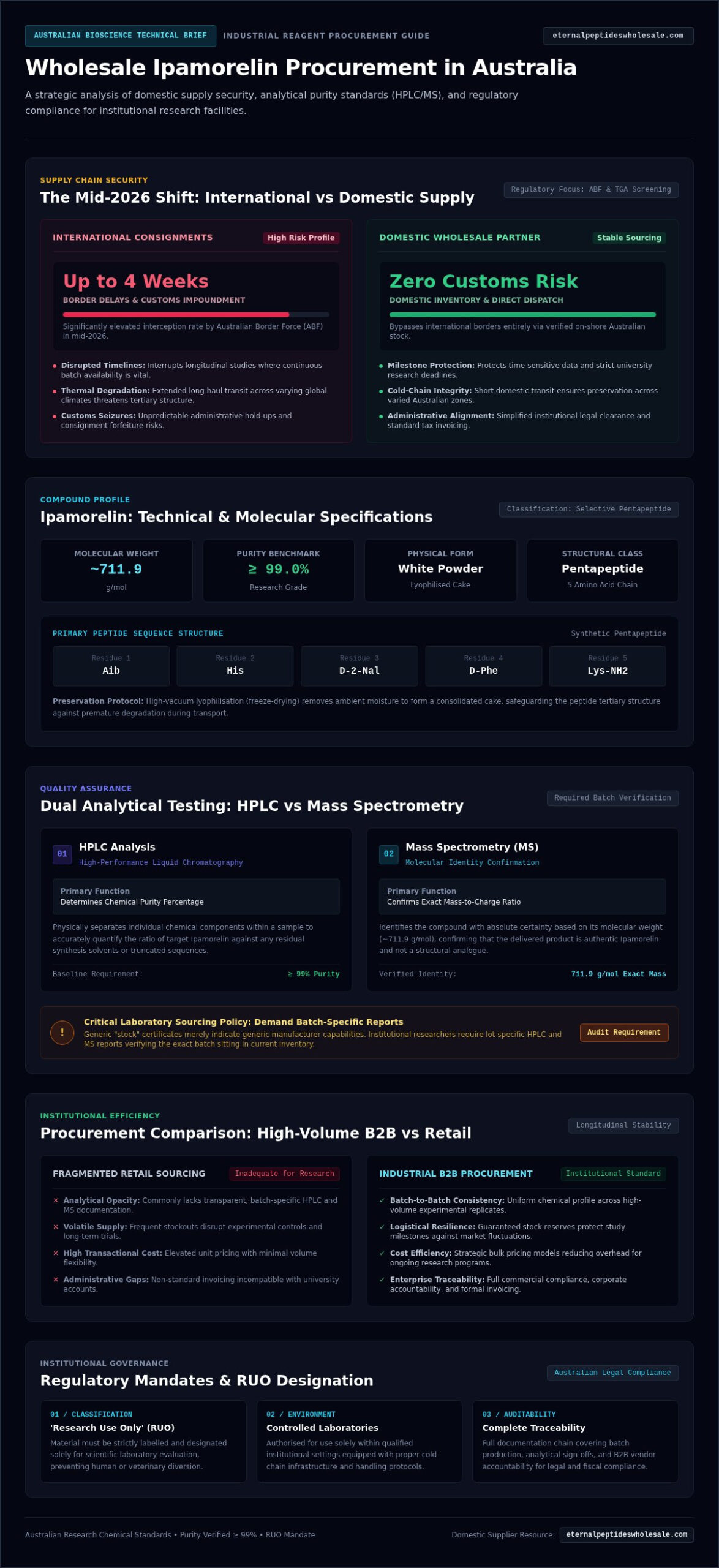
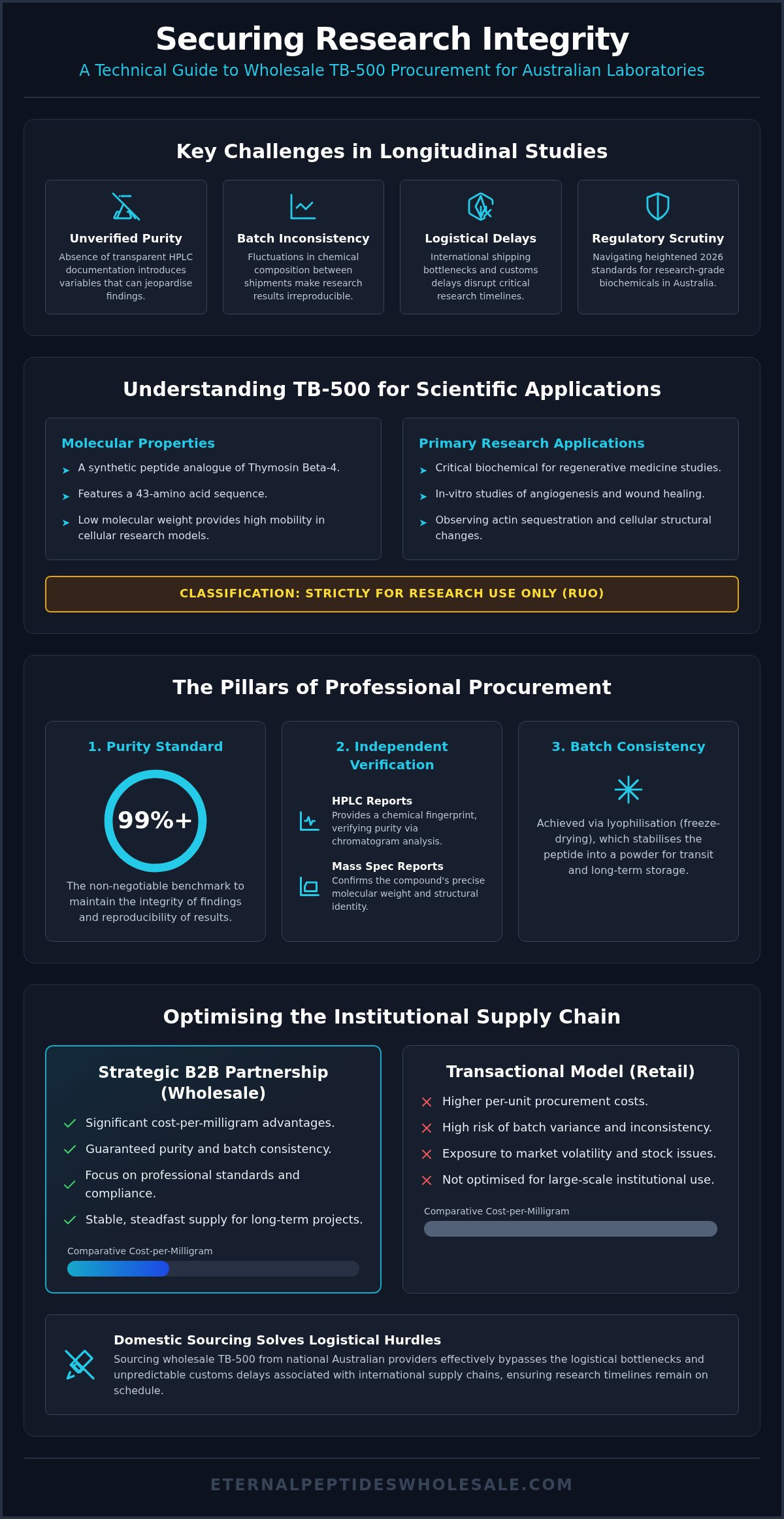
Eternal Peptides Wholesale is an Australian wholesale supplier of research-grade peptides, including Melanotan II 10mg for research purposes only. This is a laboratory research supply pathway, not retail single-vial purchasing or a clinical-use option. The Australian wholesale research supply is relevant to procurement teams assessing the offer against their research requirements.
Plan an Australian wholesale order for laboratory research
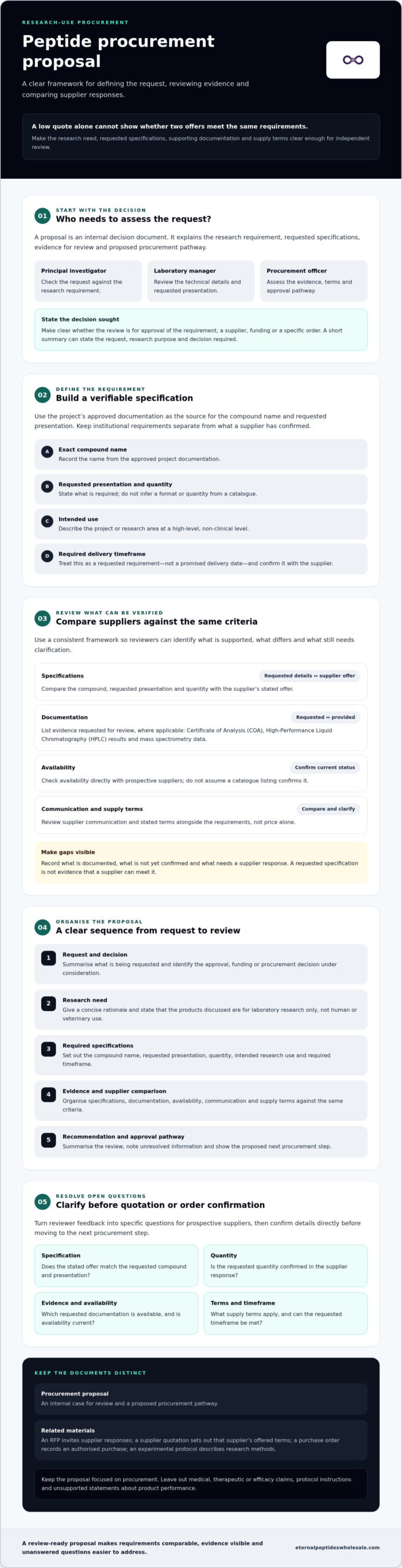
A clear order workflow helps researchers, procurement staff and laboratory administrators work from the same requirements. Keep study design decisions separate from commercial decisions, and document the basis for each before approving an order.
- Define the assay need. Record the research question, receptor context, study design and material attributes required by the laboratory’s method. Establish these requirements before comparing order quantities or purchasing routes.
- Review the product and batch documentation. Record the stated compound name, amount and relevant batch identifier, then link these details to available supporting records. Keep this information in the laboratory’s purchasing and research documentation, distinguishing supplier descriptions from conclusions established by the study.
- Confirm institutional purchasing requirements. Follow the organisation’s processes for supplier records, approvals and purchase documentation. Where Australian regulatory or import questions apply, verify current requirements directly through authoritative Australian sources, such as the relevant government agency. Don’t rely on an unverified summary or assume a research-use description resolves regulatory questions.
- Plan the quantity. Align the requested amount with the approved research plan, purchasing policy and the laboratory’s capacity to manage the order. Avoid choosing a quantity based on assumptions about experimental performance or unverified storage specifications.
What should procurement teams settle before ordering?
Agree on one written specification that researchers and purchasing staff can use consistently. It should identify the research purpose, requested material, amount, batch-recording needs and institutional approval pathway. This gives the team a shared reference for preparing purchasing records and receiving documentation, without adding unsupported assumptions about shipping timelines or handling conditions.
Keep regulatory and import statements out of order notes unless they have been checked against current, authoritative Australian guidance and are relevant to the circumstances. Rules can be technical and may depend on the activity and context. This guide doesn’t establish an organisation’s legal authority or replace formal institutional review. Check official sources rather than inferring obligations from catalogue wording.
How can teams reduce avoidable sourcing friction?
Use the same written specification across the research plan, purchasing request and laboratory records. That helps prevent inconsistencies, such as a purchasing request naming a different amount from the study plan or a batch identifier being omitted from the receiving record. Keep assay design choices with the research team and commercial ordering decisions within the relevant procurement process.
Checklist: define the assay need, review product and batch records, confirm institutional purchasing requirements, then align quantity with the approved plan before order approval.
The Australian wholesale research peptide procurement guide provides additional context for structuring a purchasing workflow. The Melanotan II 10mg wholesale supply pathway from Eternal Peptides Wholesale is for laboratory research customers nationally.
Source Melanotan II 10mg wholesale for research through Eternal Peptides Wholesale
Once assay requirements, documentation criteria and purchasing approvals are aligned, assess the supply decision against a defined laboratory need. Eternal Peptides Wholesale is an Australian wholesale supplier of research-grade peptides, including Melanotan II 10mg supplied for research purposes. The offer is for research use only, not for human consumption or medical use.
This distinction matters for procurement records. Wholesale supply is intended for professional purchasing, not retail single-vial sales. Eternal Peptides Wholesale does not sell retail single-vial products or provide medical consultations. Its role here is research supply, not advice on treatment, tanning or other personal use.
What can buyers expect from the confirmed supply offer?
The wholesale offer is Melanotan II 10mg for research purposes. That product description does not establish assay validation, analytical results or performance outcomes. Laboratories should assess the product information available against their study documentation and institutional purchasing process, keeping supplier details distinct from conclusions established by their own research.
That distinction supports a professional B2B decision. The appropriate basis for an order is a documented laboratory requirement and an approved quantity, not assumptions about biological effect or suitability for a particular method. Evaluation of research material remains within the laboratory’s own scientific and institutional framework.
What is the next step for a laboratory buyer?
Bring the key procurement records together: the assay requirements, product and batch information under review, documentation criteria, institutional purchasing approvals and the quantity supported by the research plan. This gives researchers and procurement staff a shared basis for evaluating the order and filing its records.
The Melanotan II wholesale supply information is relevant for buyers reviewing the research supply offer. Use it alongside documented study needs, not as a substitute for assay-specific assessment or institutional processes.
For laboratories whose approved research requirements align with the wholesale offer, explore Melanotan II 10mg wholesale for research through Eternal Peptides Wholesale. A disciplined approach to sourcing assay material keeps the decision focused on research purpose, evidence review and appropriate order planning.
Move from assay criteria to a considered order
A sound purchasing decision begins with a clear record of why the material is needed and how the laboratory will assess its suitability. Keep the study’s requirements, evidence review and purchasing approval connected, while treating them as distinct steps. This gives researchers and procurement teams a practical basis for making decisions and maintaining clear records.
For receptor-binding work, align documented research needs with a supply pathway designed for laboratory use. Eternal Peptides Wholesale is an Australian supplier serving research customers nationally, with Melanotan II 10mg available wholesale for research purposes only. The supply is not for human consumption or medical use.
Research teams can explore Melanotan II 10mg wholesale for research and assess the offer against their procurement requirements. A defined study plan and considered purchasing process give the team a clear basis for its decision.
Frequently Asked Questions
What is Melanotan II receptor-binding assay supply?
It means sourcing Melanotan II material for a laboratory study examining receptor binding, rather than purchasing a complete assay kit. The term describes a procurement requirement, not evidence that a product will work in a particular experimental system. Before sourcing, specify the receptor and research model, then decide which records the laboratory needs to retain. Eternal Peptides Wholesale supplies Melanotan II for research purposes only, not for human consumption or medical use.
Can Melanotan II be used in a receptor-binding assay?
Its suitability depends on the study design, receptor system, assay format and evidence available for the relevant batch. For example, a research team working with a particular receptor model should assess material information against that model’s protocol, rather than infer fit from a catalogue name. A purity figure alone can’t establish binding performance. This supply is strictly for laboratory research, not human or medical use.
How do HPLC and mass spectrometry help assess research peptide supply?
HPLC provides chromatographic information about a sample, while mass spectrometry can support assessment of molecular identity. These methods address different analytical questions, so interpret each report according to its method details and stated scope. For example, check that a report’s batch identifier corresponds to the material being considered. Neither method, by itself, demonstrates how a sample will behave in a particular receptor-binding assay.
Does a purity report prove receptor-binding activity?
No. A purity report provides analytical information about a sample, but it doesn’t independently show receptor binding, assay performance or suitability for a specific research model. Those conclusions need evidence relevant to the experimental system and its validation. Avoid treating one reported figure as a complete assessment. In laboratory records, note which batch the report describes and keep analytical findings distinct from functional or biological evidence.
Is Melanotan II 10mg available for wholesale research supply in Australia?
Eternal Peptides Wholesale offers Melanotan II 10mg through its wholesale research supply in Australia. The offer is for research purposes only, not for human consumption or medical use. It’s a wholesale product, rather than a retail single-vial purchase. Research buyers can use the stated amount when preparing an institutional purchasing request, then align the proposed order with study documentation and internal procurement procedures.
What should a laboratory check before ordering Melanotan II for an assay?
Begin by recording the receptor and assay context in the purchasing request, then identify the product details and batch records needed for laboratory files. Compare the stated compound and vial amount with the approved study plan. If the research protocol changes, update the purchasing documentation before ordering so the rationale and requested quantity remain aligned. Follow institutional purchasing procedures and verify applicable requirements through authoritative sources.
Is Melanotan II supplied for human consumption or medical use?
No. Eternal Peptides Wholesale supplies research-grade peptides for laboratory research purposes only. Its Melanotan II wholesale offering isn’t intended for human consumption, tanning, diagnosis or treatment, and the business doesn’t provide medical consultations. Research supply information should not be interpreted as guidance about personal use. Keep procurement and research activity within the relevant institutional framework, with study documentation and purchasing records reflecting the laboratory purpose.
Related from Eternal Peptides Wholesale
Eternal Peptides Wholesale publishes batch-specific Janoshik Analytical reports in its certificate of analysis library, so the documentation for a listed batch can be read alongside the evidence discussed in this article.
- Peptide COA library: batch-specific Janoshik Analytical reports with their verification details
- Our peptide testing standards: how independent Janoshik testing is used and reported
- Melanotan II research catalogue
- Evidence review: What do peptides do? Peptide signalling and classes
- Evidence review: Synthetic peptides: manufacture, impurities and analytical verification
Related reading: Melanotan II Bulk Wholesale: Technical Specifications for Australian Research