
Posted on

Wholesale BPC-157 Australia: Research Lab Sourcing Guide

Wholesale BPC-157 Australia: Research Lab Sourcing Guide

A wholesale listing is only the starting point for laboratory procurement. If you’re assessing wholesale bpc 157 australia options, first define the research requirement, then consider whether the product details and purchasing arrangement fit your institution’s processes and applicable Australian requirements. A “research use only” label does not, by itself, establish that supply or possession is authorised.

Eternal Peptides Wholesale lists BPC-157 5mg for laboratory research purposes only, not for human consumption or medical use. This guide explains how to assess product identity, compare wholesale supply with retail-oriented listings, and interpret batch documentation without treating marketing claims as evidence. It also covers how to plan quantities around a documented research requirement and why regulatory considerations belong at the start of procurement. The aim is to help laboratory buyers make an evidence-led assessment without assuming product quality or documentation beyond what has been substantiated.

Key Takeaways

  • Define the research scope and check institutional purchasing requirements before comparing wholesale bpc 157 australia options.
  • Eternal Peptides Wholesale lists BPC-157 5mg for laboratory research only, not for human consumption or medical use.
  • Assess documentation by matching product identity and batch details, then reviewing the analytical method and report scope.
  • Separate the listed compound and quantity from claims about biological effects or research outcomes.
  • Build procurement around internal approval and clear order records, and account for applicable Australian regulatory requirements.

Wholesale BPC-157 Australia: What Laboratory Buyers Need to Know

Wholesale BPC-157 supply is a laboratory research procurement arrangement, not a consumer or therapeutic product category. For Australian laboratories, comparing wholesale bpc 157 australia options means starting with the research purpose, product identity and institutional purchasing requirements. A bulk listing alone does not demonstrate suitability or permission to purchase.

Eternal Peptides Wholesale lists BPC-157 5mg for laboratory research purposes only. It is not for human consumption or medical use. The listed quantity identifies the product offering, but does not establish research outcomes, product performance or suitability for a particular project.

What does wholesale BPC-157 supply mean for a laboratory?

Wholesale procurement is organised around a laboratory’s documented requirements and purchasing processes. A single-vial retail listing is generally framed for an individual transaction, while a wholesale offering is intended for business or institutional purchasing. This describes the purchasing context, not a particular pack size, discount, testing standard or scientific benefit.

Before comparing listings, record the project scope, required material identity and reason for the quantity requested. Base the plan on the documented need, not assumed pack sizes or a desire to buy more. A supply arrangement concerns procurement; it does not establish conclusions about the compound or replace a research protocol.

  • Define the research requirement and the basis for the quantity.
  • Record the exact product identity and listed amount under review.
  • Keep procurement documentation separate from scientific interpretation.

Who is this Australian sourcing guide for?

This guide is for laboratory researchers, procurement staff and research institutions operating across Australia. It provides a framework for assessing product fit, documentation and internal processes. It is not a research protocol and does not provide directions for handling, administration or use in people.

Product decisions remain subject to institutional procedures and applicable Australian requirements. A research-use-only description does not, on its own, determine whether a particular acquisition is authorised or appropriate. Include regulatory and institutional review in procurement planning, and consult current official guidance where needed. The BPC-157 Wikipedia article offers a general overview of the compound, but is not a substitute for regulatory advice or product-specific evidence.

The distinction between wholesale and retail matters because the purchasing record should reflect the laboratory’s actual requirement, not an individual consumer transaction. A disciplined assessment also prevents a listed quantity or supplier description from being mistaken for evidence about quality or research relevance. The following sections cover product fit, documentation and procurement planning in more detail.

BPC-157 Product Fit: Define the Research Requirement Before Sourcing

Product fit starts with the research requirement, not a supplier’s description. Before comparing wholesale bpc 157 australia listings, document the laboratory context, the required material identity and the reason for the requested quantity. This gives researchers and procurement staff a consistent basis for assessing a listing while keeping product selection within institutional procedures.

Make the brief specific. For example, it can name BPC-157 as the compound under consideration, describe the laboratory research context and explain how the required quantity was determined. Don’t add assumptions about formulation, storage conditions or other specifications that aren’t stated in the product information.

Match product identity and stated quantity to the project

Eternal Peptides Wholesale lists BPC-157 5mg as a wholesale offering for laboratory research. Treat the compound name and stated quantity as product-identification details, then compare them with the written requirement. The listing does not establish suitability for a particular study, and the quantity does not indicate how much a project needs.

A clear internal brief can record:

  • The compound identity required for the project.
  • The stated quantity being assessed.
  • The intended laboratory research context.
  • The institutional process that governs purchasing decisions.

This record helps separate procurement fit from scientific interpretation. A product description can identify what is being offered; it cannot establish the material’s relevance to a hypothesis or predict a study result. Keep those judgements within the research team’s established review process.

Keep research-use language precise

Descriptions of research interest provide context, not proof. References to a topic or model do not demonstrate efficacy, confirm suitability for a specific study or support claims about health outcomes. Use neutral terms such as “research interest” and “laboratory study”, and assess scientific claims separately through appropriate evidence and institutional review.

BPC-157 products supplied by Eternal Peptides Wholesale are strictly for laboratory research. They are not for human consumption or medical use. Avoid language that blurs this boundary, such as turning a research-area description into a treatment benefit or an expected result.

Before progressing a purchase review, check that the proposed product identity and quantity align with the project brief and that the decision follows institutional requirements. For a procurement starting point, review Eternal Peptides Wholesale’s wholesale BPC-157 5mg offering against the documented research need.

Assess Wholesale BPC-157 Documentation and Quality Claims

Documentation is useful when it supports a specific procurement decision. When assessing wholesale bpc 157 australia options for research, distinguish a general quality statement from evidence tied to the exact product and batch under review. A marketing description may explain how a supplier presents an offering, but it cannot replace a document that identifies what was assessed and reports results within a defined scope.

Marketing claims and batch-specific evidence are not interchangeable. Keep that distinction clear in the procurement record. A certificate or analytical report should be interpreted according to its stated contents, not treated as a blanket assurance of research suitability, biological performance or compliance with institutional requirements. The steps below help make the limits of the paperwork clear.

What should a laboratory review in product documentation?

Use a four-step review: confirm product identity, match the record to the relevant batch, identify the analytical method and read the report scope. If an element is absent or ambiguous, record that limitation rather than filling the gap with an assumption. This creates a traceable basis for internal review without overstating what the paperwork establishes.

  1. Product identity: Check that the document names the compound being assessed and corresponds to the product under consideration.
  2. Batch link: Look for a batch identifier connecting the report to the material under review, rather than relying on a general supplier statement.
  3. Analytical method: Note the method named in the report and what it is used to assess.
  4. Report scope: Record the reported results, stated limits and any information the document does not cover.

A certificate is relevant only to the extent that its identity and batch details match the product and batch being assessed. A document for a different batch, or one that names no batch, may not support the same procurement conclusion. Include the document date and any stated limitations in the institution’s records so reviewers can see exactly what evidence informed the decision.

How to interpret purity and testing language

HPLC, or high-performance liquid chromatography, is an analytical technique used to separate components in a sample. Mass spectrometry measures the mass-to-charge ratios of ions and can contribute to characterising material. These terms describe methods. They do not guarantee that a particular supplier used them or that a report answers every question relevant to a laboratory’s requirements.

Read a stated purity percentage within the test’s scope and reporting basis. On its own, it does not prove suitability for a specific study, biological activity or performance. Don’t infer additional tests from the mention of one method. When reviewing an analytical claim, use current product documentation that directly supports it.

For a more structured procurement review, the research peptide quality assurance guide provides related context. Documentation review is one part of a broader institutional assessment; it does not replace applicable approval or regulatory review.
Wholesale BPC-157 Australia: Research Lab Sourcing Guide

Plan Wholesale BPC-157 Procurement for an Australian Laboratory

A sound procurement process connects the research requirement, institutional review and purchasing record. For wholesale bpc 157 australia enquiries, treat regulatory and institutional approval as prerequisites, not paperwork to complete after selecting a product. A research-use-only description does not, by itself, establish that a proposed supply or acquisition is authorised. The institution should assess applicable Australian requirements before a purchasing decision proceeds.

A procurement sequence from requirements to records

Use a documented sequence so each decision has a clear basis. The exact review pathway depends on institutional procedures and the requirements that apply to the proposed research.

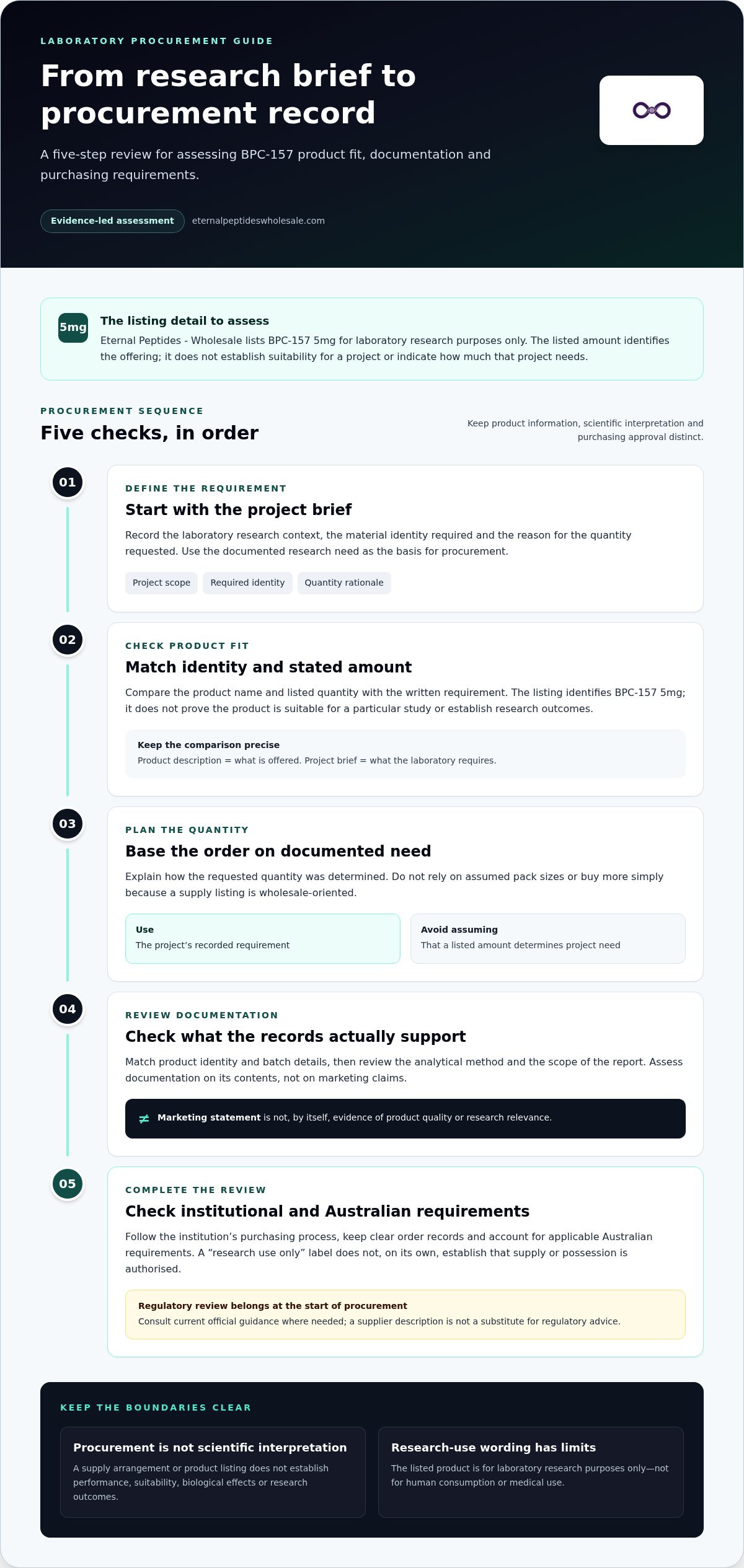
  1. Define the requirement. Record the compound identity, stated quantity and authorised research context. Explain how the quantity relates to the project rather than relying on an assumed pack size.
  2. Complete institutional review. Route the proposed procurement through the relevant purchasing, research governance and compliance processes. Resolve authorisation questions before proceeding.
  3. Assess product information. Review available product details and any batch documentation. Record what the documents establish, their scope and any limitations. Don’t infer tests or specifications that aren’t stated.
  4. Document the decision. Retain the review outcome, approval records, relevant product information and order records according to institutional procedures.

This sequence creates a traceable record from need through approval. It also distinguishes a decision to assess an offering from a conclusion that it is authorised or appropriate for a particular project. Align research-use procedures with purchasing controls, and refer unresolved regulatory questions to the institution’s designated compliance personnel.

Wholesale versus retail: choose the right purchasing context

Compare the project’s documented requirements with the supplier’s stated wholesale offer. Eternal Peptides Wholesale operates as a wholesale supplier, and its listed BPC-157 offering is BPC-157 5mg for laboratory research purposes only. The business does not sell retail single vials. Wholesale purchasing is therefore distinct from a retail-oriented single-vial listing, but that distinction does not establish the permissions, documentation or suitability required for a particular institutional purchase.

Keep the assessment focused on verifiable details. Don’t infer minimum quantities, pricing, payment terms, shipping arrangements or delivery timeframes unless those details are explicitly documented for the transaction. A general fulfilment statement is not a commitment to a specific order. For a broader framework on Australian purchasing workflows, the Australian wholesale research peptide procurement guide can help structure internal review.

Once institutional approval and relevant requirements are clear, review the BPC-157 5mg wholesale listing as part of the documented assessment. Products are for laboratory research only, not for human consumption or medical use.

Source Wholesale BPC-157 from Eternal Peptides Wholesale for Research Use

Eternal Peptides Wholesale is an Australian-based wholesale supplier of research-grade peptides. Its listed BPC-157 offering is BPC-157 5mg, supplied strictly for laboratory research. It is not intended for human consumption or medical use. These details define the offer; they do not establish suitability for a particular study or make claims about effects.

The wholesale model is distinct from retail single-vial purchasing. Eternal Peptides Wholesale does not sell retail single vials, and its BPC-157 listing is presented as a wholesale research offering. This purchasing context is relevant to laboratory procurement, but it is not evidence of product quality, research performance or legal authority to acquire or supply the compound.

What Eternal Peptides Wholesale’s wholesale offer is designed for

The offering is for laboratory research within an appropriate institutional and regulatory framework. Before proceeding, define the research requirement, establish that the proposed procurement aligns with organisational procedures and assess product information against that requirement. A research-use label does not, by itself, establish that acquisition is authorised under applicable Australian controls.

Keep these points distinct in procurement records:

  • Product identity: BPC-157.
  • Listed quantity: 5mg.
  • Purchasing context: wholesale supply for laboratory research.
  • Use restriction: not for human consumption or medical use.

This summary is a starting point, not a substitute for the product-fit and documentation review described above. A laboratory still needs to assess whether the stated identity and quantity match its documented requirement, consider what product or batch records establish, and follow its own approval and purchasing processes. Avoid drawing conclusions beyond the stated scope of product descriptions.

Take the next step with a research-led purchasing decision

Before considering a transaction, address applicable Australian requirements and institutional approvals. BPC-157’s regulatory status means a research-only description should not be treated as an exemption or proof that a proposed supply arrangement is authorised. If regulatory obligations are uncertain, consult current authoritative Australian guidance and the institution’s compliance processes before proceeding.

For laboratory buyers whose procurement has passed the relevant review, compare the documented project need with the wholesale listing and retain the basis for the decision. Review the BPC-157 5mg wholesale research listing as part of that assessment. Base the decision on product identity, quantity fit, documentation scope and applicable approvals, not unverified claims about performance, fulfilment or quality.

Make the Next Procurement Decision Evidence-Led

Turn your review into a clear internal decision record. Document why the proposed material fits the project, what the available evidence does and does not establish, and which institutional approvals apply. This gives researchers and procurement staff a shared basis for deciding whether to proceed, pause or seek further review.

For teams evaluating wholesale bpc 157 australia options, a research-use label alone does not establish authority to acquire or supply the product. Resolve applicable Australian regulatory requirements and institutional approvals before procurement. Keep that assessment distinct from product identity and batch documentation so each part of the decision is supported by appropriate evidence.

Eternal Peptides Wholesale is an Australian-based wholesale supplier, with BPC-157 5mg listed for laboratory research only, not for human consumption or medical use. If the offering aligns with your documented requirements and relevant approvals, review Eternal Peptides Wholesale’s wholesale research peptide range as part of your purchasing assessment. A careful, well-recorded decision is a sound foundation for responsible research procurement.

Frequently Asked Questions

Can laboratories source wholesale BPC-157 in Australia?

Not as an unrestricted purchase based solely on a supplier’s listing. BPC-157 is classified as a Schedule 4 prescription-only medicine in Australia, so a “research use only” description does not itself establish that supply or acquisition is authorised. Eternal Peptides Wholesale lists BPC-157 5mg as a wholesale research offering, but laboratories must assess applicable regulatory requirements and institutional approvals before considering procurement. A listing is not proof of legal authority.

What does research-use-only mean for BPC-157?

Research-use-only describes the stated purpose of a product. It does not make it a medicine, support human use or establish that a purchase is lawful. Laboratories should consider the Australian regulatory framework separately from the supplier’s label and follow their organisation’s governance and handling procedures. Eternal Peptides Wholesale’s products are for laboratory research only, not human consumption or medical use. The business does not provide medical consultations.

What should a laboratory check before purchasing wholesale BPC-157?

Begin with the institution’s authority to acquire the material, then assess whether the product information matches the approved research requirement. A procurement record can note the compound name, stated quantity, relevant batch identifier and documents reviewed, alongside the approval reference. Keep promotional descriptions separate from evidence. If a proposed acquisition raises regulatory or governance questions, pause the purchasing process and refer them through the institution’s established compliance pathway.

Is a certificate of analysis enough to assess a BPC-157 product?

No. A certificate of analysis may inform a review, but its usefulness depends on whether it identifies the specific material and batch and clearly describes its methods and results. A generic document, or one that cannot be linked to the product under consideration, offers a limited basis for assessment. Record the document’s scope and omissions, and don’t treat reported results as proof of suitability for a particular project or of biological outcomes.

How much BPC-157 should a laboratory order wholesale?

There’s no universal quantity for every laboratory. The amount should follow an approved project requirement and institutional purchasing process. Avoid basing the decision on consumer advice, an assumed pack size or a supplier’s general description. Eternal Peptides Wholesale lists BPC-157 5mg as a wholesale offering. Assess that stated quantity against the authorised need rather than interpreting it as a recommendation about study design or use.

Does wholesale BPC-157 have a human medical use?

Eternal Peptides Wholesale’s BPC-157 offering is for laboratory research only, not human consumption or medical use. The business does not provide medical consultations, and a wholesale listing is not medical advice, a treatment recommendation or an instruction for human use. Don’t infer a medical purpose from research-related descriptions. Questions about a person’s health or treatment belong with an appropriately qualified health professional, not a research product listing.

How can Australian laboratories compare wholesale and retail BPC-157 listings?

Compare the purchasing format with the institution’s procurement needs, but don’t assume that format determines legality or product quality. Wholesale and single-vial retail listings may describe different purchasing contexts; details such as quantity, testing, price and delivery terms are supplier-specific. For a wholesale bpc 157 australia assessment, record each listing’s stated product identity and supporting documents separately, then assess the proposed acquisition under institutional procedures and applicable Australian requirements.

Related from Eternal Peptides Wholesale

Eternal Peptides Wholesale publishes batch-specific Janoshik Analytical reports in its certificate of analysis library, so the documentation for a listed batch can be read alongside the evidence discussed in this article.

Posted on

Anti-inflammatory Peptide Compounds for Study: Evidence, Mechanisms and Research Considerations

Anti-inflammatory Peptide Compounds for Study: Evidence, Mechanisms and Research Considerations

What if “anti-inflammatory” is a research hypothesis, not a settled property? The phrase anti-inflammatory peptide compounds for study covers substances with different origins, proposed mechanisms and levels of evidence. A finding in cells or animals doesn’t, on its own, show that a peptide has the same effect in people.

Online summaries can make the evidence difficult to assess. Therapeutic-sounding language may blur the line between an early research signal and an established clinical outcome. A careful interpretation starts with the study type, the model used, the endpoints measured and the limitations reported.

This article examines peptide categories discussed in inflammation research, including BPC-157, TB-500 and GHK-Cu. It considers pathways researchers investigate without presenting these compounds as proven treatments. You’ll learn how to compare preclinical findings with human clinical evidence, frame a focused laboratory research question and assess relevant quality documentation. The aim is to clarify what current research can support, and what it cannot establish.

Key Takeaways

  • Assess anti-inflammatory peptide compounds for study as research hypotheses, not established treatments.
  • Compare findings by study type, model and measured endpoint to understand what the evidence can support.
  • Look for compound-specific evidence before linking peptides to immune signalling, cytokines or pathways such as NF-κB.
  • Build a rigorous laboratory question by defining the model, controls and endpoints before interpreting results.
  • Research-grade supply, including BPC-157, TB-500 and GHK-Cu, does not establish efficacy, safety or suitability for human use.

What Are Anti-inflammatory Peptide Compounds for Study?

Peptides are chains of amino acids. Their sequence and three-dimensional structure influence how they may interact with biological systems. Each peptide is therefore a distinct subject for investigation, not part of a single, predictable class. The phrase anti-inflammatory peptide compounds for study describes research interest, not a shared mechanism or established therapeutic effect.

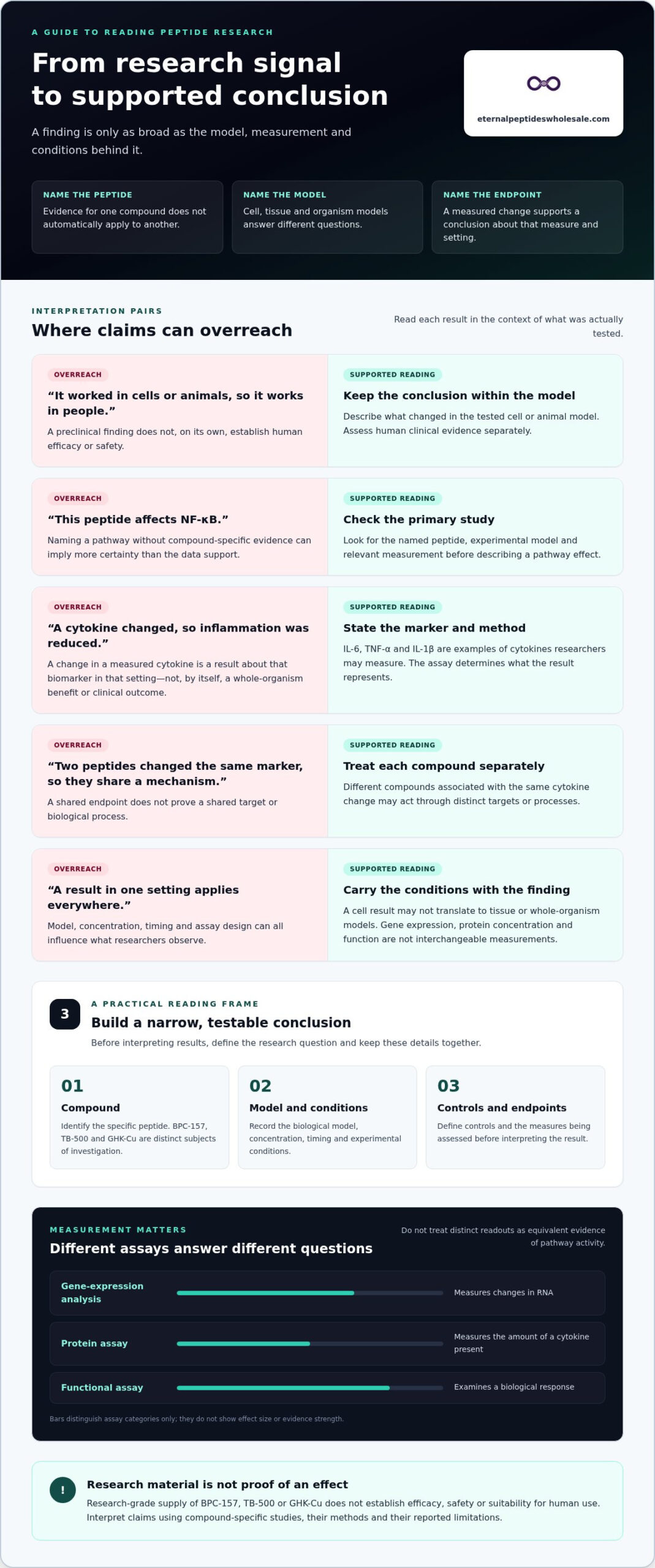
In research, “anti-inflammatory peptide” describes a peptide investigated for a change in a specified inflammation-related measure under defined experimental conditions; it does not, by itself, establish a therapeutic effect.

Research discussions commonly group peptides by origin:

  • Endogenous signalling peptides are produced within the body and can participate in biological signalling.
  • Food-derived bioactive peptides are fragments of proteins that may become active during food processing or digestion; their activity depends on characteristics such as sequence.
  • Experimental synthetic compounds are produced for investigation, including in laboratory settings. BPC-157, TB-500 and GHK-Cu are among the peptides supplied by Eternal Peptides Wholesale for laboratory research use only.

How does inflammation relate to peptide research?

Inflammation is a regulated biological response, not inherently a disease or a result that can be reduced to one measurement. Researchers may examine immune signalling, including cytokines, within a defined cell, tissue or organism model. Different peptides may be investigated for interactions with different targets or pathways, so findings about one compound shouldn’t be assumed to apply to another.

What does “anti-inflammatory” mean in a laboratory context?

In a laboratory study, the label should refer to an observed change in a specified model, endpoint and experimental condition. For example, a change in a measured cytokine is a result about that biomarker in that setting. It doesn’t, on its own, demonstrate a whole-organism benefit or a clinical outcome. The general overview of Anti-inflammatory agents offers background, but compound-specific research is needed to assess a peptide’s reported activity.

Keep each claim close to the evidence: identify the peptide, model, measured endpoint and conditions. A result linked to one pathway or experimental setting supports a narrow conclusion, not a blanket claim that the compound is anti-inflammatory in every context.

How Peptides May Interact with Inflammatory Pathways

Peptide research can examine interactions with immune signalling, cytokine production or pathways active in a particular tissue. These are possible mechanisms to investigate, not interchangeable explanations. NF-κB, for example, is a signalling pathway often discussed in inflammation research. A claim that a particular peptide affects it requires a primary study identifying the compound, experimental model and relevant measurement. Without that evidence, naming the pathway risks implying more certainty than the data support.

Every mechanism claim should name the peptide, the experimental model and the measured endpoint; a result in one setting doesn’t establish the same mechanism in another.

Which inflammatory markers appear in peptide studies?

Researchers may measure cytokines such as IL-6, TNF-α and IL-1β, but these are examples, not universal endpoints for peptide research. The method matters. Gene-expression analysis measures changes in RNA; a protein assay measures the amount of a cytokine present; a functional assay examines a biological response. These results answer different questions and shouldn’t be treated as equivalent evidence of pathway activity.

For each compound-and-marker pairing, consult the primary study and record the model, assay and experimental conditions. A review can help locate relevant work, but it shouldn’t replace checking the original methods and results. A shared endpoint also doesn’t prove a shared mechanism: two compounds associated with a change in the same cytokine could act through distinct targets, or the measured change could arise through different processes.

Why sequence and experimental context matter

A peptide’s amino-acid sequence shapes its structure and properties. Some food-derived peptide research investigates features such as charge and hydrophobicity in relation to observed activity. Those observations apply to the peptides and conditions examined; they aren’t universal rules for endogenous or synthetic compounds, nor reliable predictors of activity on their own.

Experimental context can change the result. The biological model, concentration, timing and assay design all influence what researchers observe. A finding in cultured cells may not translate to a tissue or whole-organism model, and a change in gene expression may not correspond to a change in protein concentration or function. Mechanistic interpretation therefore depends on the methods and limitations of the specific study.

For laboratory investigations involving BPC-157, TB-500 or GHK-Cu, Eternal Peptides Wholesale supplies these as research materials, not as proven anti-inflammatory interventions or products for human use. Researchers seeking bulk research materials can view research peptide supply.

How Strong Is the Evidence for Anti-inflammatory Peptide Compounds?

Evidence strength varies by compound and study type. Cell and animal findings can help researchers investigate mechanisms and develop hypotheses, but they don’t establish human efficacy or safety. The table separates evidence tiers and highlights where compound-specific details must come from the original study rather than being inferred from a general review.

Study type Compound and model Endpoint to record Major limitation
In vitro BPC-157 or TB-500 in the specific cell model reported by the primary study The paper’s measured outcome, such as a named biomarker, gene-expression result or functional assay. Don’t assume which endpoint was used. Cell findings don’t show whether the result occurs in an intact organism or people.
Animal BPC-157 or TB-500 in the animal model described in the study The reported tissue or inflammation-related outcome, recorded alongside the model and method Animal biology and experimental conditions may not reflect human biology or clinical settings.
Human observational No specific observational study is identified here If a primary study is located, record the population, exposure and measured outcome Without a specific study, no compound-specific conclusion can be drawn from this evidence tier.
Clinical intervention KPV has some published human clinical data relating to inflammatory bowel disease Check the original publication for the intervention, study design and clinical outcome measured Limited clinical data don’t establish broad efficacy or support conclusions about other peptides.

What can cell and animal studies establish?

These studies can test focused questions under defined conditions and help generate hypotheses for further investigation. Evidence on BPC-157 and TB-500 is described as predominantly preclinical, with robust human clinical data lacking as of October 2026. That characterisation doesn’t replace checking current primary literature, including the precise model, endpoint and study limitations.

How should human evidence be interpreted?

For any human study, check whether it’s peer-reviewed, controlled, adequately described and replicated. Then distinguish a change in a biomarker from an outcome meaningful to participants. A reported clinical result for one compound or condition isn’t proof of an established treatment effect, and it can’t be transferred to another peptide.

For anti-inflammatory peptide compounds for study, avoid rankings unless they’re supported by a systematic review with clear inclusion criteria. When evidence is absent or limited, state that directly. A research-grade label describes research context; it doesn’t demonstrate efficacy, safety or suitability for human use.

Anti-inflammatory Peptide Compounds for Study: Evidence, Mechanisms and Research Considerations

How to Frame a Rigorous Study of Peptide-Related Inflammation

A clear study starts with a narrow question, not a broad claim that a peptide is “anti-inflammatory”. The following workflow helps keep the research question, methods and conclusions aligned. It’s a conceptual framework, not a laboratory protocol or guidance on dosing, administration or treatment.

  1. Define the question. Specify one compound, a proposed pathway and a measurable primary endpoint. For example, ask whether a defined model shows a change in a named inflammatory marker under stated experimental conditions.
  2. Select a suitable model. Explain why the chosen cell, tissue or organism model can address the question, and describe its limits. Don’t assume a result in one model will apply to another.
  3. Set controls and comparisons. Decide on relevant control and comparison conditions before reviewing results. This helps distinguish a compound-associated change from background variation or other experimental factors.
  4. Choose and define endpoints. Pre-specify the primary outcome and distinguish it from exploratory measures. State how each endpoint will be assessed, since gene expression, protein concentration and functional assays measure different things.
  5. Document materials and conditions. Record compound identity, batch documentation, storage conditions and relevant assay details. A guide to quality assurance in research peptides can help frame documentation considerations for procurement and study planning.
  6. Plan interpretation and reporting. Report methods and results transparently, including unexpected or null findings. Where appropriate, pre-register the research question and analysis plan so readers can distinguish pre-specified outcomes from later exploratory analyses.

Account for oversight and reproducibility

Before work begins, researchers in Australia should identify the institutional ethics and biosafety review relevant to the project and its model, where applicable. Requirements depend on the research context, so follow the current guidance of the responsible institution and review bodies rather than assuming one process applies to every study. Clear records, repeatable methods and transparent reporting make it easier for other researchers to assess and reproduce findings.

These steps are particularly relevant when investigating anti-inflammatory peptide compounds for study: sound design can support a defensible interpretation, but it cannot turn a laboratory result into proof of clinical benefit. Eternal Peptides Wholesale supplies research-grade compounds, including BPC-157, TB-500 and GHK-Cu, for research use only, not human consumption or medical use. Explore wholesale research peptide supply.

Research-use Compounds and Responsible Interpretation

Research-grade supply describes the intended research context; it doesn’t establish a compound’s efficacy, safety or suitability for human use. Eternal Peptides Wholesale supplies BPC-157, TB-500 and GHK-Cu as research compounds for laboratory use. Their inclusion in a supplier’s range isn’t evidence that they produce an anti-inflammatory effect.

How should researchers assess compound-specific claims?

Trace each claim to primary literature. Check the publication date, study design, model, measured endpoint and stated limitations. A result from one experimental setting shouldn’t be generalised to other models or treated as proof of a therapeutic effect. Review articles may help identify relevant studies, but the original research is needed to assess what was actually tested and reported.

Keep supplier descriptions separate from independent evidence and peer-reviewed findings. For each material under consideration, review available identity and analytical documentation, then assess whether the compound and its documented characteristics suit the research question. Documentation supports evaluation of the material; it doesn’t establish biological activity. For further category context, see this guide to wholesale tissue repair research compounds.

What research-use boundaries should readers understand?

Eternal Peptides Wholesale supplies research-use products for laboratory contexts, not products for human consumption or medical use. This article doesn’t provide medical advice, human-use protocols or treatment recommendations. Research materials shouldn’t be presented as proven interventions, and a research-use description alone shouldn’t be treated as evidence of quality, efficacy or safety.

For a considered procurement decision, match the material’s documentation to the planned investigation, retain relevant records and interpret findings within the limits of the evidence. These checks matter for all anti-inflammatory peptide compounds for study, regardless of how a compound is described in marketing or secondary sources.

For Australian laboratories assessing research materials, explore wholesale research peptide supply.

Carry Your Research Forward with Clear Evidence Standards

“Anti-inflammatory” is best treated as a research question, not an automatic claim about a peptide. Findings depend on the compound, model and endpoint, and cell or animal results don’t establish human efficacy or safety. A focused question, appropriate controls and transparent reporting help keep conclusions proportionate to the evidence.

For researchers assessing anti-inflammatory peptide compounds for study, material documentation and study design both matter. BPC-157, TB-500 and GHK-Cu are supplied as research compounds, but their availability for laboratory research doesn’t establish therapeutic effects or suitability for human use.

Eternal Peptides Wholesale is an Australian-based wholesale supplier of research-grade peptides for laboratory use. Explore its research supply, including the listed compounds, through wholesale research peptide supply. With careful sourcing and evidence-led interpretation, your next investigation can begin on a clearer, more rigorous footing.

Frequently Asked Questions

Which peptides are studied in relation to inflammation?

Research may examine endogenous signalling peptides, protein fragments derived from foods, and synthetic experimental compounds. Their origins and evidence contexts differ, so these categories shouldn’t be treated as equivalent. BPC-157, TB-500 and GHK-Cu are among the compounds supplied by Eternal Peptides Wholesale for laboratory research; that listing doesn’t establish their mechanism or an anti-inflammatory effect. Assess each compound against primary studies and the specific model used.

How do peptides potentially influence inflammatory pathways?

Depending on the peptide and research model, investigations may examine immune signalling, cytokines or tissue-specific pathways. Markers such as IL-6, TNF-α and IL-1β can be measured, but their relevance depends on the study question and assay. Don’t assume a peptide affects NF-κB or a particular cytokine without compound-specific primary evidence. A shared marker or endpoint also doesn’t prove that different peptides act through the same mechanism.

Are anti-inflammatory peptide findings proven in humans?

No single answer applies to every peptide, because evidence differs by compound and study type. Cell and animal results can support hypotheses, but they don’t establish human efficacy or safety. For human research, examine the design, controls, methods, measured outcomes and whether findings have been independently replicated. A change in a biomarker isn’t necessarily a meaningful clinical benefit, and limited evidence shouldn’t be presented as an established treatment effect.

Can BPC-157 or TB-500 be described as anti-inflammatory?

Only with careful qualification. These compounds may be discussed in research concerning inflammation-related effects, but the claim should identify the study model and measured endpoint rather than present “anti-inflammatory” as an established general property. Available evidence for BPC-157 and TB-500 is predominantly preclinical, with robust human clinical data lacking as of October 2026. Neither research supply nor preclinical findings establish a treatment effect or suitability for human use.

What should a laboratory document when studying peptide-related inflammation?

Document the research question, model, controls, pre-specified primary endpoint and assay methods. Record compound identity, batch documentation, storage conditions and relevant experimental conditions, then report results and limitations transparently, including null findings. Distinguish exploratory measures from planned outcomes. Where applicable, account for institutional ethics and biosafety review. These records help readers assess whether findings relate to the tested material and conditions, and whether another laboratory could interpret or reproduce the work.

Related from Eternal Peptides Wholesale

Eternal Peptides Wholesale publishes batch-specific Janoshik Analytical reports in its certificate of analysis library, so the documentation for a listed batch can be read alongside the evidence discussed in this article.

Related reading: Wholesale BPC-157 Australia: Research Lab Sourcing Guide

Posted on

BPC-157 Bulk Supply: Guide for Australian Labs

BPC-157 Bulk Supply: Guide for Australian Labs

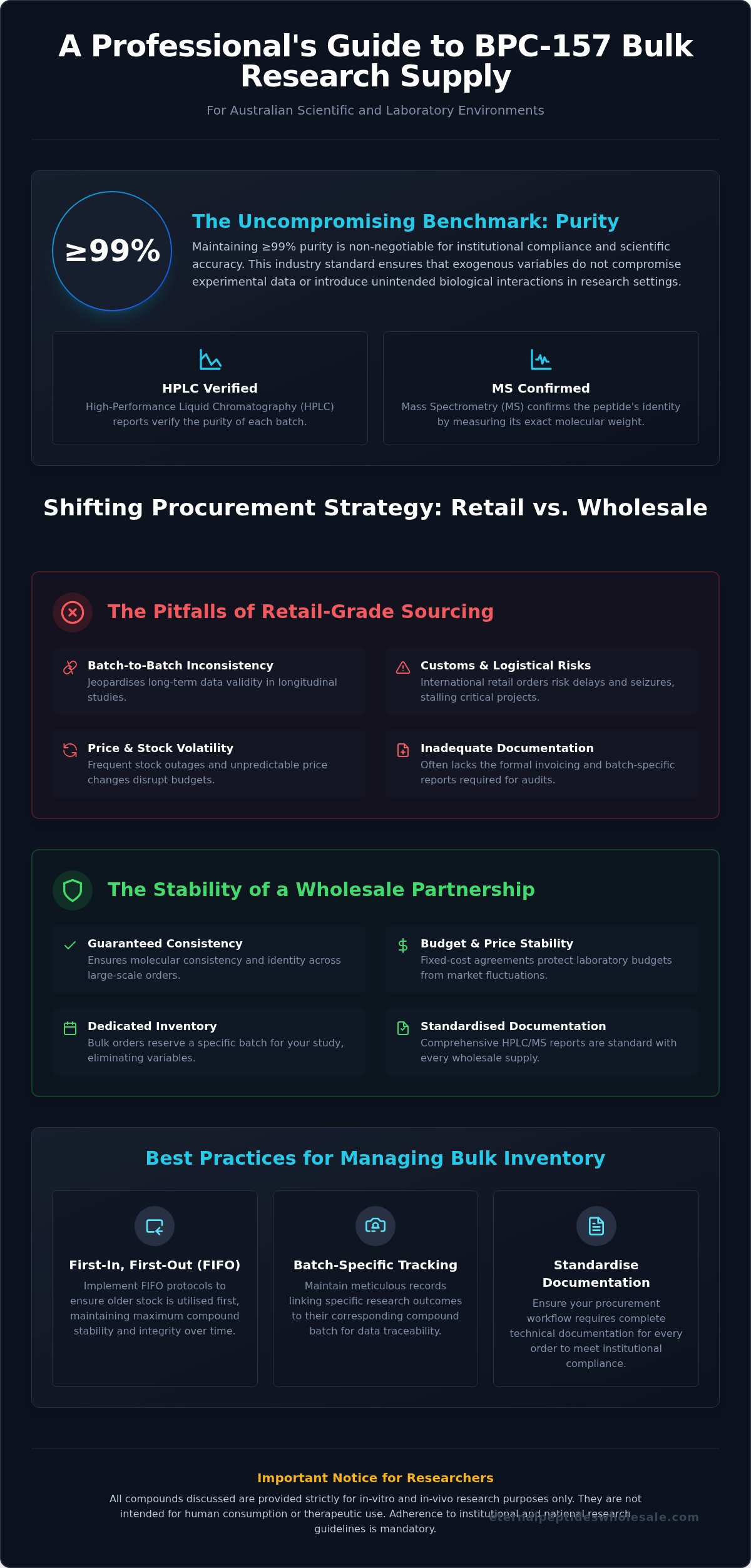
A laboratory’s research is only as credible as the compounds it utilises, yet many Australian facilities remain tethered to volatile retail-grade sources that jeopardise their long-term data. Relying on small-scale vendors often leads to batch-to-batch inconsistency and the persistent risk of Customs delays that stall critical projects. Establishing a reliable bpc-157 bulk research supply requires a shift from transactional purchasing to a professional B2B partnership built on technical transparency and logistical integrity.

You likely recognise that maintaining ≥99% purity is non-negotiable for institutional compliance and scientific accuracy. This guide provides a comprehensive framework for securing a consistent, wholesale supply of BPC-157 specifically for Australian research environments. We’ll analyse how to bypass retail volatility, ensure rigorous HPLC/MS documentation for every batch, and reduce procurement overheads through structured volume discounts. By the end of this article, your facility will have a clear roadmap for building a resilient, high-purity supply chain that supports domestic scientific advancement, ensuring all materials are handled strictly for research purposes and not for human consumption.

Key Takeaways

  • Identify why ≥99% purity verified through HPLC and Mass Spectrometry is the essential benchmark for maintaining data integrity in professional laboratory settings.
  • Navigate the logistical complexities of Australian procurement by evaluating the security of domestic distribution against the customs risks of international sourcing.
  • Optimise your bpc-157 bulk research supply through robust inventory management techniques, including First-In, First-Out (FIFO) protocols and batch-specific tracking.
  • Standardise your procurement workflow with technical documentation that ensures molecular consistency and identity across large-scale wholesale orders.
  • Ensure institutional compliance by aligning with a specialised partner that strictly provides research-grade compounds intended for scientific study rather than human consumption.

The Strategic Importance of BPC-157 Bulk Research Supply in Scientific Study

BPC-157, or Body Protection Compound 157, is a pentadecapeptide originally identified in and isolated from human gastric juice. For this BPC-157 overview, it’s essential to recognise that while it occurs naturally, laboratory-grade versions are synthesised to ensure precise molecular weights for experimental use. Establishing a bpc-157 bulk research supply is a critical step for laboratories focused on regenerative medicine. It ensures that the compound’s influence on various biological pathways remains constant throughout the duration of a study.

BPC-157 in Laboratory Research Protocols

Research into BPC-157 primarily centres on its regenerative properties, particularly its potential to accelerate angiogenesis and facilitate tendon-to-bone healing. These studies often utilise animal models or specific cell cultures to observe how the peptide interacts with growth factors. BPC-157 is a synthetic sequence of 15 amino acids used specifically for in-vitro and in-vivo research. In cell culture applications, the peptide is often introduced to observe its effect on fibroblast migration and collagen synthesis. These micro-level interactions demand the highest level of chemical integrity. To achieve repeatable scientific results, researchers require standardised concentrations across every vial. Longitudinal studies, which may span several months, are particularly sensitive to batch variations. If the peptide’s purity or concentration fluctuates between procurement cycles, the validity of the entire data set is compromised.

The Move from Retail to Wholesale Procurement

Procuring through retail channels presents significant operational risks for Australian biotech hubs. Retail vendors often cater to small-scale users, leading to frequent stock outages and unpredictable price volatility. For a professional laboratory, these disruptions can halt progress and inflate administrative costs. Transitioning to a wholesale model provides several distinct advantages:

  • Price Stability: Fixed-cost agreements protect laboratory budgets from market fluctuations.
  • Dedicated Inventory: Bulk orders ensure that a specific batch is reserved for a particular study, eliminating batch-to-batch variables.
  • Standardised Documentation: Wholesale supplies include comprehensive HPLC and Mass Spectrometry reports as standard, rather than as an optional extra.

Institutional procurement officers often require fixed-price contracts to satisfy grant requirements or internal audit protocols. Retail purchasing, with its lack of formal invoicing and fluctuating prices, rarely meets these professional standards. By securing a bpc-157 bulk research supply, Australian institutions can better manage their project timelines and financial resources. This professional approach to procurement moves away from the uncertainty of retail shops and toward a stable, B2B supply chain designed for high-level scientific inquiry. It’s vital to remember that these compounds are strictly for research purposes and not for human consumption.

Technical Specifications and Purity Standards for Wholesale BPC-157

Maintaining rigorous purity standards is the cornerstone of any institutional study. For a bpc-157 bulk research supply, the industry benchmark is ≥99% purity as verified by High-Performance Liquid Chromatography (HPLC). This level of precision ensures that exogenous variables don’t skew experimental data or introduce unwanted biological interactions. While retail-grade products might claim high purity, professional wholesale procurement demands batch-specific verification. Mass Spectrometry (MS) serves as the secondary layer of validation, confirming the peptide’s identity by measuring its exact molecular weight. Given the regulatory status of BPC-157 as a prohibited substance in many professional contexts, laboratories must ensure their documentation is airtight to maintain institutional compliance and research integrity.

Understanding HPLC and MS Reports in Bulk Sourcing

Procurement officers must be able to interpret technical chromatograms to identify potential contaminants. A clean HPLC report shows a single prominent peak, with minimal baseline noise representing secondary substances. If impurities exceed 1%, they can introduce variables that compromise the repeatability of a study. We provide detailed insights into these metrics in our guide on research peptide quality assurance. Verifying the molecular weight through MS is equally vital; it confirms the chemical sequence matches the intended pentadecapeptide structure, ensuring the compound is indeed BPC-157 and not a related analogue. Laboratories sourcing multiple peptide compounds should also review the technical standards required when procuring bulk TB-500 for laboratories, as the same rigorous batch-to-batch consistency principles apply across all research-grade peptide procurement.

Stability and Handling of Lyophilised BPC-157

Stability is achieved through lyophilisation, a specialised freeze-drying process that removes moisture while preserving the peptide’s structural integrity. Bulk BPC-157 5mg vials are delivered in this stable, powdered form to facilitate long-term storage. To prevent degradation, these vials should be stored in a temperature-controlled environment. Ideally, keep them between 2°C and 8°C for short-term use, or at -20°C for long-term storage. Exposure to UV light and moisture can lead to peptide cleavage, rendering the compound inert and useless for scientific study. When researchers are ready to begin a protocol, they should follow standardised reconstitution steps using bacteriostatic water or sterile saline. Maintaining these strict environmental controls ensures that your Eternal Peptides Wholesale supply remains viable and chemically active for the duration of the study. Consistency in handling is just as important as the initial purity of the batch.

Evaluating Domestic Wholesale vs. International Direct Sourcing

Procurement officers often face a choice between the lower upfront unit prices of international factories and the operational security of domestic wholesalers. While the former may appear cost-effective on a balance sheet, the total procurement cost often inflates when accounting for lost time and seized shipments. Securing a bpc-157 bulk research supply from a domestic partner ensures that critical laboratory timelines remain intact. It’s a strategic move that prioritises experimental continuity over marginal retail savings, allowing facilities to maintain a steady workflow without the threat of unexpected supply chain collapses.

Navigating Australian Customs and Regulatory Compliance

Australian Border Force and biosecurity protocols are exceptionally stringent regarding the importation of synthetic peptides. International shipments frequently face lengthy delays or outright seizure if documentation doesn’t precisely align with national standards for laboratory chemicals. These disruptions don’t just waste capital; they jeopardise the integrity of ongoing studies. Working with a supplier that understands the Australian regulatory environment is essential. This is particularly true given the complex mechanisms of action identified in recent scientific literature, such as this systematic review on BPC-157. Domestic sourcing ensures that every batch has already cleared these hurdles, arriving with the necessary technical documentation to satisfy institutional audit requirements and safety protocols.

Domestic Lead Times and Supply Chain Reliability

The “procurement gap” is a significant hurdle for Australian biotech hubs. International direct sourcing typically involves a three-week lag, whereas domestic wholesale dispatch often occurs within 24 to 48 hours. This difference is vital when a study requires a sudden increase in material or a replacement batch to maintain a consistent inventory system. Localised supply chains also provide the benefit of accessible customer support. Having a dedicated account manager in the same time zone allows for rapid resolution of logistical queries. A robust bpc-157 bulk research supply within Australia removes the unpredictability of global shipping lanes, allowing researchers to focus on data collection rather than tracking numbers. This stability is the hallmark of a professional B2B partnership, ensuring that compounds intended strictly for research purposes are available exactly when needed. Institutions managing multiple peptide procurement streams may also benefit from reviewing the wholesale TB-500 Australia technical procurement reference, which outlines parallel strategies for securing verified, high-purity research compounds through domestic B2B channels.

BPC-157 Bulk Supply: Guide for Australian Labs

Best Practices for Managing Bulk BPC-157 Inventory and Stability

Effective inventory management is the final safeguard for institutional data integrity once the materials arrive. A bpc-157 bulk research supply represents a significant resource commitment, making it essential to implement a First-In, First-Out (FIFO) protocol. This systematic approach ensures that older stock is utilised before newer batches, preventing the subtle molecular degradation that can occur over extended storage periods. Researchers must also meticulously monitor batch numbers. In longitudinal trials, using a single batch for an entire phase of the study eliminates the risk of inter-batch variability. Standardised storage logs that track temperature and humidity are indispensable; even minor fluctuations can compromise the molecular structure of the pentadecapeptide, rendering months of observation invalid.

Developing a Lab Procurement Protocol

Upon the arrival of a wholesale shipment, laboratories should follow a formal verification checklist. This includes inspecting the tamper-evident seals on the 5mg vials and matching the batch numbers to the provided HPLC and MS reports discussed earlier. It’s often prudent to allocate a portion of the research budget for independent third-party testing to confirm the supplier’s data, particularly when transitioning to a new source. Establishing a long-term relationship with a reliable source of wholesale tissue repair compounds like Eternal Peptides Wholesale streamlines this process. Professional suppliers provide the consistency needed for high-level scientific inquiry, ensuring that all materials are handled strictly for research purposes and never for human consumption.

Mitigating Degradation in Large-Scale Studies

Once a peptide is reconstituted, its stability window narrows significantly, necessitating precise handling techniques. To maintain integrity, researchers should aliquot the reconstituted solution into single-use volumes immediately after preparation. This technique prevents repeated freeze-thaw cycles, which are known to cause mechanical stress and peptide cleavage. Standardising lab equipment, such as using low-protein binding vials and calibrated micropipettes, further ensures that handling remains consistent across the research team. By planning procurement cycles around the specific phases of a trial, labs can avoid critical stock-outs that might otherwise disrupt months of progress. Consistent handling protocols are as vital to the outcome as the initial purity of the bpc-157 bulk research supply itself.

To secure a dependable supply chain for your facility’s next longitudinal study, browse our available inventory at Eternal Peptides Wholesale.

Eternal Peptides Wholesale: Your Partner for Specialised B2B Peptide Distribution

Eternal Peptides Wholesale operates as a dedicated logistical partner for the Australian scientific community. We recognise that institutional research requires more than just a product; it demands a stable and transparent supply chain. Our focus remains exclusively on providing a high-purity bpc-157 bulk research supply to biotech hubs and academic laboratories across the country. By specialising in 5mg vials of research-grade BPC-157, we ensure that our inventory meets the precise requirements of modern regenerative medicine studies. This commitment to scale and reliability allows your team to focus on data collection rather than procurement hurdles.

Wholesale-Only Focus for Professional Standards

We maintain clinical reliability by strictly avoiding the retail market. We don’t sell single vials or offer medical consultations; instead, we serve as a dedicated B2B supplier. This wholesale-only model allows us to provide dedicated account management for large-scale procurement needs, ensuring that your facility’s specific requirements are met with precision. For a deeper look at the current landscape, see our Sourcing Research Peptides Wholesale in Australia guide. This professional alignment ensures that our partners receive compounds that are consistently ≥99% pure, backed by the documentation necessary for institutional audit and compliance.

Ensuring Long-Term Supply Chain Stability

Reliability is the backbone of successful scientific inquiry. Eternal Peptides Wholesale serves as the logistical infrastructure for Australian tissue repair research, offering national distribution that bypasses the volatility of international shipping mentioned earlier. We understand that longitudinal trials require predictable material availability. To support this, we offer custom supply schedules and bulk pricing structures tailored to the duration of your project. If you’re managing a complex study, you can enquire about specific volume requirements to ensure your inventory remains stocked throughout every phase of the trial.

Securing a dependable bpc-157 bulk research supply is a critical first step toward experimental integrity. Choosing a wholesale partner is a strategic decision that affects the long-term viability of your research data. A focus on technical transparency and operational excellence distinguishes a professional supplier from a retail vendor. By prioritising a research-focused partner, Australian laboratories ensure their compounds are handled with the rigour their work deserves. It’s essential to remember that all our peptides are provided strictly for research purposes and are not for human consumption.

Strengthening the Foundation of Australian Scientific Inquiry

Transitioning from retail-grade procurement to a professional wholesale model is a strategic necessity for any laboratory prioritising data integrity. By establishing a robust bpc-157 bulk research supply, your facility can bypass the volatility of international shipping and ensure batch-to-batch consistency for longitudinal studies. Reliability in scientific study is built on high-purity compounds, rigorous technical documentation, and a domestic logistical backbone that understands the Australian regulatory landscape.

Eternal Peptides Wholesale provides the specialised B2B focus required by modern biotech hubs. We offer strictly research-grade compounds with national Australian distribution, ensuring your materials arrive securely and on schedule. Our commitment to professional standards means we don’t engage in retail sales, focusing instead on the success of your larger-scale operations. It’s essential to remember that all compounds are provided for research purposes only and are not for human consumption.

Enquire about bulk BPC-157 research supply for your laboratory today. We look forward to supporting your facility’s next scientific breakthrough with a dependable and transparent partnership.

Frequently Asked Questions

Is BPC-157 legal for research purposes in Australia?

BPC-157 is available in Australia specifically for laboratory research and scientific study. While the Therapeutic Goods Administration (TGA) hasn’t approved the peptide for human therapeutic use, it’s legally utilised within controlled institutional environments. Researchers must maintain strict adherence to laboratory protocols and ensure the compound isn’t used for human consumption. Compliance with Australian research regulations is essential for all facilities procuring these substances for pre-clinical investigations.

What is the minimum order quantity for bulk BPC-157 research supply?

We operate exclusively as a B2B wholesaler and don’t engage in retail single-vial sales. Minimum order quantities are designed to support the scale of professional laboratories and biotech institutions. By focusing on bulk volumes, we can ensure price stability and inventory security for long-term projects. Researchers looking to secure a bpc-157 bulk research supply should contact us directly to discuss their specific volume requirements and procurement schedules.

How is the purity of wholesale BPC-157 batches verified?

Purity verification relies on High-Performance Liquid Chromatography (HPLC) and Mass Spectrometry (MS) analysis. These methods confirm that the peptide’s purity meets the institutional benchmark of ≥99% and that the molecular weight aligns with the pentadecapeptide’s chemical structure. Every batch undergoes this rigorous testing to ensure it’s free from contaminants. This level of technical transparency is vital for maintaining the repeatability and validity of scientific data in Australian laboratories.

Can BPC-157 be purchased for human clinical trials in Australia?

Our peptides are provided strictly for research purposes only and aren’t intended for human consumption or clinical trials. We don’t provide medical consultations or compounds for therapeutic use. Laboratories must ensure that their use of BPC-157 aligns with institutional ethics approvals and national guidelines for laboratory chemicals. Our role is to serve as a reliable logistical partner for pre-clinical research, not as a supplier for human medical applications.

What are the storage requirements for large volumes of lyophilised BPC-157?

Large volumes of lyophilised BPC-157 require stable, temperature-controlled storage to prevent chemical degradation. Unreconstituted vials should be kept in a refrigerator between 2°C and 8°C for immediate use or in a freezer at -20°C for long-term preservation. It’s essential to keep the vials in a dark environment and protected from moisture. Proper storage ensures the peptide remains viable for the duration of a longitudinal study, protecting your laboratory’s investment.

How long does shipping take for wholesale peptide orders within Australia?

We offer national coverage across Australia with a streamlined dispatch process. Most wholesale orders are processed and sent within 24 to 48 hours from our domestic distribution centre. This local supply chain eliminates the delays and seizure risks associated with international shipping. By choosing a domestic partner for your bpc-157 bulk research supply, your facility can maintain a predictable inventory and avoid the three-week lags common with overseas factories.

Does Eternal Peptides Wholesale provide HPLC and MS reports for every wholesale order?

Yes, we provide detailed HPLC and MS reports with every wholesale order to ensure technical transparency. These documents are essential for laboratory quality control and institutional audit requirements. By reviewing these chromatograms, researchers can confirm the purity and identity of the peptide before beginning their protocols. This commitment to documentation helps maintain the high standards required for peer-reviewed scientific study and ensures the integrity of every batch we distribute.

What is the difference between BPC-157 5mg and larger vial sizes for research?

We specialise in 5mg vials because this format offers superior flexibility for laboratory research protocols. Smaller vial sizes help prevent the degradation that can occur when larger quantities are reconstituted and stored over long periods. Using 5mg vials allows researchers to reconstitute only what’s needed for immediate use, reducing the risk of peptide cleavage. This approach ensures more consistent results across different stages of a study and simplifies inventory management.

Posted on

Wholesale Tissue Repair: Australian Procurement Guide

Wholesale Tissue Repair: Australian Procurement Guide

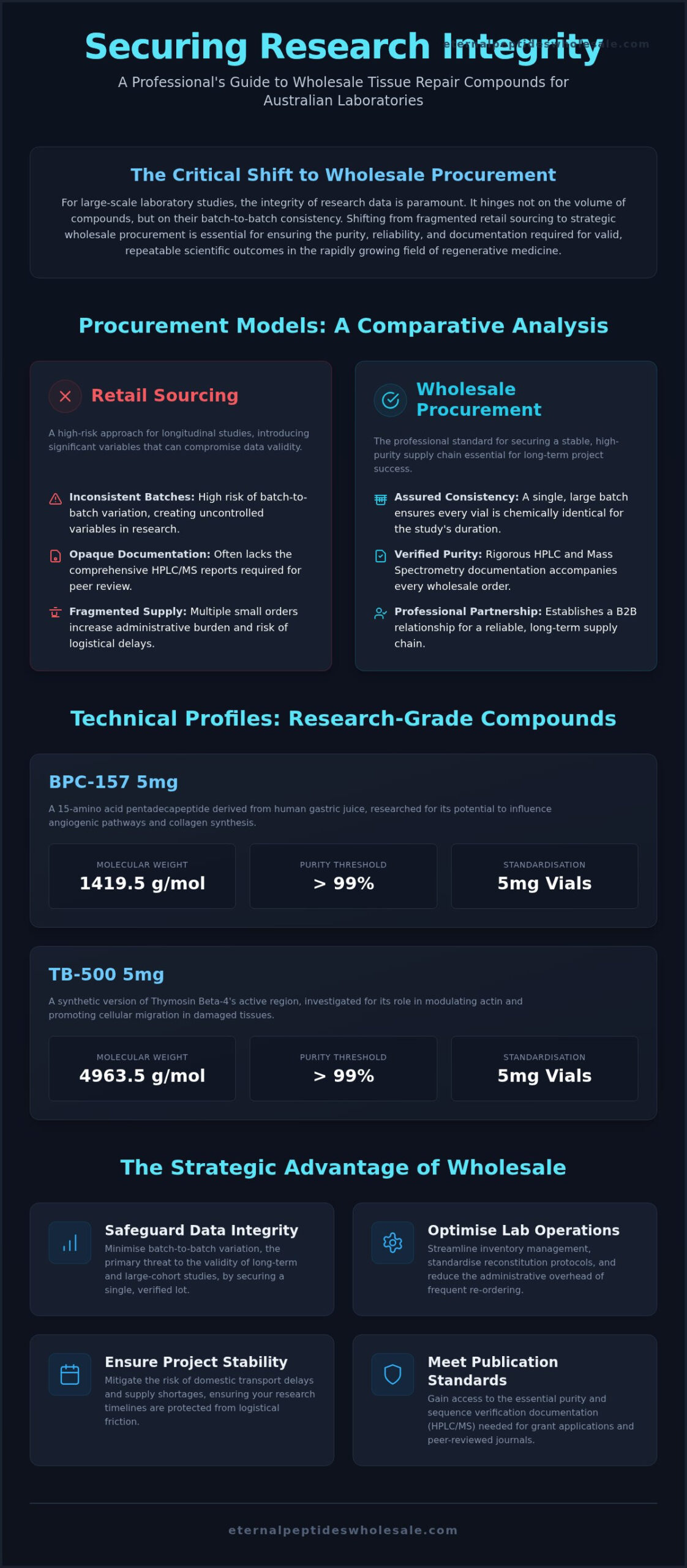
In large-scale research, the value of tissue repair compounds is defined by batch-to-batch consistency, not just volume. For Australian laboratories, the primary bottleneck in progress is frequently the reliability of wholesale tissue repair compounds rather than the hypothesis itself. Procurement professionals understand that sourcing bulk BPC-157 and TB-500 often involves navigating a landscape of inconsistent batches and opaque documentation. You need a supply chain that prioritises clinical reliability over transactional speed.

This guide provides a professional analysis of the Australian wholesale landscape, specifically focusing on establishing stable procurement for BPC-157 5mg and TB-500 5mg. We’ll examine how to verify HPLC/MS documentation, mitigate logistical delays, and ensure your research-grade materials meet the rigorous standards required for valid, large-scale data collection. By the end, you’ll have a clear framework for securing high-purity biochemicals that support long-term project stability without the friction of retail-level supply issues.

Key Takeaways

  • Understand the operational shift required when moving from retail sourcing to strategic wholesale procurement for large-scale laboratory studies.
  • Identify the technical specifications and solubility requirements for wholesale tissue repair compounds to ensure precise research planning and reconstitution.
  • Learn how to safeguard the integrity of long-term data by minimising batch-to-batch variation through rigorous documentation and purity verification.
  • Optimise laboratory inventory management by addressing the specific logistical requirements and lead times of the Australian biotech environment.
  • Discover the advantages of establishing a professional B2B partnership to secure a consistent, high-purity supply of research-grade biochemicals.

Defining Wholesale Tissue Repair Compounds in a Research Context

Tissue repair compounds are essential biochemicals in modern regenerative medicine research. They’re primarily utilised to investigate the underlying mechanisms of tissue healing, cellular signalling, and inflammatory modulation. The Australian research sector is currently seeing a surge in regenerative medicine projects, with the legal peptide therapeutics market projected to reach USD 3,711.1 million by 2033. This growth highlights the importance of reliable supply chains for researchers investigating cellular recovery. While retail vendors focus on small-scale transactions, laboratory procurement requires a dedicated logistical backbone that can provide high-volume quantities without compromising on purity.

For scientific validity, volume and purity must be perfectly balanced. A study’s integrity depends on the assumption that every vial used is identical to the last. This is why professional labs avoid the retail market, where batch documentation is often insufficient. Securing wholesale tissue repair compounds through dedicated B2B channels ensures that researchers have access to the documentation required for peer-reviewed publication and repeatable results.

The Role of BPC-157 and TB-500 in Scientific Study

Researchers frequently focus on BPC-157 and TB-500 due to their roles in gastric and musculoskeletal repair models. These compounds are often studied in tandem because researchers look for synergistic effects that might exceed the results of isolated application. BPC-157 is a pentadecapeptide derived from human gastric juice for research. Scientific interest in BPC-157 (Body Protection Compound 157) centres on its potential to influence angiogenic pathways and collagen synthesis within controlled laboratory settings. Its companion, TB-500, is a synthetic version of Thymosin Beta-4, often investigated for its potential to modulate actin and promote cellular migration in damaged tissues.

Wholesale vs. Retail: The Necessity of Scale

Sourcing single vials for longitudinal or large-cohort studies creates significant variables. Every new batch from a retail source introduces a potential point of failure in data consistency. Strategic procurement of wholesale tissue repair compounds allows laboratories to secure a single, massive batch of 5mg vials. This ensures every subject in a study receives a chemically identical compound. Maintaining a bulk inventory also offers logistical advantages. It reduces the frequency of domestic transport delays, which is critical when working with time-sensitive research protocols.

Standardised 5mg vial sizes allow for uniform reconstitution protocols across the entire laboratory team. This level of standardisation is difficult to achieve when relying on fragmented retail supplies. By centralising procurement, labs can focus on their scientific objectives rather than the administrative burden of managing multiple small-scale orders. This approach provides the economic stability and logistical transparency necessary for high-volume biotech operations.

Technical Profiles: BPC-157 and TB-500 Specifications

Precision in biochemical research requires exact molecular specifications. Sourcing wholesale tissue repair compounds demands a focus on molecular weight and sequence integrity. BPC-157 (1419.5 g/mol) and TB-500 (4963.5 g/mol) have distinct profiles that dictate their roles in regenerative models. These technical parameters influence everything from reconstitution volumes to the final concentration used in laboratory assays.

BPC-157 5mg: Research Grade Standards

BPC-157 consists of 15 amino acids. Its sequence, Gly-Glu-Pro-Pro-Pro-Gly-Lys-Pro-Ala-Asp-Asp-Ala-Gly-Leu-Val, must be verified via HPLC. Purity thresholds for wholesale lots should exceed 99% to ensure experimental repeatability. This compound is notably prohibited by the World Anti-Doping Agency for athletic use, which underscores the necessity of strictly research-grade procurement. Verification of these standards is detailed in our guide on Quality Assurance in Research Peptides.

TB-500 5mg: Synthetic Thymosin Beta-4 Analogues

TB-500 is a synthetic peptide fragment representing the active region of the naturally occurring protein Thymosin Beta-4. In research, it’s primarily studied for its role in actin-binding and cellular migration. Unlike the full-length protein, the 5mg TB-500 wholesale format offers a more targeted approach for investigating tissue organisation. High-volume procurement requires rigorous screening for truncated sequences or residual solvents from the synthesis process. Laboratories managing large-scale inventories should review the technical standards for bulk TB-500 for laboratories to ensure every synthesis run meets the minimum purity thresholds required for valid longitudinal data.

Solubility is a critical factor in laboratory preparation. Both compounds are typically reconstituted using bacteriostatic water or sterile saline. Procuring wholesale tissue repair compounds requires a robust understanding of these stability profiles. Lyophilised powders remain stable at room temperature for short durations, but long-term storage in Australian laboratories should be maintained at -20°C. Once reconstituted, vials must be refrigerated at 2-8°C and used within a specific window to prevent degradation. For labs managing large-scale projects, maintaining these cold-chain standards across bulk inventory is non-negotiable.

Researchers seeking to procure high-purity biochemicals can rely on our systematic approach to technical verification and logistical reliability.

Ensuring Batch Consistency in High-Volume Peptide Sourcing

For large-scale biotech projects, the integrity of the data relies on the uniformity of the biochemicals used. When procuring wholesale tissue repair compounds, the greatest risk isn’t just the price; it’s the variation between batches. Inconsistent purity levels can lead to skewed results in long-term studies, forcing researchers to discard months of work. Standardising procurement ensures that every vial in a bulk order, whether it’s 50 or 500 units, shares an identical chemical profile. In an environment where the TGA has made unapproved peptides a compliance priority for 2026, maintaining transparent, high-level documentation is a necessity for any legitimate research facility.

The Importance of HPLC and MS Reports

High-Performance Liquid Chromatography (HPLC) is the industry standard for verifying the purity of peptides like BPC-157 and TB-500. It separates the compound from any synthesis by-products or residual reagents. Complementary to this, Mass Spectrometry (MS) confirms the molecular weight, ensuring the peptide sequence is correct. For wholesale orders, these reports shouldn’t be generic; they must be batch-specific. Researchers should demand these documents to confirm that the wholesale tissue repair compounds they receive meet the exact specifications required for their protocols. This level of transparency is what separates a professional B2B partner from a standard retail vendor.

Standardising Purity Across Wholesale Batches

In the Australian research sector, “Research Grade” typically denotes a purity threshold of 98% or higher. However, even within this range, slight variances between synthesis runs can occur. A professional wholesaler acts as a steadfast logistical backbone by screening these runs before they reach the laboratory. If a batch shows a variance that exceeds the acceptable threshold for a specific longitudinal study, it must be flagged or rejected. Maintaining this level of operational excellence allows labs to focus on their data rather than worrying about the chemical reliability of their supply chain. It’s about creating a narrative of competence through systematic processes and rigorous standards.

By centralising bulk orders through a single, reliable source, labs can mitigate the risks associated with fragmented supply chains. This approach ensures that the “no-nonsense” professional partnership valued by procurement professionals is maintained through every stage of the project. Reliable batch-to-batch consistency isn’t just a logistical advantage; it’s the foundation of valid scientific outcomes.

Wholesale Tissue Repair: Australian Procurement Guide

Strategic Procurement: Optimising the Laboratory Supply Chain

Effective procurement in the 2026 Australian research landscape involves more than just selecting a supplier; it requires a comprehensive strategy for supply chain management. Laboratories must navigate a market where regulatory enforcement is a priority, making the reliability of wholesale tissue repair compounds a central concern for operational continuity. Reducing procurement lag is achievable only through established national distribution networks that bypass the delays common in international retail shipping. For a deeper look at current market dynamics, see our Sourcing Research Peptides Wholesale in Australia guide.

Managing Large-Scale Peptide Inventories

Successful longitudinal studies depend on the potency of the biochemicals from the first day to the last. Bulk lyophilised peptides require specific environmental controls to prevent degradation over time. Organising stock rotation is vital to maintain potency across multi-year trials. When receiving large wholesale shipments, laboratories should follow a systematic verification protocol to ensure every unit meets the required standards.

  • Maintain long-term storage at -20°C in a dedicated laboratory freezer with backup power.
  • Utilise a First-In, First-Out (FIFO) rotation to ensure stock freshness across different synthesis runs.
  • Conduct a visual inspection of vials for vacuum seal integrity and lyophilisation quality upon arrival.
  • Cross-reference batch numbers with the provided HPLC/MS documentation immediately to confirm consistency.

B2B Logistics and Shipping within Australia

Biochemical sensitivity makes standard courier services unsuitable for high-value research materials. Temperature-controlled shipping is mandatory for maintaining the structural integrity of wholesale tissue repair compounds during transit, especially during the summer months in regional Australia. National distribution networks that specialise in cold-chain logistics help laboratories overcome common hurdles like regional transport delays and heat exposure at sorting centres. These logistical requirements often mirror those found in Wholesale GLP-1 Research Chemicals, where stability is equally paramount for valid research data. Procurement professionals expanding their research portfolios should also consider how ipamorelin wholesale Australia sourcing strategies align with the same domestic supply chain principles that protect longitudinal study timelines.

Establishing a steadfast logistical backbone allows your team to focus on scientific discovery rather than administrative friction. To secure a reliable supply for your next large-scale biotech project, you can view our wholesale procurement options and speak with a specialist about your specific research requirements.

Eternal Peptides Wholesale: Your Professional Research Partner

Eternal Peptides Wholesale functions as more than a supplier; we serve as a steadfast logistical backbone for the Australian biotech sector. Our operations are built on a foundation of clinical reliability and transparency, specifically designed to meet the high-volume needs of professional laboratories. Unlike generic marketplaces that offer a broad range of unrelated goods, we specialise exclusively in high-purity biochemicals. This focus ensures that our procurement protocols, documentation standards, and distribution networks are all optimised for the scientific community. By providing a consistent supply of wholesale tissue repair compounds, we allow researchers to maintain the momentum of their projects without the disruptions caused by fragmented supply chains.

A Steadfast Logistical Backbone for Australian Labs

Our “no-nonsense” approach to business prioritises precision and operational excellence. Procurement professionals value a partner who understands that research success depends on more than just a product; it requires a systematic process. Eternal Peptides Wholesale provides BPC-157 5mg and TB-500 5mg at scale, ensuring every shipment is backed by batch-specific documentation. We do not offer retail sales. Our focus remains entirely on B2B logistical excellence. This clinical, business-oriented partnership is designed to reduce administrative friction and provide the long-term stability needed for multi-year research programmes. We strictly adhere to research-only standards, ensuring that all compounds are provided for laboratory use and are not for human consumption or medical application.

Securing Your Supply Chain for 2026

As the TGA intensifies its focus on peptide compliance in 2026, the value of a transparent, Australian-based partner becomes even more significant. Establishing a wholesale account for your institution provides a direct channel to a reliable supply of research-grade materials. Our process for batch verification is rigorous, ensuring that every synthesis run meets our internal purity thresholds before it enters our national distribution network. We focus on building long-term professional relationships that evolve with your laboratory’s needs. This steady cadence of supply mirrors the reliability required for a well-oiled research facility. Enquire about wholesale tissue repair compounds today to discuss your procurement requirements and secure your research timeline for the coming year.

Securing Your Research Infrastructure for 2026

Establishing a stable supply of wholesale tissue repair compounds is a foundational step for any high-volume laboratory project. By prioritising batch-to-batch consistency and rigorous HPLC/MS verification, researchers can eliminate variables that otherwise compromise long-term data integrity. A professional B2B partnership ensures that your procurement process remains transparent and predictable, allowing your team to focus on scientific outcomes rather than logistical hurdles. This methodical approach to supply chain management mirrors the precision required in your own experimental protocols, creating a narrative of operational excellence throughout the study.

Reliable national distribution across Australia provides the security needed to maintain project timelines without the risks associated with fragmented retail sourcing. Our commitment to providing strictly research-grade biochemicals means your facility receives materials that meet the highest technical standards for every synthesis run. Using a dependable logistical backbone is essential for navigating the complexities of the modern biotech landscape while ensuring your research remains on schedule and within budget.

Contact Eternal Peptides Wholesale for bulk research compound enquiries to discuss your specific laboratory requirements. We look forward to supporting the success of your next large-scale biotech initiative and helping you achieve valid research data.

Frequently Asked Questions

Are these tissue repair compounds suitable for human consumption?

No, these compounds are strictly for laboratory research purposes only and are not for human consumption or medical use. Every order of our wholesale tissue repair compounds is supplied under the condition that it’s used within a controlled scientific environment. We don’t provide medical consultations or advice on therapeutic applications. Researchers must ensure their protocols comply with institutional biosafety and ethics requirements while handling these biochemicals.

What is the standard purity of your wholesale BPC-157 and TB-500?

We maintain a “research grade” standard, which requires a minimum purity threshold of 98% or higher for all batches. This level of purity is essential for ensuring that laboratory data remains valid and repeatable across large-scale studies. Our quality control processes screen every synthesis run to ensure that residual solvents and synthesis by-products are kept within acceptable limits for peer-reviewed scientific investigation.

Do you provide HPLC and MS reports for bulk peptide orders?

Yes, we provide comprehensive High-Performance Liquid Chromatography (HPLC) and Mass Spectrometry (MS) reports for every wholesale order. These documents verify the peptide’s purity and confirm its molecular weight against the expected sequence. Providing batch-specific documentation is a core part of our commitment to logistical transparency and clinical reliability. This allows procurement officers to maintain a clear audit trail for their laboratory’s inventory.

Can I purchase single vials for individual research use?

No, we do not engage in retail single-vial sales. Our business model is exclusively focused on B2B distribution and bulk supply for laboratories, biotech companies, and research institutions. This wholesale focus allows us to maintain the steadfast logistical backbone necessary for large-scale operations. By specialising in high-volume procurement, we ensure that our clients receive consistent, high-purity batches that support long-term scientific projects.

How are wholesale peptide orders shipped within Australia?

All orders are shipped via our national distribution network using temperature-controlled logistics to maintain compound integrity. We understand the sensitivity of biochemicals like BPC-157 and TB-500, especially during transit across various Australian climates. Our shipping protocols are designed to overcome regional hurdles and prevent heat exposure. This ensures that lyophilised peptides arrive at your facility in optimal condition for laboratory storage and eventual reconstitution.

What is the shelf life of bulk lyophilised peptides in laboratory storage?

Bulk lyophilised peptides typically remain stable for up to 24 months when stored in a dedicated laboratory freezer at -20°C. Once reconstituted, the compounds are much more sensitive and should be kept at 2-8°C and used within a specific window, usually 7 to 14 days, depending on the buffer used. Maintaining these strict storage conditions is critical for preserving the potency of your wholesale tissue repair compounds throughout multi-year trials.

Do you offer wholesale discounts for university research projects?

We specialise in providing tailored supply solutions for university research projects and large-scale biotech institutions. While we don’t offer retail-style discounts, our wholesale pricing structures are designed to accommodate the budgetary and logistical needs of high-volume laboratory environments. We focus on building long-term professional relationships with procurement departments to ensure a reliable and cost-effective supply chain for their ongoing scientific investigations.

Are these compounds regulated for research use in Australia?

In Australia, BPC-157 and TB-500 are unapproved therapeutic goods and are not included in the ARTG for human use. However, they’re available for legitimate laboratory research purposes within highly regulated scientific channels. It’s the responsibility of the purchasing institution to ensure they have the legal authority and necessary permits to possess and use these substances for their specific research protocols in accordance with state and federal laws.

Related from Eternal Peptides Wholesale

Eternal Peptides Wholesale publishes batch-specific Janoshik Analytical reports in its certificate of analysis library, so the documentation for a listed batch can be read alongside the evidence discussed in this article.

Related reading: Wholesale BPC-157 Australia: Research Lab Sourcing Guide; Anti-inflammatory Peptide Compounds for Study: Evidence, Mechanisms and Research Considerations; TGA Research Peptide Guidelines: 2026 Compliance Guide